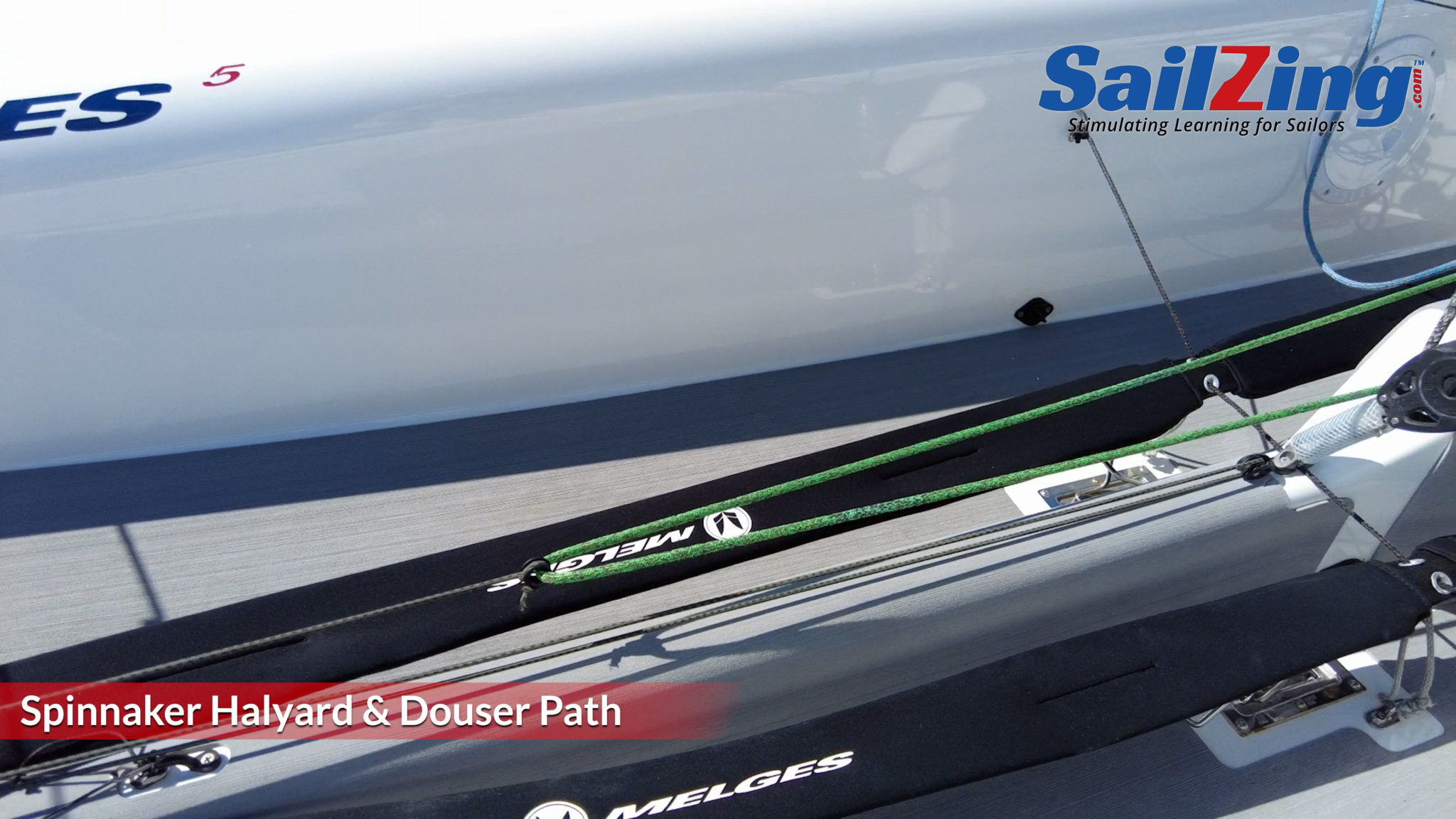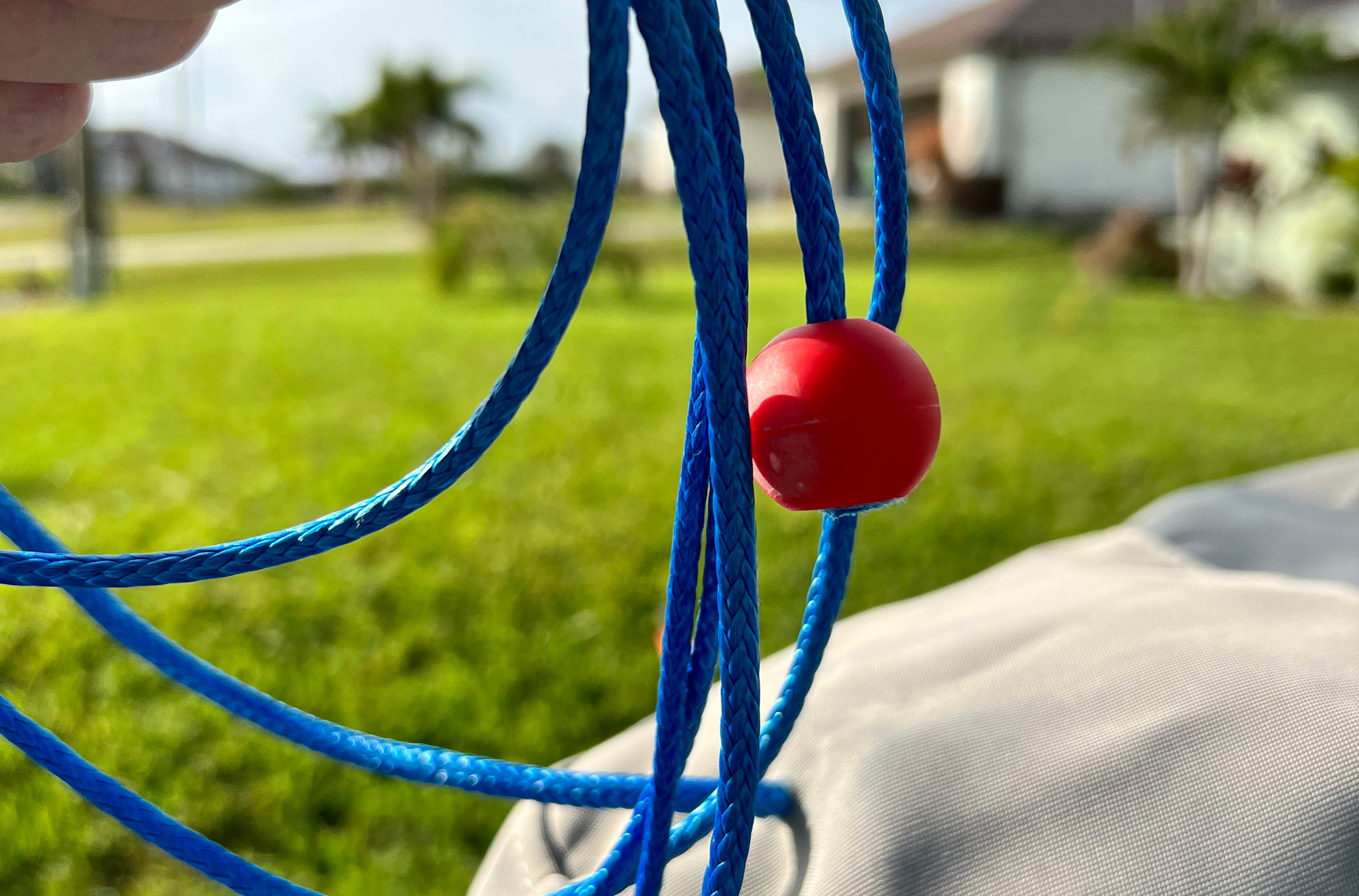
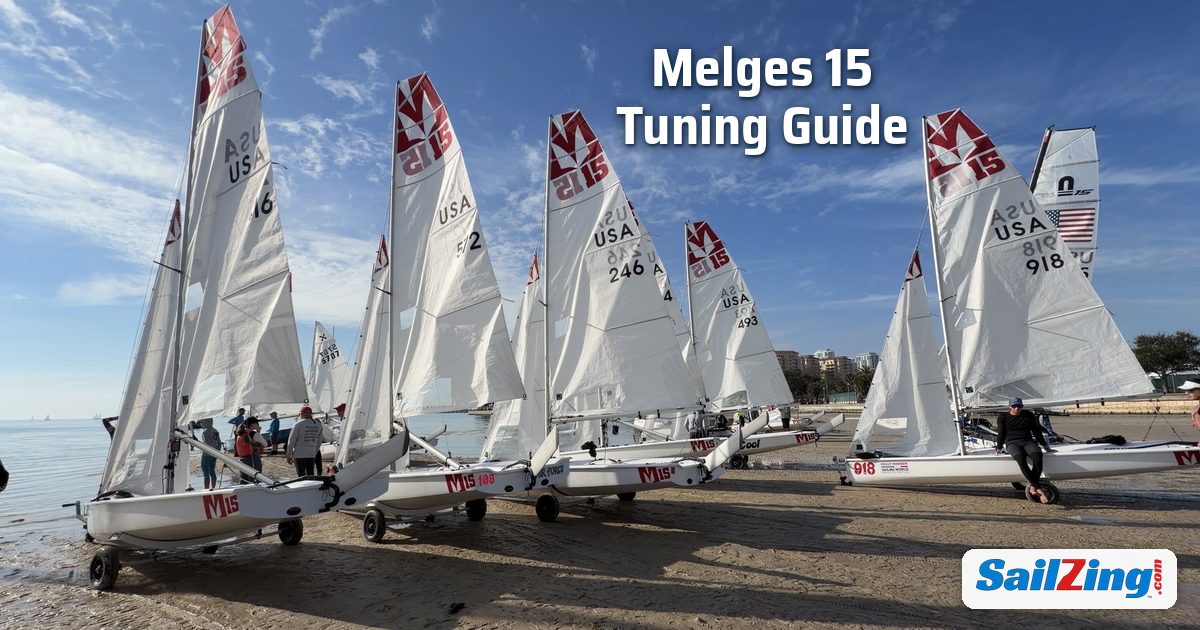
The breeze is 8 knots at the dock and 14 by the warning signal, usually 5 minutes before your start (rule 26). You set the rig ashore, and now the boat to leeward is pointing higher and going just as fast. You know there’s a number for this. You just don’t know which one, or which control to touch first.
Good news: we can help with that. The builder publishes one chart, one spreader setting and one bridle starting point. The skill is knowing which control to move as the wind changes, and when to leave a setting alone.
In this Melges 15 tuning guide, you’ll learn:
- the 2026 rig tension chart, wind range by wind range
- how to set and center the rig, and when the rules let you change it
- why you leave the spreaders alone, and why there’s no mast rake to set
- how bridle height sets your pointing
- why the vang/GNAV is your first depower control, and how to set the jib leads
- the downwind settings that keep the mast in the boat
- a Quick Sheet and a short quiz to lock it in
Every number below comes from a published source, linked where it appears. The headline numbers come from the 2026 Melges 15 Tuning Guide (Jan 14, 2026), published by the builder, Melges Performance Sailboats (Melges). We add the 2026 Melges 15 Class Rules (effective June 5, 2026). We also use the builder’s M15 Midwinters Webinar: Tuning Strategy & Pro Tips on YouTube (Mar 17, 2026). Its panel is three experienced Melges 15 racers: Eddie Cox, a top sailor and the former Melges 15 lead at Melges, plus Doug Wake and Andy Burdick. Webinar times are approximate.
Each section gives what the guide and the experts say first. Where we add our own advice, it’s labeled SailZing’s take.
These numbers are for the Melges 15 only. Other classes should use their own guide.
In This Post
- The 2026 Melges 15 Rig Tension Chart
- Key Terms
- How to Set and Center the Rig
- Crew Weight and the Chart
- Spreaders: Leave Them at the Factory Setting
- Mast Rake: Not Adjustable
- Read Your Headstay Sag
- Bridle Height: Your Pointing Control
- Mainsail Controls: Vang First
- Jib Leads and Jib Trim
- Downwind Settings
- Rudder and Board Upwind
- When to Change Gears
- When It Feels Wrong
- Quick Sheet: Melges 15 Settings by Wind Range
- Where to Start
- Quiz
The 2026 Melges 15 Rig Tension Chart
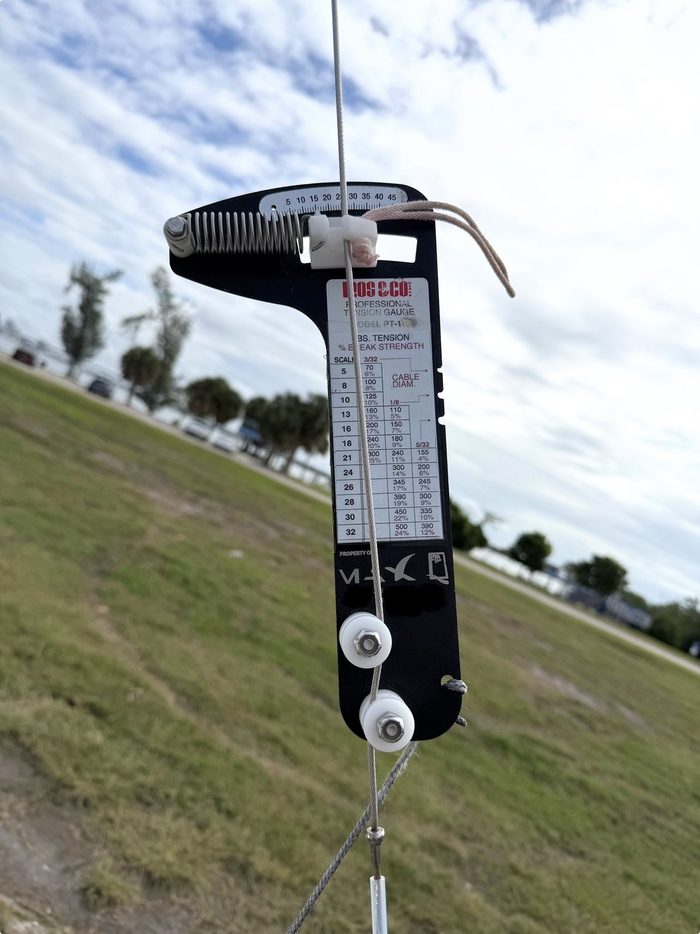
The Melges 15 has a fixed-length headstay (forestay), the wire from the bow to the mast. You don’t tune with it. Instead you tighten the two sidestays (shrouds, the side wires) evenly, and you read the overall rig tension on the headstay with a Loos PT-1 tension gauge (2026 Tuning Guide).
Here is the builder’s 2026 chart, redrawn (chart on the 2026 Tuning Guide page; the same chart appears on a webinar slide at about 2:45):
| Wind | Headstay, reading on a PT-1 |
|---|---|
| 0–6 kts | 6 |
| 6–10 kts | 17 |
| 10–14 kts | 19 |
| 15–18 kts | 21 |
| 18+ kts | 24 |
Source: 2026 Melges 15 Tuning Guide, Jan 14, 2026. Redrawn by SailZing.com.
About the gauge number: a setting like “17 on a PT-1″ is a PT-1 scale reading, not pounds. On the Melges 15’s 1/8″ rig wire, the Loos gauge’s calibration card converts the reading to pounds of rig tension. The PT-1 covers 3/32″, 1/8″ and 5/32” cable (Loos PT-1 instructions). That’s tension in the wire, not crew weight. For a sense of scale, 21 on a PT-1 is about 240 lb of rig tension on 1/8″ wire (Loos PT-1 card, Loos & Co.’s own data).
Three things to know about this chart:
- 17 is the reference, not the lowest setting. The guide calls 17 on a PT-1 “a good base setting”: the number you start from. The chart goes as low as 6 and as high as 24, and you pick the row that matches the day’s wind (we pick it by the lull wind speed; see How to Set and Center the Rig). The guide says to put some tension on the sidestays once the breeze is over 10 knots, and to sail closer to 21 on a PT-1 once it’s over 15 knots (2026 Tuning Guide).
- The jump from 6 to 17 is real. The 2026 chart itself shows the 6 (chart). When a viewer asked whether the jump from 6 to 17 was a typo, Eddie Cox’s answer was simple. Sail the rig loose under about 6 knots and tight from about 10 knots. In between, work through the range as conditions change, rather than jumping from one end to the other (webinar, about 3:15–3:40).
- Older charts are superseded. If you find an older Melges 15 guide online whose chart starts at 17 in 0–6 knots, use the 2026 chart instead. That older chart reads 17 / 19 / 21 / 24 for 0–6 / 6–10 / 10–14 / 15+ knots. The 2026 chart is looser in every band below 18 knots.
Key Terms
- Sidestays (shrouds): the two wires that hold the mast up from each side.
- Headstay (forestay): the wire from the bow to the mast. On the Melges 15 it’s fixed length.
- Rig tension: how tight the stays are.
- Turnbuckle: the threaded adjuster at the bottom of each sidestay. You turn it to shorten or lengthen the stay. SailZing makes and sells rig tension wrenches for turning them (Shop.SailZing.com).
- Chainplate: the deck fittings the sidestays attach to.
- PT-1 tension gauge and scale: a Loos hand tool that clips onto a wire and gives a scale reading. Sailors quote the number (“I’m at 17”). It’s not pounds, and it’s not crew weight.
- Spreaders: the two struts partway up the mast that push the sidestays out. Spreader rake (sweep) is how far back the spreader tips angle. It is not mast rake.
- Mast rake: how far the mast tilts aft. On the Melges 15 it isn’t adjustable (see Mast Rake).
- Bridle: the line across the back of the boat that carries the lower mainsheet block.
- Backbone: the raised, molded part of the hull in the middle of the cockpit floor that the mainsheet block is mounted on. The guide measures bridle height from the top of the backbone to the bottom of that block.
- Vang/GNAV: the control that holds the boom down. On the Melges 15 it’s an inverted vang above the boom, called the GNAV (“vang” spelled backward).
- Cunningham: the line that pulls the front edge (luff) of the mainsail down.
- Outhaul: the line that pulls the back corner of the mainsail along the boom. It also tightens or eases the sail’s foot (its bottom edge).
- Leech: the back edge of a sail. Telltales are the yarns or ribbons that show airflow.
- Open vs. closed leech: the leech is the back edge of the mainsail. A closed leech has the top of the sail pulled in, so its back edge points more toward the centerline: more power and more pointing, until it’s so closed that the main stalls. An open leech lets the top twist off to leeward, which spills power. See also Twist and Leech hook below.
- Jib car (lead): the sliding fitting on a track that the jib sheet runs through.
- Depower: reduce the sail’s force so you can keep the boat flat.
- Rig tension easer: the tension easer (“boat-breaker”) the builder supplies with each new Melges 15, for taking rig load off after sailing. At the end of the day, Rob puts on the boat-breaker and disconnects the forestay at the bow. The rig is left eased, but not so loose that it bounces around in breeze while stored. The turnbuckles don’t come into play while the boat-breaker is on, but backing them off before you put on the boat-breaker is a good idea when the rig is set tight: to unpin the forestay you have to pull it even tighter with the boat-breaker, and your next race may not need as much tension. Details in Ease it after sailing. Don’t over-tighten the boat-breaker either; the builder says that can damage the boat’s structure. Continuous high rig tension on the boat can damage the hull (Care & Maintenance). It isn’t the same as the “rig tool,” the handle used to turn the turnbuckles (Rig Tool).
- Twist: how much the top of the mainsail opens out to leeward compared with the bottom. A “twisted” main has a more open upper leech.
- Leech hook: the back edge of the mainsail curling to windward. The guide says vang tension adds some, and the cunningham counters it.
- Out of sheet: the mainsheet blocks have come together, so you can’t trim the main any harder. At what feels like maximum trim you want about 1–1.5″ still left between the blocks. If you run out before you can get the main on as hard as you need to point, bring the bridle down a little (Doug Wake, webinar, about 42:11 and 43:06).
- Pinch (pinching): sailing higher and slower, by steering too close to the wind. The opposite of footing.
- Foot (footing): sailing lower and faster, by steering a little farther from the wind to build speed. This is the steering sense of “foot,” not the sail’s foot (its bottom edge; see Outhaul).
- Apparent wind: the wind you feel on the moving boat, a mix of the true wind and the wind your own speed makes.
- Plane (planing): when the boat lifts up and skims across the water instead of pushing through it.
- Chine: the corner where the bottom of the hull meets the side.
- Bear-away set: hoisting the spinnaker right after you turn downwind at the windward mark.
- Chord: the width of the rudder or daggerboard, front edge to back edge.
For more terms, see our Racing Terms: Glossary for Newer Sailors.
How to Set and Center the Rig
- Even the turnbuckles and center the mast. Make sure the sidestay turnbuckles are even side to side (2026 Tuning Guide). SailZing’s take, from Rob Hudson’s racing experience: hang a weight on the main halyard and move it over to the deck edge where each shroud attaches to check that the lengths are even side to side. The weight keeps the tension on the halyard the same for both checks. Some people count the threads showing on each turnbuckle instead. That’s a valid alternative, but it assumes the shrouds themselves are exactly the same length. When they match, the mast sits centered side to side (2026 Tuning Guide).
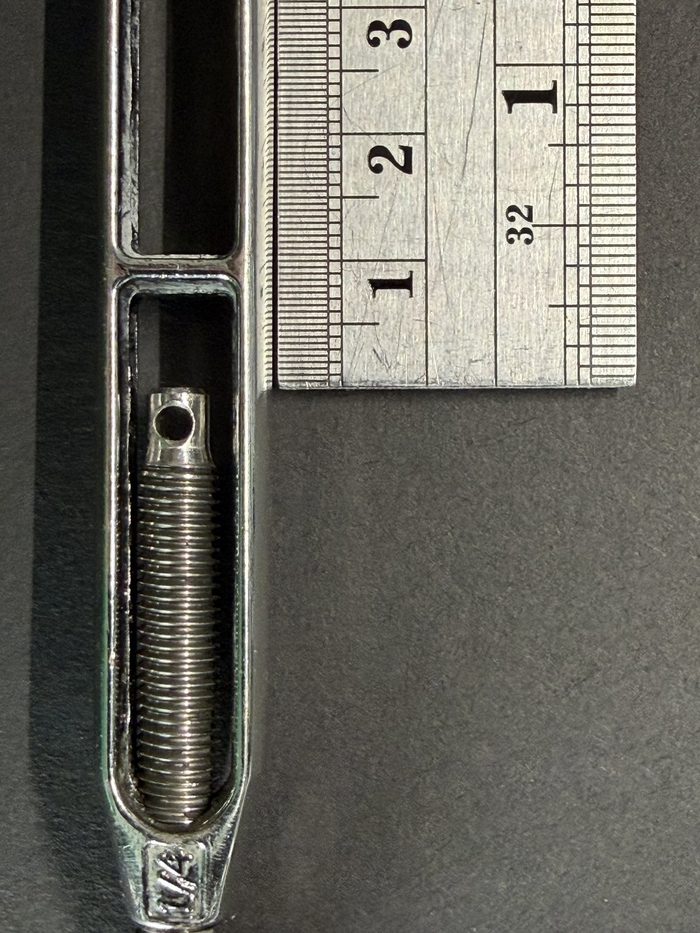
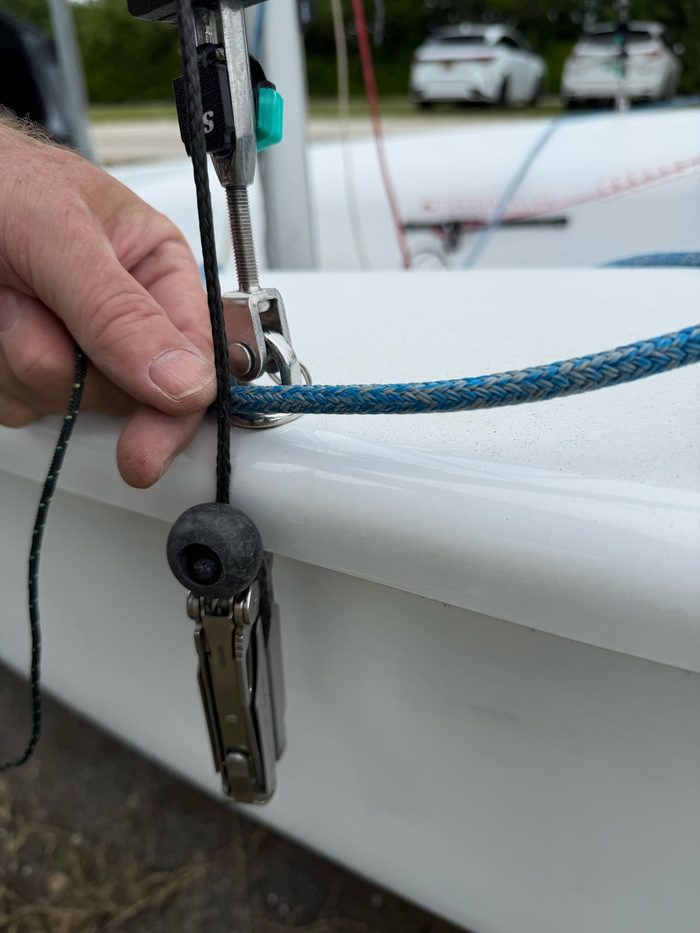
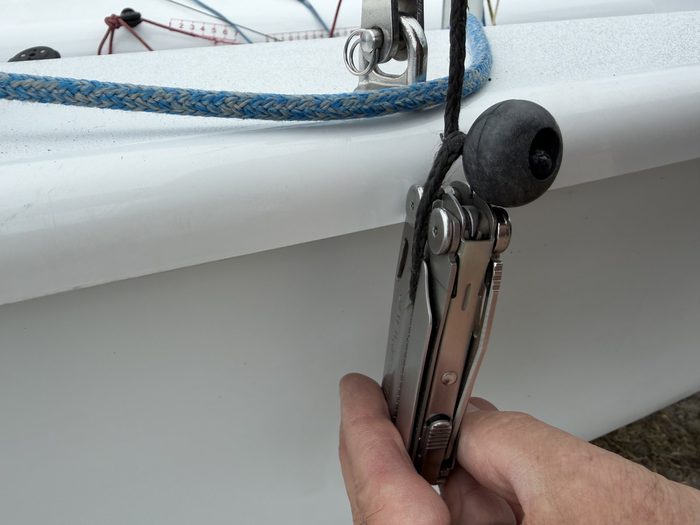
- Tighten evenly to the chart number. With the jib halyard eased, tighten both sidestays evenly until the headstay reads the chart number (2026 Tuning Guide). We pick the row for the day’s lull wind speed (see below).
Stay inside the limits. Don’t overload the sidestays: too much tension overloads the mast and boat with compression. Sidestays that are too loose can, in rare cases, let the mast invert and break (2026 Tuning Guide).
New boat? Sail it a few times in heavy air to stretch the rig before you make your shroud settings permanent. Then double-check the tension (2026 Tuning Guide).
Can’t get the rig loose enough? If your turnbuckles run out of thread before you reach the lower rig tension settings, you may need the Melges 15 T Toggle – Long. Melges sells it to lengthen the shrouds (sidestays) for more adjustment; it’s sold singly, and the boat has two (Melges 15 T Toggle – Long). The class rules allow “one sidestay extender per sidestay, provided by MPS [Melges Performance Sailboats] or an authorized dealer” (2026 Class Rules C.6.1.3(z)).
Set it ashore or between races. Under the class rules, sidestay length shall not be adjusted while racing unless something has failed (2026 Class Rules C.11.4). Rig tools may stay attached to the turnbuckles while racing (C.6.1.3(y)), but you still can’t use them to change sidestay length while racing. So set your number before your preparatory signal. In the standard starting sequence, that’s 4 minutes before the start (rule 26). Under the racing rules, “A boat is racing from her preparatory signal until she finishes and clears the finishing line and marks or retires, or until the race committee signals a general recall, postponement or abandonment” (Definitions). The class rule applies the whole time you’re racing. Between races, our own Rig Tension Wrenches for Melges 15 (Shop.SailZing.com) stay attached to the shrouds and come with pins that lock the turnbuckles between adjustments. SailZing makes and sells these.
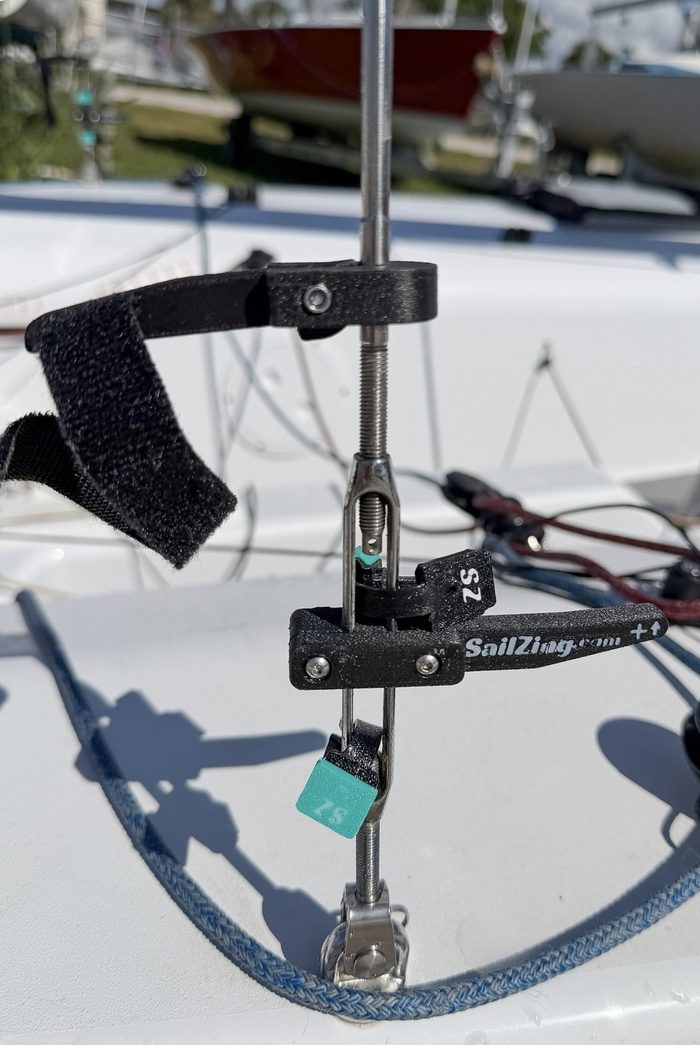
SailZing’s take, from Rob Hudson’s racing experience: set the rig for the lulls. Pick the chart row for the lull wind speed, not the puffs, so you’re fast through the lulls. You can’t change sidestay length while racing (class rule C.11.4, unless something has failed), so the rig has to work in the lightest part of the race. Handle the puffs with the vang/GNAV, the cunningham, “Ease, hike, trim!” and twist.
SailZing’s take, from Rob Hudson’s racing experience: at the end of each day, put on the boat-breaker and disconnect the forestay at the bow. Leave the rig eased, but not so loose that it bounces around in breeze while stored. Backing the turnbuckles off before you put on the boat-breaker is a good idea when your rig is set tight: to unpin the forestay you have to pull it even tighter with the boat-breaker, so starting from a lighter setting keeps that load within normal limits. It also sets you up for a next race that may not need as much tension. Melges’ Care & Maintenance page says to ease the turnbuckles back to the light-air setting first, and it ties its care guidelines to the warranty.
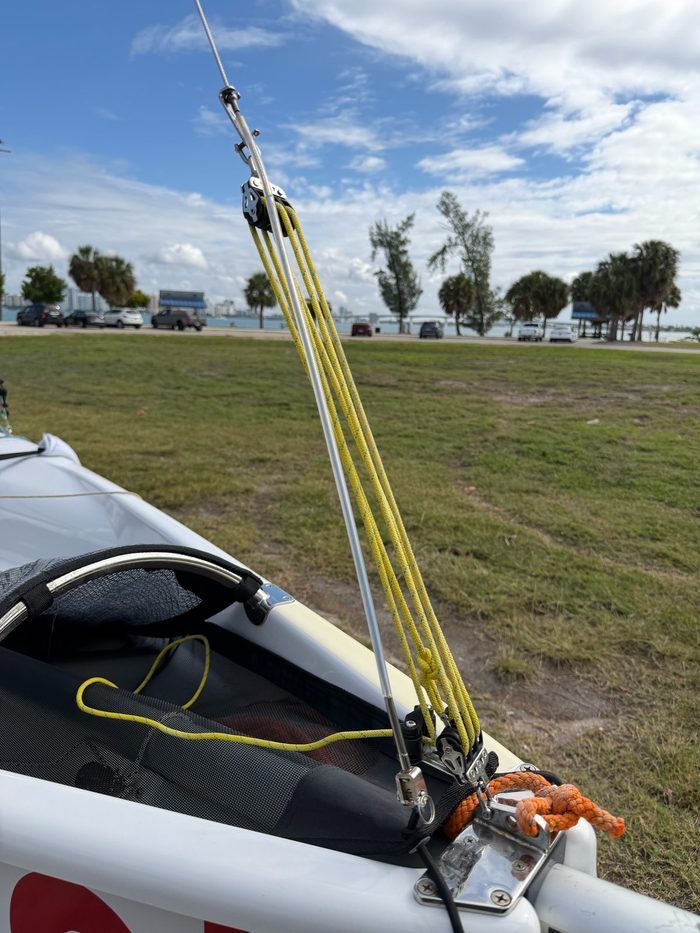
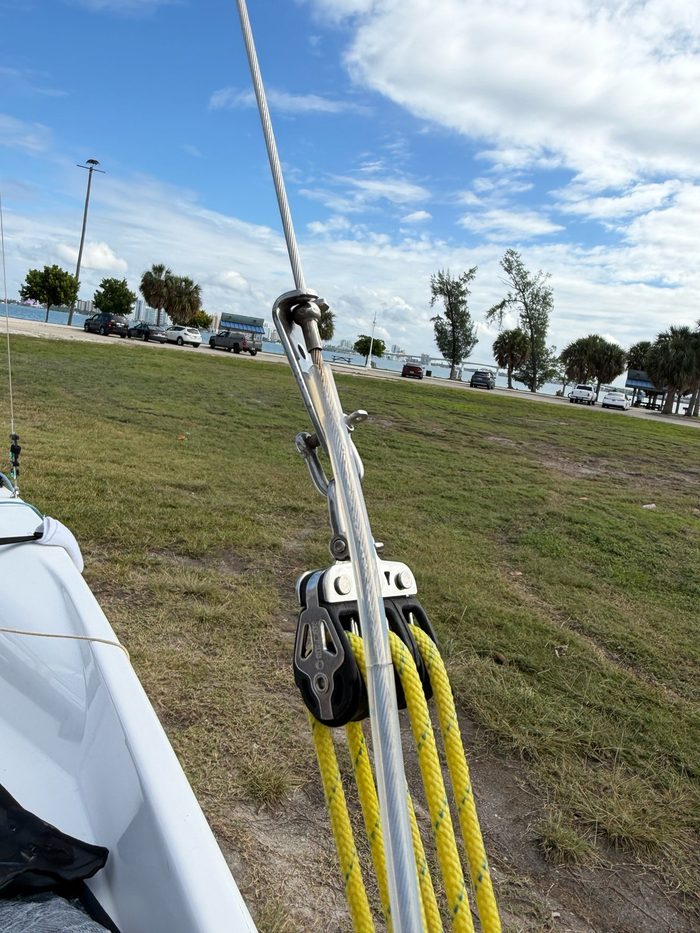
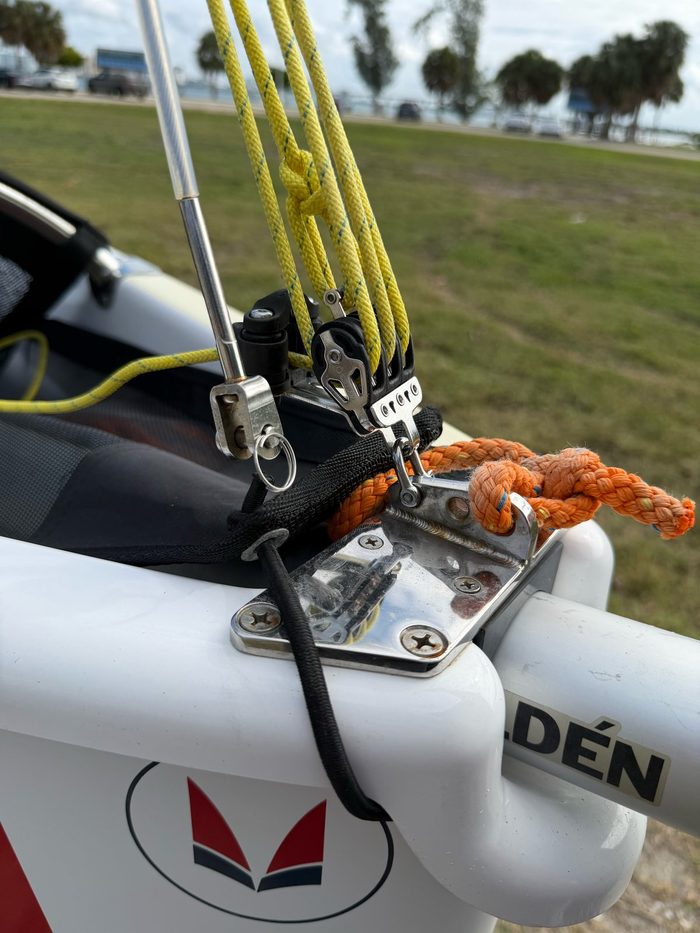
SailZing’s take: more rig tension means less headstay sag, a flatter jib and higher pointing. Less tension means more sag, a fuller and more forgiving jib, and less pointing. Use the chart number for the lull wind speed, change it between races, never while racing, and recheck the bridle whenever you change it.
Crew Weight and the Chart
The 2026 chart is set up for a team with a combined crew weight of about 300 lb. Eddie Cox said heavier teams, around 325–330 lb combined crew weight or more, can sail the rig a little looser, and lighter teams a little tighter. No gauge numbers are given for that shift (webinar, about 4:17–4:30).
For context on combined crew weight (people, not rig tension):
- Combined crew weight, ideal range: US Sailing’s Melges 15 one-design profile lists 275–350 lb (US Sailing profile).
- Combined crew weight, maximum: Melges says crew weight should not exceed 400 lb (2026 Tuning Guide).
- The 2026 class rules set no weight limit. The crew is 2 or 3 people unless the Notice of Race says otherwise (2026 Class Rules C.3.1).
No crew-weight-adjusted gauge chart is published.
SailZing’s take: start on the 2026 chart. If your combined crew weight is well over about 300 lb, bias the rig a touch softer. If you’re lighter, go a touch firmer. Change one thing at a time, and check against a buddy boat.
Examples, not rules: crew weight and the jib. Some experts suggest adjusting the jib for crew weight. For example, the class’s Jan 2022 article (Tuning Your Melges 15 Based on Crew Weight, Melges 15 Class, Jan 19, 2022) gives these:
- Jib cars, 12 kts: a team sailing at 295 lb moves the jib cars further aft so the jib is flatter down low (1 or 2 on the jib car guide). A team in the area of 350 lb can leave the cars further forward for more power down low (0 or -1, -2). Getting too full could hurt your ability to point.
- Jib halyard: a heavier team can consider softer tension, which puts some power in the jib. At 295 lb or less in 12 kts, keep the jib firm along the luff (front edge) with no wrinkles.
- Sea state: a flatter jib in flat water, a fuller jib when it’s choppy.
Those numbers (1 or 2, and 0, -1 or -2) are on the Melges gauge strip next to the jib track. With Melges’s sticker placement, 0 is this guide’s base of 4 holes showing; 1 and 2 are 3 and 2 holes showing; -1 and -2 are 5 and 6 holes showing (see Jib Leads and Jib Trim).
For rig tension, use the 2026 chart above.
The chart itself has a looser story behind it. Eddie Cox said it was updated after the 2025 Nationals. The winning team sailed much looser than the rest of the fleet (webinar, about 2:17). That team was Chris Alexander and Madeline Baldridge. In his debrief for Colie Sails, Clay Johnson wrote that they were far looser on their tuning than everyone else. The regatta was sailed mostly in light air (Colie Sails debrief, Nov 3, 2025).
Spreaders: Leave Them at the Factory Setting
The Melges 15 spreaders are “fully adjustable,” but the builder publishes one setting and calls it “a fast setting in all conditions” (2026 Tuning Guide):
| Spreader check | Setting |
|---|---|
| Spreader rake (sweep) | 135 mm (5 5/16″) |
| Even-rake check, each side | 396 mm |
| Tip to tip, outside of shroud to outside of shroud | 755 mm |
| Spreader tips | All the way inboard (factory preset) |
Source: 2026 Melges 15 Tuning Guide.
How the guide measures it:
- Rake: put the mast on two sawhorses with the spreaders up and the sidestays attached. Run a straight edge (a batten or level) from sidestay to sidestay right next to the spreaders. Measure from the aft face of the mast to the straight edge.
- Even rake: measure from inside the mast track to where the spreader ends and the black sidestay retainer cap starts. Each side should read 396 mm.
- Double-check: measure across the tips, outside of shroud to outside of shroud: 755 mm.
We found no published alternate spreader setting from the class, the builder, a sailmaker or a named sailor. Leave them at the factory setting. The class rules are closed: anything not specifically permitted is prohibited, and spars and rigging stay to the builder’s design (2026 Class Rules Part II introduction and C.9.2).
Mast Rake: Not Adjustable
The Melges 15 mast rake is not adjustable, so there’s nothing to set. You set the rig with the sidestays, using the chart above.
Read Your Headstay Sag
Set rig tension with the jib halyard eased: the headstay is a fixed length, and the sidestays set the number you read on it with a PT-1 (2026 Tuning Guide). You can’t change sidestay length while racing (class rule C.11.4, unless something has failed; 2026 Class Rules). The jib halyard is a separate control that tensions the hanked-on jib along its luff (Melges, How to Rig the Melges 15).
SailZing’s take: use the halyard only to smooth the luff, just enough to take out the scallops between the hanks (the clips that hold the jib to the headstay). It doesn’t change rig tension or headstay sag; only the sidestays set those.
SailZing’s take: What sag looks like: under load, the middle of the headstay and jib luff bow to leeward. More sag makes the front of the jib fuller: more power for chop and light air, less pointing. Less sag makes the jib flatter: it points higher and is easier to hold in breeze.
What it tells you: if you can’t point, check the bridle first; the guide says pointing trouble is “almost always due to your bridle height” (2026 Tuning Guide). The fix is to lower the bridle a little, as long as you’re out of sheet at full trim (less than the 1–1.5″ you want left between the mainsheet blocks) and you aren’t overpowered (Doug Wake, webinar, about 41:30–43:06). If you’re overpowered, add vang/GNAV first, the guide’s #1 depowering control. If you’re still overpowered even in the lulls, set the headstay to the next number up on the chart between races (for example, 17 to 19 on a PT-1). If you’re bogging down in the lulls in light air or chop, set the headstay to the next number down. Change rig tension ashore or between races: you can’t change sidestay length while racing.
Luff puckers: small wrinkles running back from the jib’s luff. Wrinkles that run back across the sail mean the luff is too soft for the breeze; tighten the jib halyard until they just disappear. A crease running up the sail just behind the luff means it’s too tight; ease the halyard a little.
Bridle Height: Your Pointing Control
If you can’t point with the boats around you, look at the bridle first. The guide says pointing problems are “almost always due to your bridle height” (2026 Tuning Guide).
The base setting:
- Measure from the top of the backbone to the bottom of the block.
- Start at 28.5″ (“a good base setting”).
- Raise it in lighter air. Lower it in bigger air (2026 Tuning Guide).
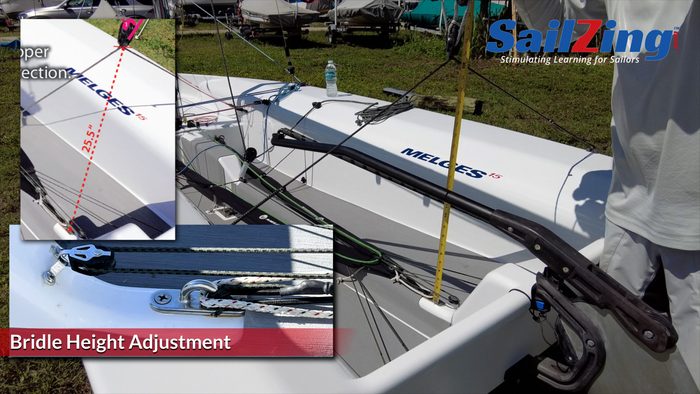
Read the sail, not the number. Doug Wake ranked the bridle as likely the most important adjustment on the boat. Start at 28.5″, then check it on the water (webinar, about 41:30–43:06):
- Trim to what feels like maximum. You should still have about 1–1.5″ between the mainsheet blocks, so you can trim harder in tacks and puffs.
- Get the main to about centerline and check the leech telltales.
- If you need more pointing and you’re out of sheet, bring the bridle down a little. In lighter air, raise it a little instead.
In light air, aim for the boom on centerline without closing the leech, the top telltale flying, and a twisted, powerful main (webinar, about 45:04).
Changed the rig? Recheck the bridle. Wake said bridle height depends partly on how tight you set the rig (webinar, about 42:47). Any time you change the headstay number, recheck the bridle before you race.
Class rule check: the bridle may be any height or tension, as long as the tiller moves freely to the traveler eye strap and the rudder can flip up. It attaches and adjusts at two points and must be at least 4 mm Dyneema or Spectra line. It attaches to the deck only at the traveler pad eyes on the deck edge near the transom (2026 Class Rules C.9.3(c)).
SailZing’s take: which way to move the bridle. It depends on one question: can you hold the boat flat at full trim?
- Light air (0–6 knots): raise it. The boom can come to centerline without closing the leech, so the main stays twisted and powered.
- 6–10 knots: a little above the 28.5″ base.
- Breeze you can hold flat: base or lower. A lower bridle lets the mainsheet pull the boom down and in, so the leech closes and you point higher. That’s the guide’s “lower it in bigger air.”
- Overpowered with the vang and cunningham maxed: raise it a little, the opposite way. Now the twist spills power off the top of the sail, where it heels the boat most (Eddie Cox, below).
The bridle can’t be adjusted under load, so pick the setting before the start for the breeze you expect. A heavier team can stay low into more wind; a lighter team reaches the raise-to-depower point sooner.
Still overpowered with the vang and cunningham maxed? At a Melges 15 clinic, Eddie Cox’s answer was to raise the bridle a bit: raise it until you see plenty of twist in the top of the sail.
SailZing’s take: once the vang and cunningham are maxed and you’re still overpowered, raising the bridle is the next step. With the block higher, the mainsheet pulls the boom down less, so the leech eases and the top of the sail twists open. That spills power up high, where it heels the boat most. In practice: the class rules allow adjusting it (2026 Class Rules C.9.3(c), C.11.4). But on a spliced Dyneema bridle it can only be adjusted with no load on it, and evenly on both sides, so it’s hard to change during a race. Set it before the start for the breeze you expect. If the wind drops, you’re stuck with the extra twist.
Mainsail Controls: Vang First
The guide is blunt: “The vang is the #1 control for depowering your Melges 15” (2026 Tuning Guide). On this boat that’s the vang/GNAV.
| Control | Light air | As the wind builds | Source |
|---|---|---|---|
| Vang/GNAV | Typically all the way off in 5–8 kts | Add tension as the wind increases. It flattens the sail and lets you dump power by easing the mainsheet | Guide; webinar ~44:38 |
| Cunningham | Loose | Pull it on to flatten the front of the sail and counter some of the leech hook the vang causes | Guide |
| Outhaul | 3–5″ between boom and sail; about 3.5″ in 5–8 kts (a bit flatter in flat water) | Pull it tight to depower the bottom of the sail | Guide; webinar ~44:48 |
| Mainsheet | Boom to about centerline without closing the leech | Keep a 1–1.5″ block gap at max trim; ease in puffs | Webinar ~42:15; Guide |
In puffs, the guide’s rule is “Ease, hike, trim!”: ease the main and jib together to keep the boat flat, then trim back in as the puff passes (2026 Tuning Guide).
In dirty air, set up for power. Eddie Cox’s advice: ease the outhaul, ease the vang and don’t overtrim the main (webinar, about 10:00). For more on bad air, see Beat the Shadow: How to Find, Use and Escape Bad Air.
Battens: they sit in Velcro pockets and aren’t really adjustable. Just get the wrinkles out (webinar, about 43:30). Batten tension may not be adjusted while racing (2026 Class Rules C.11.4).
Class purchase limits: vang 8:1, cunningham 2:1, outhaul 4:1 (2026 Class Rules C.9.3(a)). Under C.9.3(b), no fittings, shackles, friction rings, or pulleys may be added to the outhaul.
The guide gives no vang or cunningham marks and no mainsheet numbers.
SailZing’s take: the vang/GNAV holds the boom down. More vang gives a flatter main and a straighter leech, and the mainsheet becomes your power dump. Too much in light air closes the top of the main and stalls it. The cunningham pulls the main’s luff down, so the draft moves forward, the front flattens, and it frees the leech the vang closed (the top of the leech can twist open again; see open vs. closed leech). Easing the outhaul deepens the bottom third of the main for power; tightening it flattens the bottom for less power and drag.
For a broader look at setting controls before the start, see Mark Control Settings – Get Fast, Quicker.
Jib Leads and Jib Trim
Jib lead (car position) (2026 Tuning Guide):
- Base: four holes showing behind the car, read at the rear edge of the car. The guide words it as “the fifth hole from the back of the car,” which leaves 4 holes showing.
- As the wind increases: move the car aft.
- Light air with chop: move it forward a few holes.
- Why: a car farther forward gives a deeper jib with more power, but less ability to point.
Holes showing vs. the Melges gauge strip: with Melges’s sticker placement, the printed strip next to the track runs from -5 to 3, which matches 9 down to 1 holes showing behind the car. 0 is the base (4 holes showing). 1 and 2 are 3 and 2 holes showing (car farther aft); -1 and -2 are 5 and 6 holes showing (car farther forward). Read the position at the rear edge of the car.
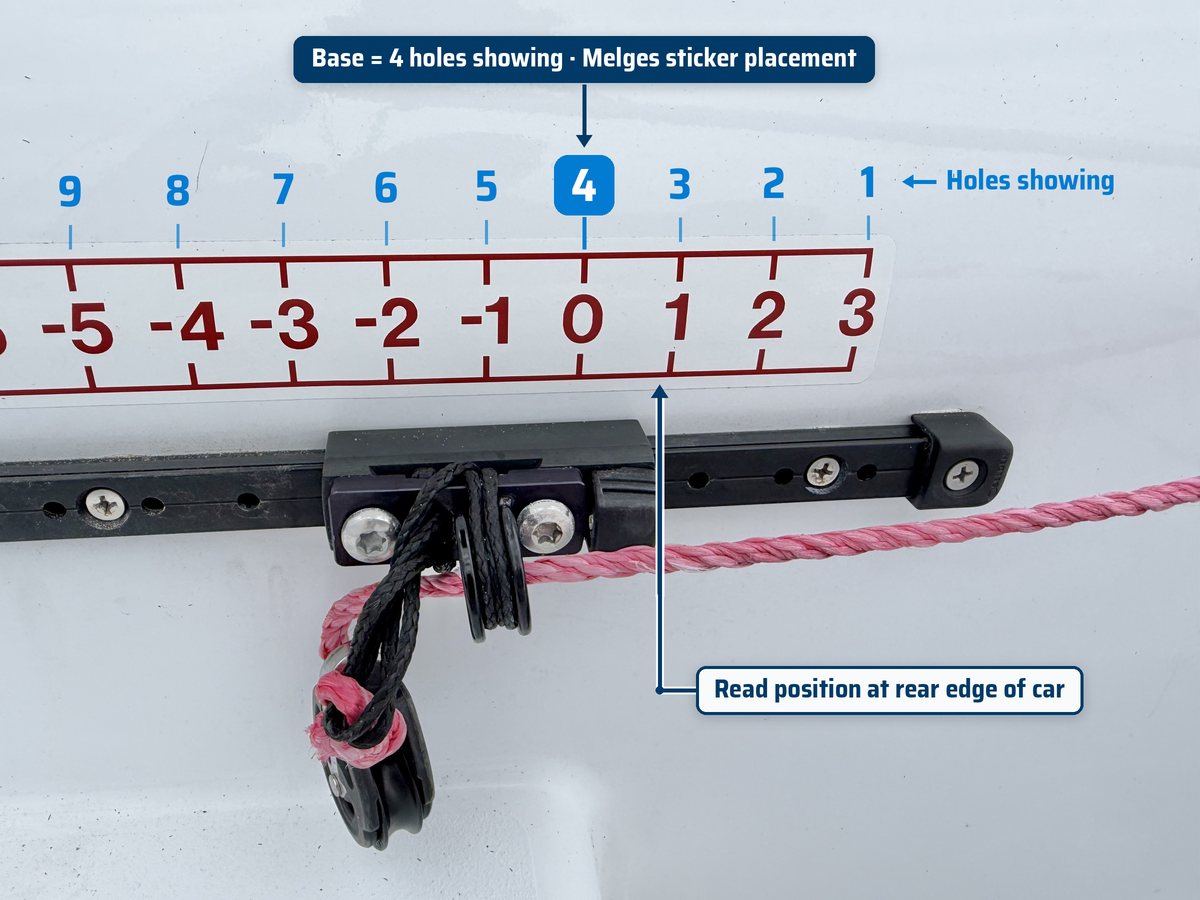
Jib sheet: at a normal upwind angle, the jib leech telltale should flow back “almost constantly.” In puffs, ease the main and jib together and hike, then trim back (2026 Tuning Guide).
Downwind Settings
Downwind, the guide says the Melges 15 “comes alive in any breeze over 8kts,” and that you move your weight aft to start planing (2026 Tuning Guide). Downwind is also where the guide’s biggest mast warning applies.
The one rule that protects your mast: “Gybing in heavy air with the vang loose and the mainsail eased out too far is a recipe for mast damage” (2026 Tuning Guide).
So the vang/GNAV is eased for the set and back on before a breeze jibe:
- Approaching the windward mark: ease the vang (2026 Tuning Guide).
- On the run: sail with enough vang to match the main’s leech to the spinnaker’s leech. Keep the cunningham loose and the outhaul eased 3–5″ (2026 Tuning Guide).
- Before a breeze jibe: put vang tension back on (if it’s loose), so you never jibe in heavy air without it (2026 Tuning Guide).
Downwind, Eddie Cox’s rule of thumb is to set the vang/GNAV so the boom sits perpendicular to the mast; more vang straightens the leech and takes away the twist that powers the main downwind. Mark that setting on the vang line and go to it as you round the windward mark, then adjust from there to match the main’s leech to the spinnaker’s, as the guide says.
In bigger breeze, Andy Burdick says to let the vang all the way off to ease the rounding, keep the boat flat, and never hoist overheeled (webinar, about 13:12–14:33).
Andy Burdick’s breeze rounding, in three steps (webinar, about 13:12–14:33):
- Mark the spinnaker halyard with a clear mark at full hoist, so your crew knows when the spinnaker is all the way up and stops pulling.
- Keep the boat flat while hoisting. Never put the spinnaker up when the boat is overheeled.
- Let the vang all the way off as you bear away. Not just uncleated: all the way off. Then you can steer the boat high or low as you need.
Mainsheet and boom:
- Above about 8 knots, keep the boom no farther out than the transom corner, or the spinnaker backwinds the main (webinar, about 17:15). In light air, a little outside the corner is fine (about 19:50). That’s Eddie Cox’s advice in both cases.
- Downwind, don’t ease the sheet more than about 6 feet, measured from the aft corner of the boat to the boom (the guide writes “about 6’”) (2026 Tuning Guide).
SailZing’s take, from Rob Hudson’s racing experience: “When I first started sailing the Melges 15 with a chute (the spinnaker), I would ease my main to compensate in a big breeze. The result was that suddenly the boat would roll to windward and then back to leeward, so I would ease more or head up. Nothing would stop the roll. Then I realized that I needed to focus on flow between the chute and the mainsail (and jib). Once I kept my main in, the rocking stopped and I accelerated. What was happening is that gusts off the chute were hitting the backside of my main and rolling me to windward. When that pressure let go, I’d roll back to leeward. Allowing the force to flow through the slot (the gap between the sails) stopped that and allowed the boat to accelerate. Sometimes you still need to ease temporarily in a gust, but keep the flow.”
Heel: about 5°, which lets you sail on the leeward chine (2026 Tuning Guide). Eddie Cox goes up to about 10° when it’s windier (webinar, about 15:46).
Daggerboard (downwind): raise it about 6″ downwind, especially in moderate wind and waves. Experiment with more as conditions vary. “When in doubt, leave the board fully down” (2026 Tuning Guide). Doug Wake’s advice: in light, pre-planing air, as it gets a little windier and you start to rotate the kite more, you can pull the board up more, to about a foot or even more. When it’s really light, keep more board down so the boat doesn’t side-slip (webinar, about 21:11–21:48).
This is the downwind setting. Upwind, keep it fully down unless you’re overpowered; see Rudder and Board Upwind.
Modes by wind (2026 Tuning Guide):
- 0–8 knots: sail a higher angle to build apparent wind, with the boat slightly heeled to leeward.
- 9–12 knots: both skipper and crew on the windward side. Drive deeper in the pressure.
- 13–25 knots: plane. Weight aft, and trim the main almost all the way in at times.
Weight: move weight aft to start planing (2026 Tuning Guide). In light air, the fast teams keep their weight well forward (webinar, about 19:30; also about 20:42). Mind the class limit: no crew member may be more than 650 mm forward of the sidestay attachment point. Crew also may not pass forward of the mast in a maneuver. The only exceptions are repairs and tangles (2026 Class Rules C.11.3).
SailZing’s take: normally, keep the skipper’s and crew’s weight together and move as one. On some occasions downwind, the crew sits high to see the chute while the skipper sits low. The guide sets up that split for light-air downwind: skipper on the low side, crew on the high side trimming the kite (2026 Tuning Guide, Downwind Tips).
Jib downwind: cleat the jib, leave it cleated through the jibe and switch it after (2026 Tuning Guide). In light air, Andy Burdick eases it well out so the spinnaker flies free, even if the jib luffs a bit (webinar, about 22:42).
Rudder and Board Upwind
Doug Wake and Eddie Cox say the rudder is big for the boat, so minimize tiller movement and steer with crew weight (webinar, about 20:42 and 21:52). Shim tape may be added to take out rudder slop (2026 Class Rules C.6.1.3(x)). The rudder and board chord width and profile may not be changed (C.8.1).
Board upwind: there’s no published upwind board setting for the Melges 15, so sail with it fully down. If you’re maxed out and the extra twist from the bridle isn’t enough, Eddie Cox’s advice at a Melges 15 clinic was to raise the board upwind, no more than 6″. That’s an upwind limit for when you’re overpowered, separate from the guide’s downwind setting of about 6″ up.
SailZing’s take: when you’re overpowered upwind, pull the board up a little, never more than about 6″. Less board underwater means less sideways grip for the wind to lever against, so the boat heels less. You give up a little pointing, so put it back down as soon as you’re not overpowered.
Keep the daggerboard shock cord over the board, around its trailing edge, at all times while sailing (2026 Class Rules C.6.1.3(m)). You can’t shim the daggerboard or the board box (C.8.1(g)).
When to Change Gears
The guide’s numbers are starting points. Here’s what to change, and when.
Ashore or between races, before your preparatory signal: the rig. You can’t change sidestay length while racing (C.11.4). So read the forecast and the course, then pick the chart number for the lull wind speed you expect, not the puffs. The guide’s own cues are over 10 knots (put tension on the sidestays) and over 15 knots (closer to 21 on a PT-1) (2026 Tuning Guide). Then recheck the bridle.
On the course: vang first. The guide calls the vang/GNAV the #1 depower control. As the breeze builds, it also says to pull on the cunningham (which counters the leech hook the vang adds), pull the outhaul tight, and move the jib car aft. It doesn’t give an order beyond vang first. As the breeze drops, ease them back (2026 Tuning Guide).
In light air: don’t pinch. Bow down a little and keep speed. Eddie Cox’s advice was to keep the power on all the time, because speed builds on itself (webinar, about 45:36).
Upwind: sail flat to slight leeward heel, and use “Ease, hike, trim!” in every puff (2026 Tuning Guide).
Change one thing at a time. Then compare against a tuning partner before you change the next.
When It Feels Wrong
| What you feel | Check first | Source |
|---|---|---|
| Boats around you point higher | Bridle height. Lower it a little if you’re out of sheet | Guide; webinar ~41:30 |
| Overpowered upwind, boat heeling | More vang/GNAV first; cunningham and outhaul on as it builds; ease main and jib together in puffs | Guide |
| Still overpowered, vang and cunningham maxed | Raise the bridle a bit until the top of the main twists open; if that isn’t enough, raise the board upwind, no more than 6″ | Eddie Cox, Melges 15 clinic |
| Slow and sticky in bad air | Power up: ease outhaul and vang; don’t overtrim | Webinar ~10:00 |
| Slow in light air, upwind | Don’t pinch; bow down and build speed | Webinar ~45:36 |
| Main backwinding on a breezy run | Trim the boom back inside the transom corner | Webinar ~17:15 |
| Side-slipping on a light-air run | Put more board down | Webinar ~21:25 |
| You just changed the rig | Recheck the bridle | Webinar ~42:47 |
| Not sure about the board downwind | Leave it fully down | Guide |
Quick Sheet: Melges 15 Settings by Wind Range
Screenshot this for the dock. The headstay row is as published; the other rows are SailZing’s advice.
SailZing’s take, from Rob Hudson’s racing experience: pick the headstay number for the lull wind speed, not the puffs. Handle the puffs with vang/GNAV, cunningham, “Ease, hike, trim!” and twist.
| 0–6 kts | 6–10 kts | 10–14 kts | 15–18 kts | 18+ kts | |
|---|---|---|---|---|---|
| Headstay, on a PT-1 (published) | 6 | 17 | 19 | 21 | 24 |
| SailZing’s take: Bridle (base 28.5″) | Raise | Slightly raised | Base | Lower; raise a bit only once vang and cunningham are maxed | Lower; raise a bit only once vang and cunningham are maxed |
| SailZing’s take: Upwind board | Down | Down | Down | Down; up to 6″ when maxed | Down; up to 6″ when maxed |
| SailZing’s take: Vang/GNAV | Off | Off (5–8 kts) → light | Building | #1 depower | Hard on |
| SailZing’s take: Cunningham | Loose | Loose | Building | On | On hard |
| SailZing’s take: Outhaul (boom to foot) | 3–5″ (~3.5″) | 3–5″ | Tightening | Tight | Tight |
| SailZing’s take: Jib lead (base: four holes showing, 0 on the Melges strip) | Forward a few in chop | Base | Base / aft | Aft | Aft |
| SailZing’s take: Downwind board | More down if very light | About 6″ up | About 6″ up; try more | About 6″ up; try more as it builds | About 6″ up; try more as it builds |
| SailZing’s take: Downwind heel | ~5° | ~5° | ~5° | Up to ~10° | Up to ~10° |
Sources: headstay row from the 2026 Tuning Guide chart. The SailZing rows map the guide‘s “as the wind builds” advice and the webinar onto the chart’s bands; they’re our guidance, not official settings. The chart is set up for a combined crew weight of about 300 lb (webinar, about 4:17).
These lines use each source’s own wind bands, which don’t line up with the chart’s bands:
- Rig cues: over 10 kts, put tension on the sidestays; over 15 kts, closer to 21 on a PT-1 (2026 Tuning Guide).
- Light upwind, 5–8 kts: vang/GNAV typically all the way off; outhaul about 3.5″ (webinar, about 44:38–44:48).
- Downwind modes (the guide’s own bands): 0–8 kts higher angle, build apparent wind · 9–12 kts both on the rail, drive deeper in pressure · 13–25 kts plane, weight aft (2026 Tuning Guide).
- Downwind boom: above about 8 kts, no farther out than the transom corner (webinar, about 17:15).
Base settings, and which way to go as the wind builds:
| Control | Base / light air | As the wind builds | Source |
|---|---|---|---|
| Bridle | 28.5″, raise in lighter air | Lower | Guide |
| Vang/GNAV | Off in 5–8 kts | Add; #1 depower | Guide; webinar ~44:38 |
| Cunningham | Loose | Pull on | Guide |
| Outhaul | 3–5″ (about 3.5″ in 5–8 kts) | Tight | Guide; webinar ~44:48 |
| Jib car | Four holes showing (0 on the Melges strip); forward a few in light chop | Aft | Guide |
| Spreaders | 135 mm rake, tips fully inboard | Leave them | Guide |
| Upwind board | Fully down | Up to 6″ only when maxed out (Eddie Cox, clinic) | Eddie Cox, Melges 15 clinic |
| Downwind board | About 6″ up; when in doubt, fully down. In varying conditions, try more up | — | Guide |
| Upwind heel | Flat (about 0°); in light air, a slight leeward heel (2026 Tuning Guide) | Flat: ease, hike, trim in every puff | Guide; about 0°: SailZing’s advice, from Rob Hudson’s racing experience |
| Downwind heel | About 5° | Up to about 10° | Guide; webinar ~15:46 |
| Mast rake | Not adjustable | N/A | — |
SailZing’s take: the Melges guide says flat to slight leeward heel upwind without naming a wind range. In light air, a little leeward heel cuts wetted surface and helps the sails fall into shape.
These directions are guidance from the sources, not an official setting by wind band.
Where to Start
- Set the headstay to the chart number for the lull wind speed you expect, with even turnbuckles, a centered mast and the jib halyard eased.
- Leave the spreaders at the factory setting.
- Set the bridle at 28.5″, then check your block gap and leech telltales on the water.
- Use the vang/GNAV first when you’re overpowered.
- Every time you change the rig, recheck the bridle.
New to the boat? Start with our Melges 15 Introduction and Melges 15 Assembly – A Comprehensive Look: From Delivery to Ready to Sail.
Quiz: Test Your Melges 15 Tuning
#1 – “Pick the Number”
The forecast is a steady 8 knots. What headstay reading does the 2026 chart give?
17 on a PT-1. That’s the 6–10 knot band, and the guide’s base (reference) setting.
#2 – “Can’t Point”
You’re going as fast as the boats around you, but they point higher. What does the guide say to look at first?
Bridle height. The guide says pointing problems are “almost always” the bridle. If you’re out of sheet, bring it down a little.
#3 – “First Depower”
It’s 16 knots and you’re overpowered upwind. Which control comes first?
The vang/GNAV. The guide calls it “the #1 control for depowering.” The cunningham and outhaul also come on as the wind builds.
#4 – “Breeze Jibe”
You’re running in 15 knots with the vang loose. Now you need to jibe. What first?
Put vang tension back on. Jibing in heavy air with the vang loose and the main eased too far is “a recipe for mast damage.”
#5 – “Between Races”
The wind built, so you went from 17 to 21 between races. What else should you check?
The bridle. Bridle height depends partly on how tight the rig is, so recheck it whenever you change the headstay number.
Related Content
- Melges 15 Introduction
- Melges 15 Assembly – A Comprehensive Look: From Delivery to Ready to Sail
- Melges 15 ILYA Champion 2022 Shares Race Course Notes
- Mark Control Settings – Get Fast, Quicker
- Beat the Shadow: How to Find, Use and Escape Bad Air
-
2026 Melges 15 Tuning Guide – Melges Performance Sailboats
- 2026 Melges 15 Class Rules (effective June 5, 2026). Rules change. For the latest version, go to Melges15.com and open The Class, then Class Rules, or ask your class measurer.
- M15 Midwinters Webinar: Tuning Strategy & Pro Tips (YouTube, Mar 17, 2026)
- Tactic Tip: Championship Winning Tips – Clay Johnson, Colie Sails (Nov 3, 2025)