
This post has been updated for the 2025-2028 Racing Rules of Sailing.
A moored boat, a shoreline, a starboard boat you need to duck: obstructions are everywhere. Rules 19 and 20 decide who gets room to pass them, and how to ask for room to tack.
Rule 19 covers room to pass an obstruction, and Rule 20 covers room to tack at an obstruction. Both are in Part 2, Section C, so they don’t apply at a starting mark surrounded by navigable water, or its anchor line, from the time boats are approaching it to start until they have left it astern (see the Section C preamble in Rule 18.1 – When Mark-Room Applies).
In 2018, the Inland Lake Yachting Association (ILYA) and SailZing, LLC partnered on a Fair Sailing initiative. As part of this initiative, SailZing worked with the ILYA and UK Sailmakers to develop a series of articles on the rules. With the rules changes in 2025, SailZing is updating these articles for the 2025-2028 Racing Rules of Sailing.
Our thanks to UK Sailmakers for generating the animated scenarios.
Rule 19 – Room to Pass an Obstruction
19.1 – When Rule 19 Applies
19.1 When Rule 19 Applies
World Sailing, Racing Rules of Sailing 2025-2028 (Study Version). Read Section C online at racingrulesofsailing.org.
Rule 19 applies between two boats at an obstruction except when rule 18 applies between them and
(a) the obstruction is the mark, or
(b) the obstruction is another boat overlapped with each of them.
However, at a continuing obstruction, rule 19 always applies and rule 18 does not.

19.2 – Giving Room at an Obstruction
19.2 Giving Room at an Obstruction
Racing Rules of Sailing 2025-2028, Part 2, Section C (World Sailing)
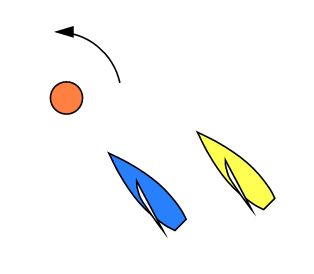
(a) A right-of-way boat may choose to pass an obstruction on her port or starboard side. If a right-of-way boat changes course when choosing on which side to pass the obstruction, she shall give the other boat room to keep clear.
(b) When boats are overlapped, the outside boat shall give the inside boat room between her and the obstruction, unless she has been unable to do so from the time the overlap began.
(c) While boats are passing a continuing obstruction, if a boat that was clear astern and required to keep clear becomes overlapped between the other boat and the obstruction and, at the moment the overlap begins, there is not room for her to pass between them,
(1) she is not entitled to room under rule 19.2(b), and
(2) while the boats remain overlapped, she shall keep clear and rules 10 and 11 do not apply.
What Rule 19 Means in Plain Words
- Obstructions include things like a moored boat, a shoreline, a dock, or a right-of-way boat you have to keep clear of.
- At a mark, Rule 18 usually wins. If Rule 18 applies between two boats, Rule 19 steps aside when the obstruction is the mark, or another boat overlapped with both of them. At a continuing obstruction (like a long shoreline, even if it’s a mark), Rule 19 applies and Rule 18 doesn’t.
- The right-of-way boat chooses the side. New for 2025: if she changes course to make that choice, she must give the other boat room to keep clear.
- Inside boats get room. When boats are overlapped, the outside boat gives the inside boat room between her and the obstruction, unless she couldn’t from the moment the overlap began.
- No barging in late along a continuing obstruction. A boat that comes from clear astern and pushes in where there isn’t room gets no room and must keep clear.
Definitions
Obstruction. An obstruction is
(a) an object that a boat could not pass without changing course substantially, if she were sailing directly towards it and one of her hull lengths from it;
(b) an object that can be safely passed on only one side; or
(c) an object, area or line that is so designated in a rule.
However, a boat racing is not an obstruction to other boats unless they are required to keep clear of her or, if rule 22 applies, avoid her.
Continuing Obstruction. An obstruction is a continuing obstruction when the boat with the shortest hull referred to in the rule using the term will pass alongside it for at least three of her hull lengths. However, the following are not a continuing obstruction: a vessel under way, a boat racing, or a race committee vessel that is also a mark.
Room. The space a boat needs in the existing conditions, including space to comply with her obligations under the rules of Part 2 and rule 31, while manoeuvring promptly in a seamanlike way.
Mark. An object the sailing instructions require a boat to leave on a specified side, a race committee vessel surrounded by navigable water from which the starting or finishing line extends, and an object intentionally attached to the object or vessel. However, an anchor line is not part of the mark.
Clear Astern and Clear Ahead; Overlap. One boat is clear astern of another when her hull and equipment in normal position are behind a line abeam from the aftermost point of the other boat’s hull and equipment in normal position. The other boat is clear ahead. They overlap when neither is clear astern. However, they also overlap when a boat between them overlaps both. These terms always apply to boats on the same tack. They apply to boats on opposite tacks only when rule 18 applies between them or when both boats are sailing more than ninety degrees from the true wind.
Keep Clear. A boat keeps clear of a right-of-way boat
(a) if the right-of-way boat can sail her course with no need to take avoiding action and,
(b) when the boats are overlapped, if the right-of-way boat can also change course in both directions without immediately making contact.
Rule 19 Key Points
- Rule 19 does not apply when rule 18 applies and the obstruction is the mark, or another boat overlapped with each of them.
- Under Rule 19, the right-of-way boat gets to choose which side to pass an obstruction. If she changes course to do so, she must give the other boat room to keep clear.
- The outside boat must give inside overlapped boats room to pass an obstruction. This does not apply at a continuing obstruction if the inside boat becomes overlapped from clear astern with no room to pass.
Rule 19 Changes
For 2025-2028, Rule 19.1 was reworded: Rule 19 now steps aside at a mark only when Rule 18 applies between the boats. Rule 19.2(a) adds a duty to give room to keep clear when the right-of-way boat changes course to choose her side. The definition Obstruction was rewritten (an object, area or line “so designated in a rule”), and Continuing Obstruction became its own definition.
Why the Change?
Optional reading. Skip ahead to the Rule 19 Scenarios if you like.
Rule 19.1. The Study Version ties the new wording to Submission 009-22 (as edited). The effect: Rule 19 gives way to Rule 18 at a mark only when Rule 18 applies between the two boats.
Rule 19.2(a), second sentence. This came from Submission 008-23, Proposal 2. The submission said it “codifies how rule 19 has been interpreted,” and that it “makes it clear that while the right of way boat may choose what side to pass an obstruction, it should make the decision and the change of course in such a way that the outside, keep clear boat has room to keep clear.” The Study Version also notes wording changes in 19.2(a) and (b) from Submission 010-22 (as edited).
“Continuing obstruction” in 19.1 and 19.2(c). The Study Version lists these as consequential changes resulting from Submission 008-23, Proposal 1 (as amended).
Sources: World Sailing, 2023 Submissions; World Sailing, Study Version of the RRS 2025-2028 (change comments).
Rule 19 Scenarios
For each scenario, read the description, watch the animation, and decide your answer. Then reveal the answer to check your thinking.
#1 – “Starting Line”
Description: Yellow and Blue are approaching the race committee boat at the starting line, prior to the start.
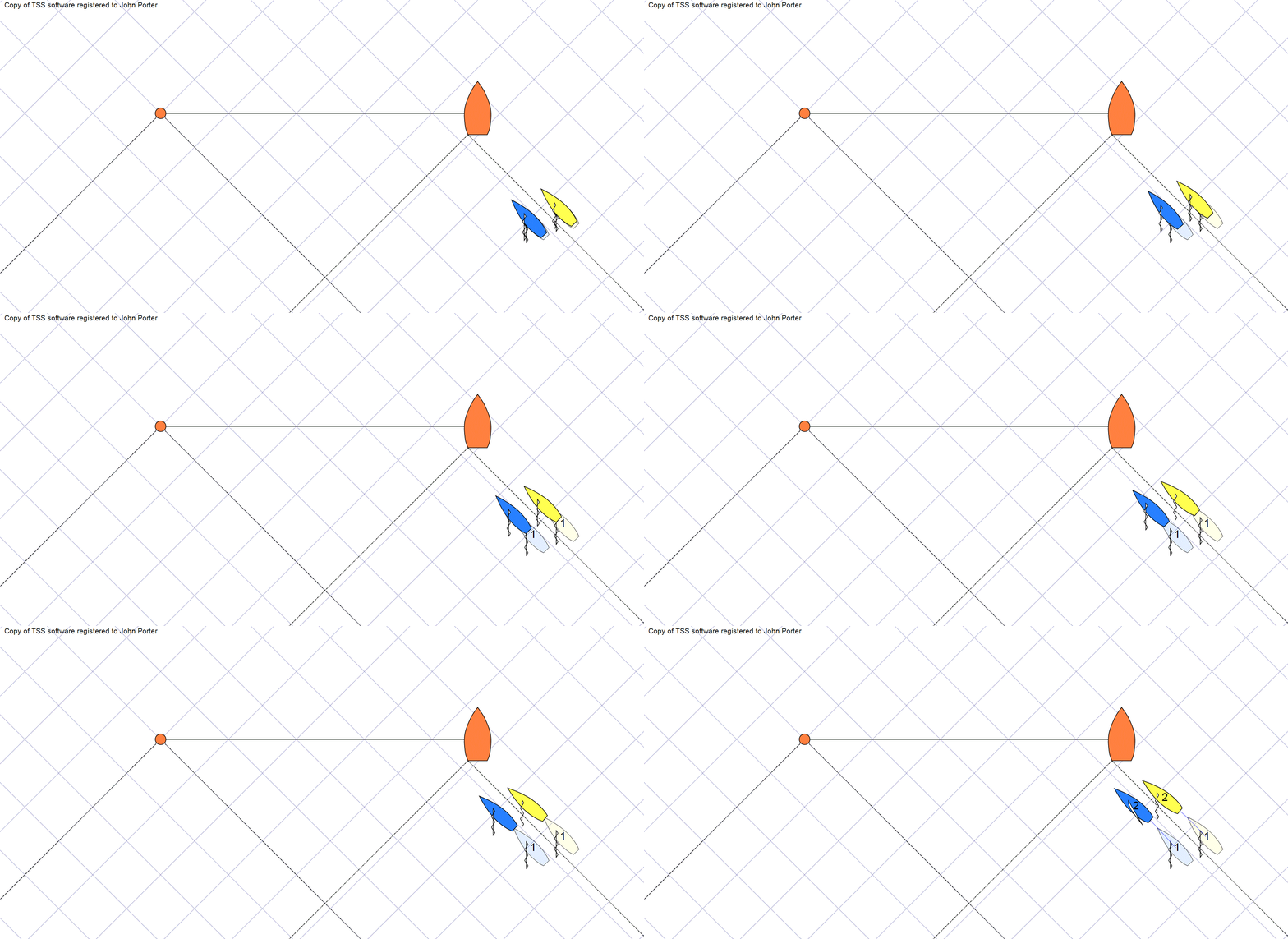
Is Blue required to give Yellow room to pass inside the RC boat?
No. The preamble to Section C states: “Section C rules do not apply between boats when the mark or obstruction referred to in those rules is a starting mark surrounded by navigable water or at its anchor line, from the time boats are approaching it to start until they have left it astern.” (Section C)
#2 – “Starting Line on Shore”
Description: Yellow and Blue are approaching a starting line that has one end on shore.
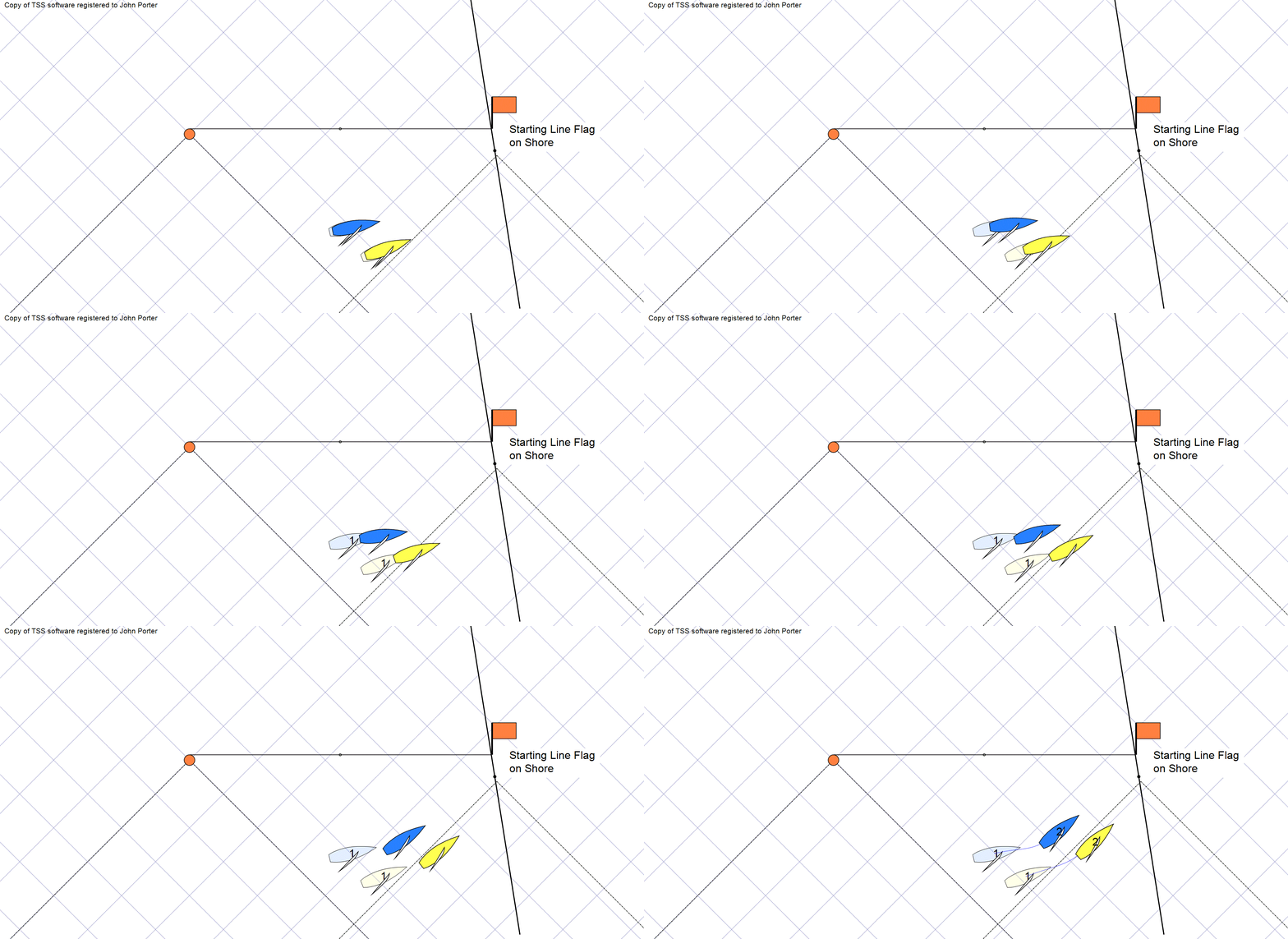
Does Rule 19 apply in this situation?
Yes. The shore is not a starting mark surrounded by navigable water, so the Section C preamble doesn’t switch Rule 19 off. The shore is a continuing obstruction, and rule 19.1 says, in part, that at a continuing obstruction, rule 19 always applies and rule 18 does not.
#3 – “Over or Under”
Description: Yellow and Blue are reaching to the next mark, with a government mark in their path. Yellow establishes an overlap from behind and is bound by rule 17 to sail no higher than her proper course. As the boats approach the government mark, Yellow decides to sail to windward of the mark. Blue alleges Yellow broke rule 17 because she could have sailed to leeward of the mark.
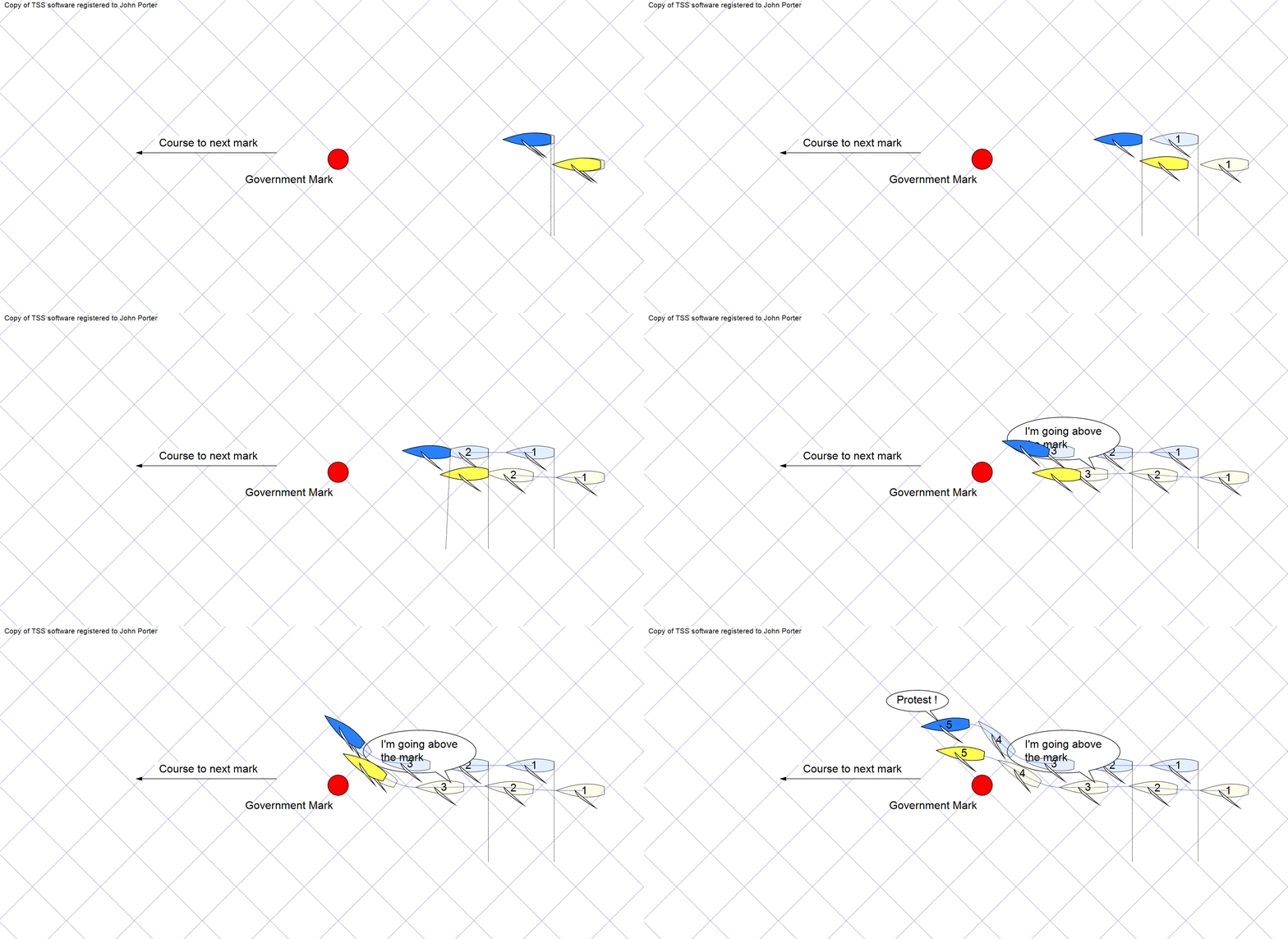
Is Yellow required to sail to leeward of the obstruction?
No. rule 19.2(a) says a right-of-way boat may choose to pass an obstruction on her port or starboard side. Yellow is the right-of-way boat (leeward). New for 2025: if Yellow changes course when choosing her side, she must give Blue room to keep clear.
#4 – “Which Room Wins?”
Description: Blue and Green approach Yellow, a starboard boat and an obstruction. Blue hails ‘Room to tack’ and Green hails ‘Room to duck’. Green wants to duck Yellow and Blue wants to tack. Blue tacks. Green protests, alleging Blue broke Rule 19.2. There was no contact.
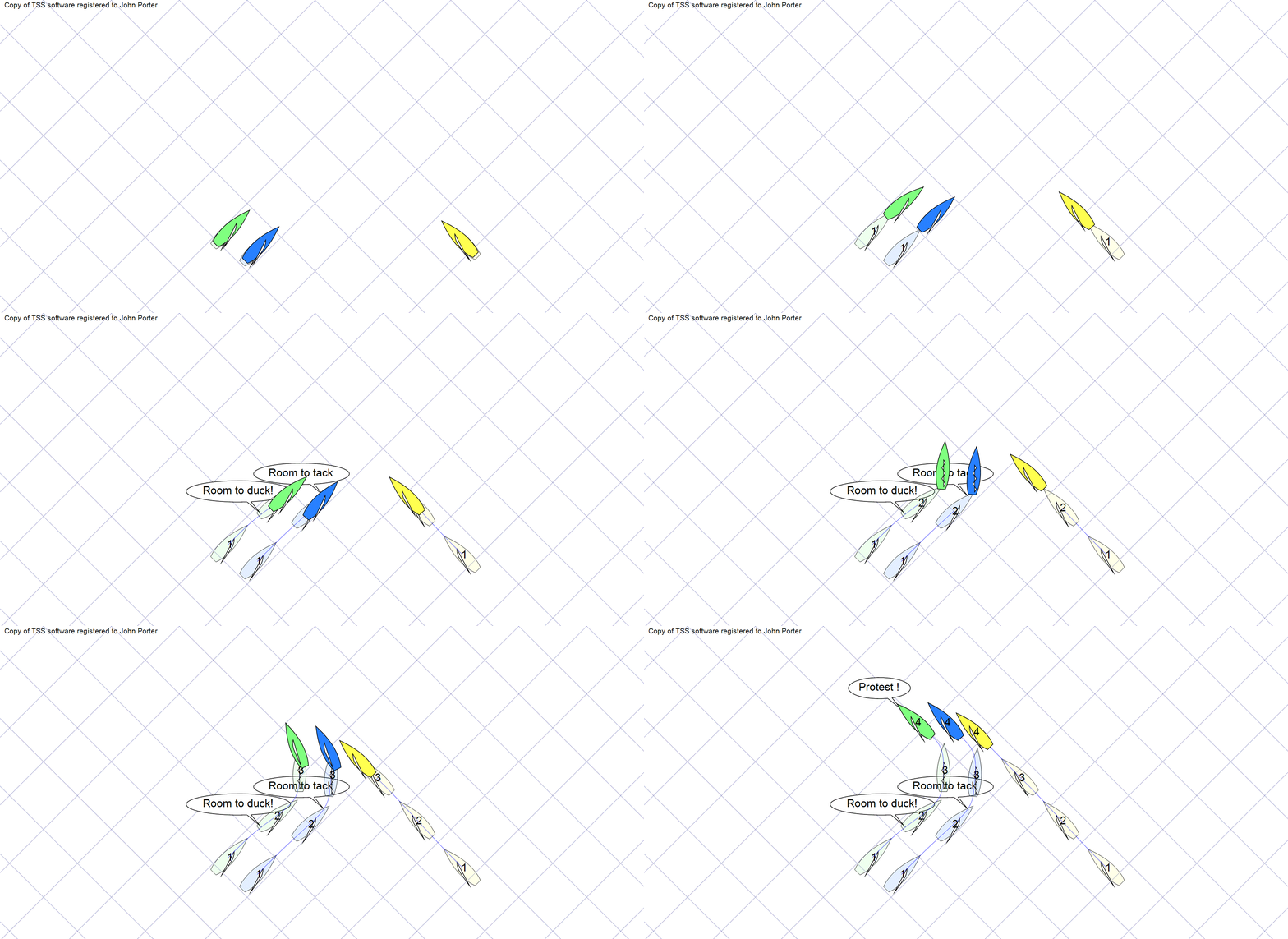
Did Blue break Rule 19.2?
No. rule 19.2(a) says a right-of-way boat may choose to pass an obstruction on her port or starboard side. Blue is the right-of-way boat (leeward). If Blue changes course when making that choice, she must give Green room to keep clear.
Could Blue duck while forcing Green to tack?
No. rule 19.2(b) requires the outside overlapped boat to give the inside boat room between her and the obstruction. Once Blue decides to duck, she must give Green room to duck.
#5 – “Overlap from Astern”
Description: Yellow and Blue are sailing along a shore, which is a continuing obstruction. Blue overlaps Yellow from clear astern. Blue asks Yellow to head up, alleging she is entitled to room.

Is Yellow required to give room to Blue?
No. The boats are passing the shore, which is a continuing obstruction. Blue was clear astern and became overlapped inside without room to pass. Therefore rule 19.2(c) applies, and Blue is not entitled to room under Rule 19.2(b).
Rule 20 – Room to Tack at an Obstruction
20.1 Hailing
World Sailing, Racing Rules of Sailing 2025-2028 (Study Version). Read Section C online at racingrulesofsailing.org.
A boat may hail for room to tack and avoid a boat on the same tack by hailing ‘Room to tack’. However, she shall not hail unless
(a) she is approaching an obstruction and will soon need to make a substantial course change to avoid it safely, and
(b) she is sailing close-hauled or above.
In addition, she shall not hail if the obstruction is a mark and a boat that is fetching it would be required to change course as a result of the hail.
20.2 Responding
(a) After a boat hails, she shall give a hailed boat time to respond.
(b) A hailed boat shall respond even if the hail breaks rule 20.1.
(c) A hailed boat shall respond either by tacking as soon as possible, or by immediately replying ‘You tack’ and then giving the hailing boat room to tack and avoid her.
(d) When a hailed boat responds, the hailing boat shall tack as soon as possible.
(e) From the time a boat hails until she has tacked and avoided a hailed boat, rule 18.2 does not apply between them.
20.3 Passing On a Hail to an Additional Boat
When a boat has been hailed for room to tack and she intends to respond by tacking, she may hail another boat on the same tack for room to tack and avoid her. She may hail even if her hail does not meet the conditions of rule 20.1. Rule 20.2 applies between her and a boat she hails.
20.4 Additional Requirements for Hails
(a) When conditions are such that a hail may not be heard, the boat shall also make a signal that clearly indicates her need for room to tack or her response.
(b) The notice of race may specify an alternative communication for a boat to indicate her need for room to tack or her response, and require boats to use it.
What Rule 20 Means in Plain Words
- The hail is fixed for 2025: say the words “Room to tack.” Other hails, like “I’ll need to tack soon,” don’t count.
- Only when you need it: you may hail only if you’re close-hauled or above and approaching an obstruction you’ll soon need to turn hard to avoid. Not at a mark when a boat fetching it would have to change course.
- The hailed boat must answer, even if the hail breaks 20.1: either tack as soon as possible, or reply “You tack” right away and then give the hailing boat room to tack and avoid her.
- Then the hailing boat must tack as soon as possible.
- Pass it on: a hailed boat that will tack may hail the next boat on the same tack.
- Can’t be heard? In wind or noise, also make a clear signal (20.4). The notice of race may require another way to communicate.
Definitions
Fetching. A boat is fetching a mark when she is in a position to pass to windward of it and leave it on the required side without changing tack.
Tack, Starboard or Port. A boat is on the tack, starboard or port, corresponding to her windward side.
Rule 20 Key Points
- You must hail “Room to tack” when approaching an obstruction if you need to tack and avoid a boat on the same tack.
- The hailed boat must respond either by tacking as soon as possible or by hailing “You tack.”
- When a hailed boat responds, the hailing boat must tack as soon as possible.
- The hailed boat may pass on the hail for room to tack to another boat.
Rule 20 Changes
For 2025-2028, Rule 20.1 requires the specific hail “Room to tack.” The rest of Rule 20 is unchanged.
Why the Change?
Optional reading. Skip ahead to the Rule 20 Scenarios if you like.
Rule 20.1. The change came from Submission 014-23, from the Royal Yachting Association. Its purpose: “To make the hail for room to tack prescribed, similar to ‘Protest’ and ‘You tack’.” The submission’s reasons included:
- A hail for room to tack “must clearly convey that A requires room to tack” (World Sailing Case 54), and the clearest way to do that is to hail “Room to tack.”
- The only other two required hails in the rules are “Protest” and “You tack,” and “it is not consistent or logical to require a specific hail in two cases but not the third.”
- Hails like “We’re tacking” or “Room” put the hailed boat in a difficult position.
Sources: World Sailing, 2023 Submissions (014-23); World Sailing, Study Version of the RRS 2025-2028.
Rule 20 Scenarios
For each scenario, read the description, watch the animation, and decide your answer. Then reveal the answer to check your thinking.
#6 – “Approaching Shore, Tack Immediately”
Description: Yellow and Blue are approaching a shore, sailing close-hauled. Blue hails “Room to tack.” Yellow tacks immediately and Blue begins her tack as soon as Yellow does.
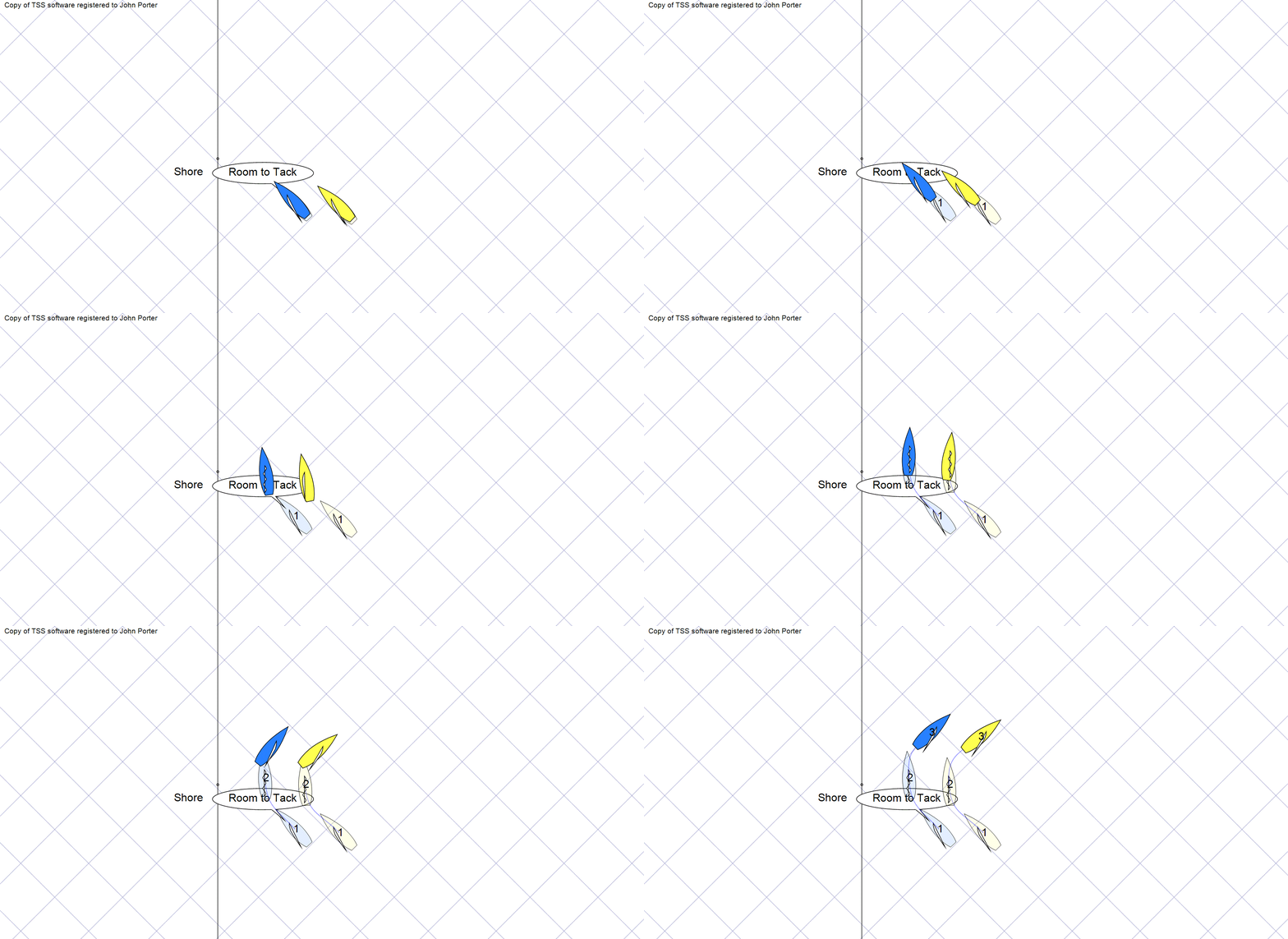
Should Yellow hail in response to Blue’s hail?
No. Yellow is not required to hail if she tacks as soon as possible (rule 20.2(c)). If Yellow does not tack as soon as possible, she must immediately reply “You tack” and give Blue room to tack and avoid her.
Could Blue have hailed for room to tack if she were reaching?
No. A boat shall not hail unless she is sailing close-hauled or above (rule 20.1(b)). A boat on a reach may not hail. If Blue wants to tack, she should head up to close-hauled first.
After Yellow tacked, could Blue have sailed further before tacking?
No. rule 20.2(d) says that when a hailed boat responds, the hailing boat shall tack as soon as possible. This rule prevents the hailing boat from gaining a tactical advantage.
#7 – “Approaching Shore, You Tack”
Description: Yellow and Blue are approaching a shore, sailing close-hauled. Blue hails “Room to tack.” Yellow hails “You tack,” and ducks Blue.
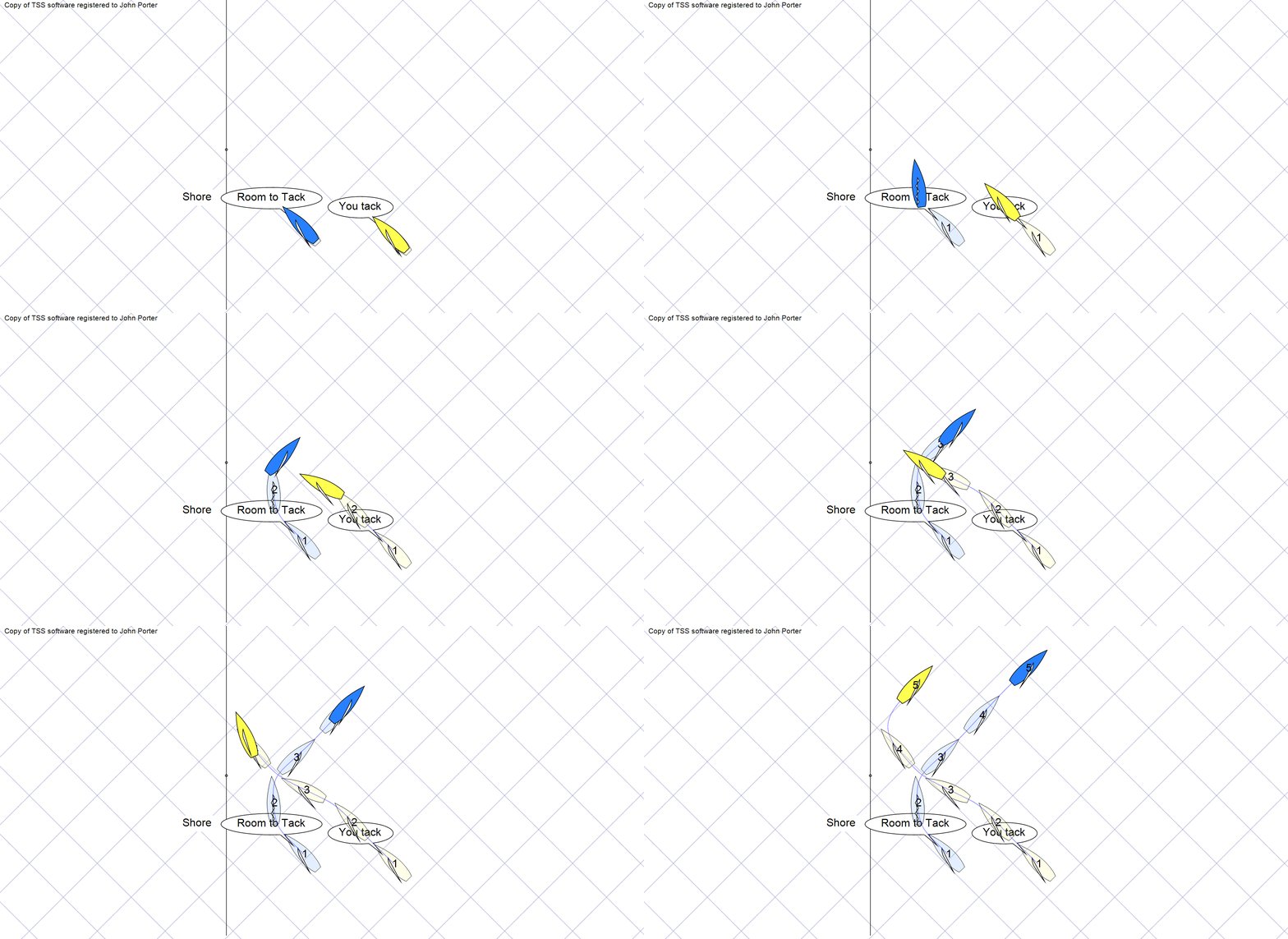
Could Yellow also tack immediately after responding?
Yes. rule 20.2(c) requires Yellow either to tack as soon as possible, or to reply “You tack” and then give the hailing boat room to tack and avoid her. Yellow may tack after replying, as long as she gives Blue that room.
#8 – “Passing on the Hail”
Description: Blue, Green, and Grey are approaching Yellow, an obstruction. Blue hails “Room to tack.” Green passes on the hail to Grey by saying “Room to tack.” Grey responds “You tack.” Blue and Green tack, and Grey ducks.
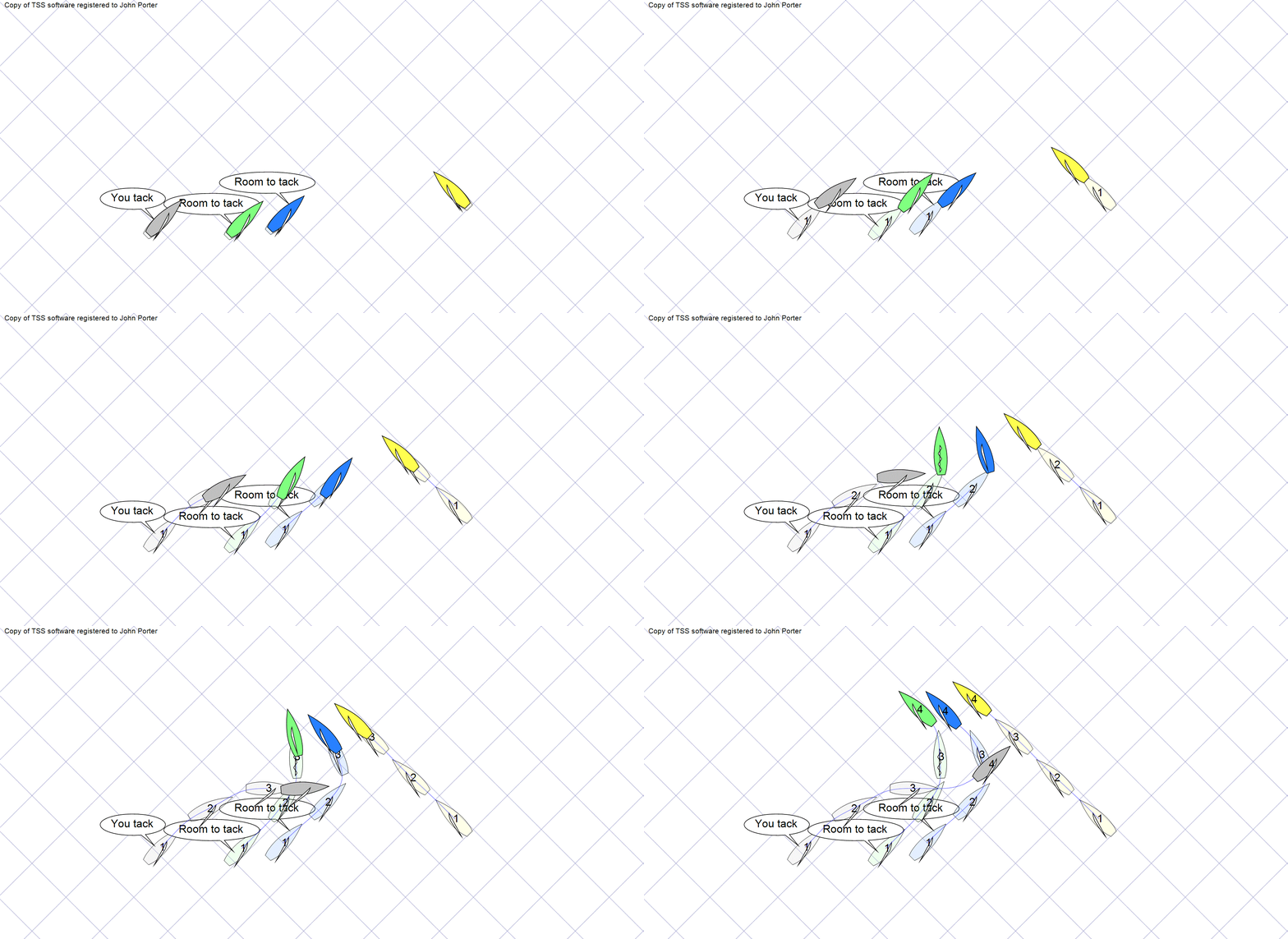
Could Green have decided to hail “You tack” in response to Blue’s hail?
Only if she could give Blue room to tack and avoid her. In the situation shown, that is not likely.
Should Grey respond to Green’s hail?
Yes. Grey was required to respond to Green’s hail, either by tacking as soon as possible or by replying “You tack.” Under rule 20.3, once Green passes on the hail, Rule 20.2 applies between Green and Grey.
Rules 19 and 20 Insights
Various cases in the World Sailing Case Book add insights to these rules. Click the links to read more.
- Case 3: A leeward port-tack boat, hailing for room to tack when faced with an oncoming starboard-tack boat, an obstruction, is not required to anticipate that the windward boat will fail to comply with her obligation to tack promptly or otherwise provide room.
- Case 10: If a boat hails for room to tack when she is neither approaching an obstruction nor sailing close-hauled or above, she breaks rule 20.1. The hailed boat is required to respond even if the hail breaks rule 20.1.
- Case 11: When boats are overlapped at an obstruction, including an obstruction that is a right-of-way boat, the outside boat must give the inside boat room to pass between her and the obstruction.
- Case 29: A leeward boat is an obstruction to an overlapped windward boat and a third boat clear astern. The boat clear astern may sail between the two overlapped boats and be entitled to room from the windward boat to pass between her and the leeward boat, provided that the windward boat has been able to give that room from the time the overlap began.
- Case 54: Interpretation of rule 20’s requirements for hails and signals and their timing.
- Case 101: When a boat with right of way is required to give another boat room for a manoeuvre, right of way does not transfer to the boat entitled to room. When, in reply to her hail ‘Room to tack’ when approaching an obstruction, a boat is hailed ‘You tack’, and when she does so and is then able to tack again to keep clear in a seamanlike way, the other boat has given the room required.
- Case 113: An explanation of the application of rule 20 when three boats sailing close-hauled on the same tack are approaching an obstruction and the leeward-most boat hails ‘Room to tack’, but cannot tack unless both boats to windward of her tack.
- Case 117: When three boats are on the same tack and two of them are overlapped and overtaking the third from clear astern, if the leeward boat astern becomes overlapped with the boat ahead, the boat ahead is no longer an obstruction, and rule 19.2(b) does not apply. There are no situations in which a row of boats sailing close to one another is a continuing obstruction.
Summary
If you remember one thing, make it this: at an obstruction, the right-of-way boat picks the side, and inside boats get room. When you need to tack away from an obstruction, say exactly “Room to tack,” and when you’re hailed, answer right away.
Rules 21-23 – Keeping Clear, Avoiding, Interfering comes next.
Related Content
- Rule 14 and Rule 15 – Avoiding Contact and Acquiring Right of Way
- Rule 17 – On the Same Tack, Proper Course
- Rule 18.1 – When Mark-Room Applies
- Rule 18.2 – Giving Mark-Room
- Rules 18.3 and 18.4 – Mark-Room 3
- Rules 21-23 – Keeping Clear, Avoiding, Interfering
- Racing Terms: Glossary for Newer Sailors
- ILYA #FairSailing Initiative
- Racing Rules of Sailing 2025-2028, Part 2, Section C – At Marks and Obstructions – World Sailing (official rule text)
- World Sailing Racing Rules of Sailing – World Sailing