
This post has been updated for the 2025-2028 Racing Rules of Sailing.
Flags, sounds, recalls and shortened courses: Part 3 is the race committee’s toolkit, and every sailor needs to read its signals.
Part 3 (Rules 25-37) of the Racing Rules of Sailing (RRS) covers the conduct of a race. These rules matter to both sailors and the race committee. This article highlights the parts most important to sailors.
In 2018, the Inland Lake Yachting Association (ILYA) and SailZing, LLC partnered on a Fair Sailing initiative. As part of this initiative, SailZing worked with the ILYA and UK Sailmakers to develop a series of articles on the rules. With the rules changes in 2025, SailZing is updating these articles for the 2025-2028 Racing Rules of Sailing.
Rule 25 – Notice of Race, Sailing Instructions and Signals
Rule 25 applies more to the race committee than to sailors. The most important part for sailors is Rule 25.1:
25.1 The notice of race shall be made available to each boat that enters an event before she enters. The sailing instructions shall be made available to each boat before a race begins.
Racing Rules of Sailing 2025-2028, Part 3 (World Sailing)
The notice of race (NoR) and sailing instructions (SIs) can change many of the rules, and some information appears only in the NoR. The take-away for sailors: read both.
Rule 26 – Starting Races
Races shall be started by using the following signals. Times shall be taken from the visual signals; the absence of a sound signal shall be disregarded.
Racing Rules of Sailing 2025-2028, Part 3 (World Sailing)
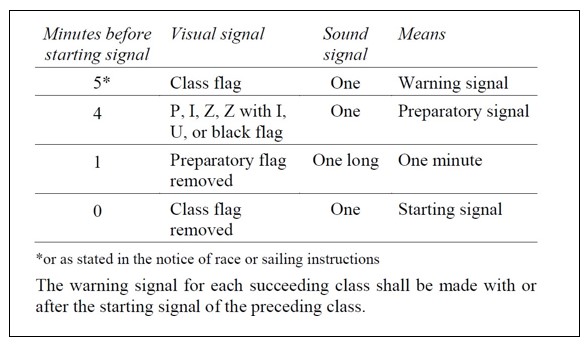
As a sailor, how do you know when the warning signal will come? Some possibilities:
- Many race committees make the warning signal at the exact time shown in the NoR, without any alert.
- Some race committees make a series of sounds as an assembly signal before the warning. This is optional and not in the rules.
- Some race committees announce on the radio when they are about to make the warning signal.
- After a postponement, the warning signal is made one minute after the postponement flag (AP) is removed. See Race Signals.
- After a general recall, the warning signal is made one minute after the general recall flag (First Substitute) is removed (Rule 29.2).
Rule 28 – Sailing the Course
28 SAILING THE COURSE
Racing Rules of Sailing 2025-2028, Part 3 (World Sailing)
28.1 A boat shall sail the course.
28.2 A boat may correct any errors in sailing the course, provided she has not finished.
Rule 28 Definitions
Start. A boat starts when, her hull having been entirely on the pre-start side of the starting line at or after her starting signal, and having complied with rule 30.1 if it applies, any part of her hull crosses the starting line from the pre-start side to the course side.
Finish. A boat finishes when, after her starting signal, any part of her hull crosses the finishing line from the course side. However, she has not finished if after crossing the finishing line she
(a) takes a penalty under rule 44.2,
(b) corrects an error in sailing the course made at the line, or
(c) continues to sail the course.
After finishing she need not cross the finishing line completely. The sailing instructions may change the direction in which boats are required to cross the finishing line to finish.
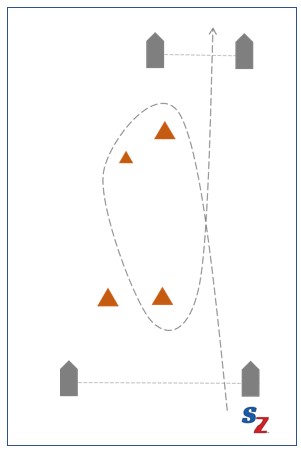
Sail the Course. A boat sails the course when
(a) she starts;
(b) a string representing her track until she finishes, when drawn taut,
(1) passes each mark of the course for the race on the required side and in the correct order (including the starting marks),
(2) touches each mark designated in the sailing instructions to be a rounding mark, and
(3) passes between the marks of a gate from the direction of the course from the previous mark; and then
(c) she finishes.
A mark that does not begin, bound or end the leg the boat is sailing does not have a required side.
Rule 28 Changes and Key Points
- For 2025-2028, Rule 28 is much shorter: a boat shall sail the course, and may correct errors until she finishes.
- The definition Sail the Course now includes starting and finishing, plus the “string” test.
- A boat now finishes “after her starting signal,” so she doesn’t have to have started to finish. But if she didn’t start, she hasn’t sailed the course.
- A mark that doesn’t begin, bound or end your leg doesn’t have a required side. That sentence moved from Rule 28 into the definition.
Why the Change?
Optional reading. Skip ahead to Rule 30 if you like.
Rule 28, Sail the Course and Finish. These changes came from Submission 010-23 (Proposals (a), (e) and (f), as amended), from the Chair of the Racing Rules Committee. Its purpose: “Improve the definition of sailing the course to one that is generally understood by sailors.” Its reasons:
- “Makes the definition of sailing the course include the need to start and to finish. This is how most sailors understand the term.”
- “This simplifies other rules in that the changed definition of sail the course now means that a boat that does not start or finish has not sailed the course.”
The Study Version ties the “after her starting signal” wording in Finish to Submission 002-22 (as edited). The effect: a boat can finish without having started.
Sources: World Sailing, 2023 Submissions (010-23); World Sailing, Study Version of the RRS 2025-2028 (change comments).
Rule 30 – Starting Penalties
30.1 I Flag Rule
Racing Rules of Sailing 2025-2028, Part 3 (World Sailing)
If flag I has been displayed, and any part of a boat’s hull is on the course side of the starting line or one of its extensions during the last minute before her starting signal, she shall sail across an extension so that her hull is completely on the pre-start side before she starts.

30.2 Z Flag Rule
Racing Rules of Sailing 2025-2028, Part 3 (World Sailing)
If flag Z has been displayed, no part of a boat’s hull shall be in the triangle formed by the ends of the starting line and the first mark during the last minute before her starting signal. If a boat breaks this rule and is identified, she shall receive, without a hearing, a 20% Scoring Penalty calculated as stated in rule 44.3(c). She shall be penalized even if the race is restarted or resailed, but not if it is postponed or abandoned before the starting signal. If she is similarly identified during a subsequent attempt to start the same race, she shall receive an additional 20% Scoring Penalty.

30.3 U Flag Rule
Racing Rules of Sailing 2025-2028, Part 3 (World Sailing)
If flag U has been displayed, no part of a boat’s hull shall be in the triangle formed by the ends of the starting line and the first mark during the last minute before her starting signal. If a boat breaks this rule and is identified, she shall be disqualified without a hearing, but not if the race is restarted or resailed.
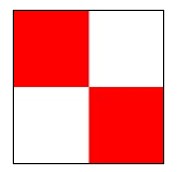
30.4 Black Flag Rule
Racing Rules of Sailing 2025-2028, Part 3 (World Sailing)
If a black flag has been displayed, no part of a boat’s hull shall be in the triangle formed by the ends of the starting line and the first mark during the last minute before her starting signal. If a boat breaks this rule and is identified, she shall be disqualified without a hearing, even if the race is restarted or resailed, but not if it is postponed or abandoned before the starting signal. If a general recall is signalled or the race is abandoned after the starting signal, the race committee shall display her sail number before the next warning signal for that race, and if the race is restarted or resailed she shall not sail in it. If she does so, her disqualification shall not be excluded in calculating her series score.

Rule 30 is unchanged for 2025-2028.
Rule 30 Questions
Read each question and decide your answer. Then reveal the answer to check your thinking.
#1 – Z Flag and I Flag
The race committee displayed both a Z flag and an I flag at the preparatory signal. Immediately after the start, the race committee signals an individual recall and hails your number.
What must you do to start properly? How will your score for the race be determined?
Under rule 30.1 (I flag), you must sail across an extension of the line (around an end of the line) before starting. Under rule 30.2 (Z flag), you will receive a 20% Scoring Penalty calculated as stated in rule 44.3(c). Unless the NoR or SIs state a number of points, that is 20% of the score for Did Not Finish, rounded to the nearest tenth of a point, added to your finishing score.
#2 – U Flag
The race committee displayed a U flag at the preparatory signal. Five seconds before the start, your hull is in the triangle formed by the ends of the starting line and the first mark.
If the race committee then restarts the same race, are you still disqualified?
No. If the race committee restarts the race, for a general recall or any other reason, you are not disqualified (rule 30.3). The U flag rule gives a less severe penalty than the black flag.
#3 – Black Flag
The race committee displayed a black flag at the preparatory signal. Thirty seconds before the start, the race committee identifies your boat in the triangle formed by the ends of the starting line and the first mark.
If the race committee signals a general recall and restarts the race, are you still disqualified?
Yes. If you are identified in the triangle formed by the ends of the starting line and the first mark during the last minute, you are disqualified without a hearing (scored BFD) under rule 30.4. After a general recall, the race committee will display your sail number before the next warning signal, and you may not sail in the restarted race.
Rule 31 – Touching a Mark
While racing, a boat shall not touch a starting mark before starting, a mark that begins, bounds or ends the leg of the course on which she is sailing, or a finishing mark after finishing.
Racing Rules of Sailing 2025-2028, Part 3 (World Sailing)
Rule 31 Key Points
- Under rule 44.1, you may take a One-Turn Penalty when you may have broken Rule 31, unless the NoR or SIs specify another penalty.
- Rule 31 is unchanged for 2025-2028.
Rule 31 Questions
Read each question and decide your answer. Then reveal the answer to check your thinking.
#1 – Anchor Line
When rounding a mark, your rudder touches the mark’s anchor line, but the mark itself never touches any part of the boat.
Does this break Rule 31?
No. If you touch the anchor line but not the mark, you have not broken Rule 31. The definition Mark says an anchor line is not part of the mark.
#2 – Offset Mark
You accidentally touch the offset mark while sailing upwind toward the windward mark. (You have not yet rounded the windward mark.)
Does this break Rule 31?
No, if the offset mark does not bound the leg you are sailing. Rule 31 says, in part: “a mark that begins, bounds or ends the leg of the course on which she is sailing.” On the upwind leg, the offset mark doesn’t begin, bound or end your leg until you have rounded the windward mark.
Rule 32 – Shortening or Abandoning after the Start
32.1 After the starting signal, the race committee may shorten the course or abandon the race:
Racing Rules of Sailing 2025-2028, Part 3 (World Sailing)
(a) because of foul weather,
(b) because of insufficient wind making it unlikely that any boat will sail the course within the race time limit,
(c) because a mark is missing or out of position, or
(d) for any other reason directly affecting the safety or fairness of the competition.
In addition, the race committee may shorten the course so that other scheduled races can be sailed, or abandon the race because of an error in the starting procedure. However, after one boat has sailed the course within the race time limit, if any, the race committee shall not abandon the race without considering the consequences for all boats in the race or series.
32.2 To shorten the course, the race committee shall display flag S with two sounds before the first boat crosses the finishing line. If the course is shortened, the finishing line shall be,
(a) at a rounding mark, between the mark and a staff displaying flag S;
(b) a line the course requires boats to cross; or
(c) at a gate, between the gate marks.
32.3 To abandon a race in progress, the race committee shall display flag N, N over H, or N over A, with three sounds.

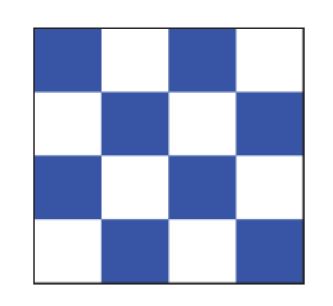
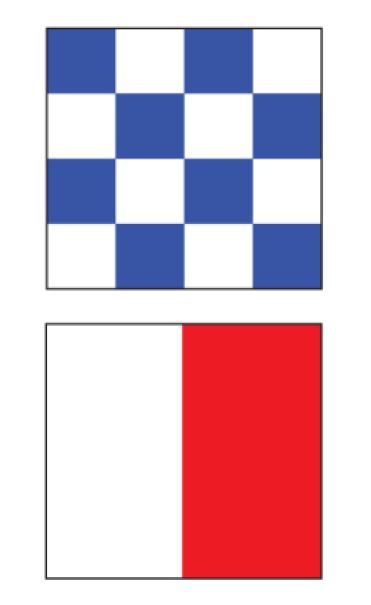

For 2025-2028, the signals moved out of 32.1: flag S is now in 32.2 and the abandonment flags are in a new 32.3. Rule 32.1(b) now refers to sailing the course within the time limit.
Rule 32 Questions
Read each question and decide your answer. Then reveal the answer to check your thinking.
#1 – Shortened at the Windward Mark
You are sailing upwind towards the windward mark. The race committee displays flag S with two sounds.
Where should you look for the finishing line?
First, look for the S flag. If the race committee shortens the course to finish at the windward mark, the finishing line will be between the windward mark and the staff displaying flag S (32.2(a)). The race committee may instead set a line the course requires boats to cross before the windward mark (32.2(b)).
#2 – Shortened at the Leeward Gate
You are sailing downwind towards the leeward gate marks. The race committee displays flag S with two sounds.
Where should you look for the finishing line?
First, look for the S flag. If the race committee shortens the course to finish at the leeward gate, the finishing line will be between the gate marks (32.2(c)). If there is no gate (a single leeward mark), the finishing line will be between the mark and the staff displaying flag S (32.2(a)).
Rule 33 – Changing the Next Leg of the Course
While boats are racing, the race committee may change a leg of the course that begins at a rounding mark or at a gate by changing the position of the next mark (or the finishing line) and signalling all boats before they begin the leg. The next mark need not be in position at that time.
Racing Rules of Sailing 2025-2028, Part 3 (World Sailing)
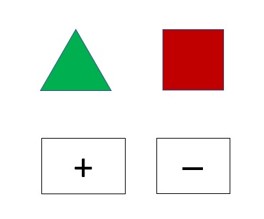
(a) If the direction of the leg will be changed, the signal shall be the display of flag C with repetitive sounds and one or both of
(1) the new compass bearing,
(2) a green triangle for a change to starboard or a red rectangle for a change to port.
(b) If the length of the leg will be changed, the signal shall be the display of flag C with repetitive sounds and a ‘–’ if the length will be decreased or a ‘+’ if it will be increased.
(c) Subsequent legs may be changed without further signalling to maintain the course shape.

Rule 37 – Search and Rescue Instructions
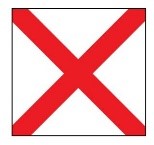
When the race committee displays flag V with one sound, all boats and official and support vessels shall, if possible, monitor the race committee communication channel for search and rescue instructions.
Racing Rules of Sailing 2025-2028, Part 3 (World Sailing)
Conduct of a Race Insights
Various cases in the World Sailing Case Book add insights to these rules. Click the links to read more.
- Case 65: When a boat knows that she has broken the Black Flag rule, she is obliged to retire promptly. When she does not do so and then deliberately hinders another boat in the race, she commits a breach of sportsmanship and of rule 2, and her helmsman commits an act of misconduct.
- Case 96: When after a general recall a boat learns from seeing her sail number displayed that she has been disqualified by the race committee under the second sentence of rule 30.4 and believes the race committee has made a mistake, her only option is not to start, and then to seek redress. However, if the race committee does not display her sail number and she sails in the restarted race, she should be scored BFD, and not DNE.
- Case 129: When the course is shortened at a rounding mark, the mark becomes a finishing mark. Rule 32.2(a) permits the race committee to position the vessel displaying flag S at either end of the finishing line. A boat must cross the line in accordance with the definition Finish, even if in so doing she leaves that mark on the side opposite the side on which she would have been required to leave it if the course had not been shortened.
Summary
If you remember one thing, make it this: read the NoR and SIs, know your starting-penalty flags (I, Z, U, black), and when you see flag S, look for the finishing line at the next mark or gate.
Related Content
- Racing Terms: Glossary for Newer Sailors
- ILYA #FairSailing Initiative
- Racing Rules of Sailing 2025-2028, Part 3 – Conduct of a Race – World Sailing (official rule text)
- World Sailing Racing Rules of Sailing – World Sailing