This post has been updated for the 2025-2028 Racing Rules of Sailing.
You’ve just tacked, so you’re on starboard and have right of way, right? Not until you’ve finished the tack.
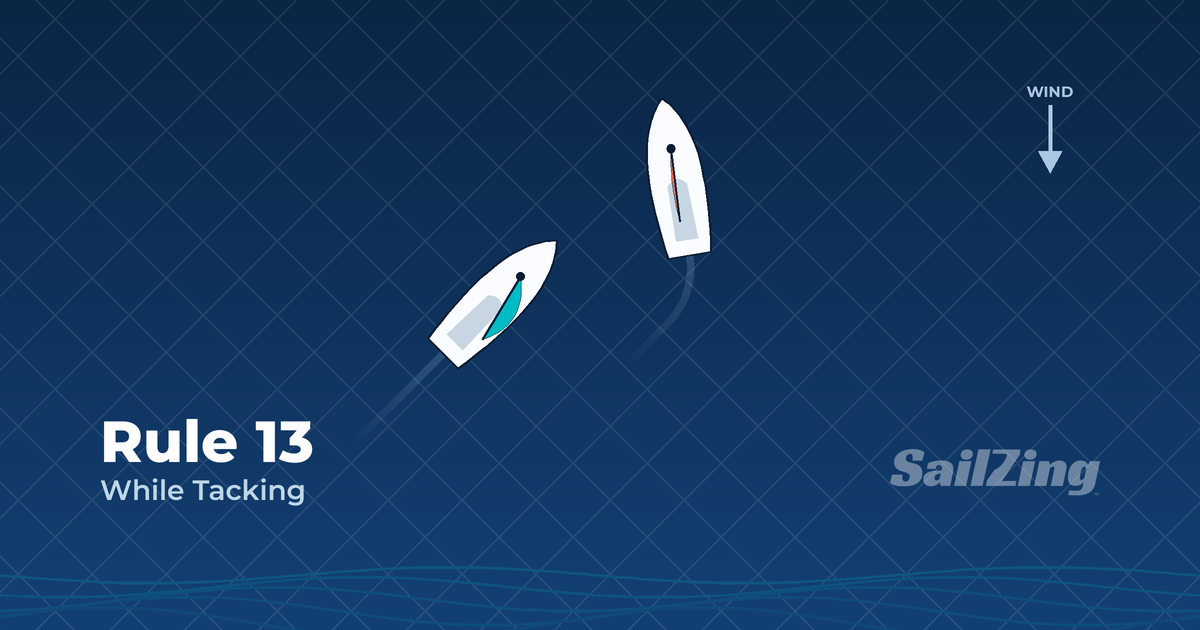
Rule 13 – While Tacking is the fourth and final right-of-way rule in Part 2, Section A of the Racing Rules of Sailing (RRS). This post covers what you need to know about Rule 13, with the rule text, definitions, animations, a quiz on each scenario, and a link to the World Sailing Case Book.
In 2018, the Inland Lake Yachting Association (ILYA) and SailZing, LLC partnered on a Fair Sailing initiative. As part of this initiative, SailZing worked with the ILYA and UK Sailmakers to develop a series of articles on the rules. With the rules changes in 2025, SailZing is updating these articles for the 2025-2028 Racing Rules of Sailing.
Our thanks to UK Sailmakers for generating the animated scenarios.
Rule 13 – While Tacking
13 WHILE TACKING
Racing Rules of Sailing 2025-2028, Part 2, Section A (World Sailing)
After a boat passes head to wind, she shall keep clear of other boats until she is on a close-hauled course. During that time rules 10, 11 and 12 do not apply. If two boats are subject to this rule at the same time, the one on the other’s port side or the one astern shall keep clear.
There were no changes to Rule 13, or to the definitions it uses, for 2025-2028.
What Rule 13 Means in Plain Words
- When it starts: the moment your bow passes head to wind (pointing straight into the wind). Before that, you are still on your old tack and the normal right-of-way rules apply.
- When it ends: when you are on a close-hauled course, the heading you would sail when beating upwind on the new tack. It is about where the boat is pointing, not whether the sails are trimmed in yet.
- In between, you keep clear of everyone. While Rule 13 applies, Rule 10, Rule 11 and Rule 12 are switched off. Even if you’re heading onto starboard, you have no right of way until you reach close-hauled.
- Two boats tacking at once: the boat on the other’s port (left) side, or the boat astern, must keep clear. Many sailors remember this as “the boat on the right wins.”
- After the tack, give room. Once you reach close-hauled you may have right of way again, but you got it through your own action. Rule 15 then says you must initially give the other boat room to keep clear (see Case 27 below).
Definitions
Keep Clear. A boat keeps clear of a right-of-way boat
(a) if the right-of-way boat can sail her course with no need to take avoiding action and,
(b) when the boats are overlapped, if the right-of-way boat can also change course in both directions without immediately making contact.
Tack, Starboard or Port. A boat is on the tack, starboard or port, corresponding to her windward side.
“Head to wind” and “close-hauled” are not defined terms in the rulebook. They have their ordinary sailing meanings, explained above.
Rule 13 Key Points
- The rule says “until she is on a close-hauled course.” That refers to the course (heading) of the boat, not whether the sails are trimmed.
- If two boats are tacking at the same time, the last sentence means, “boat on the right wins.”
- Related 2025 change: Rule 17 lost its old last sentence, which switched Rule 17 off when an overlap began while the windward boat was tacking. Now, if a boat from clear astern becomes overlapped to leeward of a boat that has just tacked, she may not sail above her proper course while Rule 17 applies.
Rule 13 Insights
The World Sailing Case Book adds insights to this rule. Click the link to read more.
- Case 27: A boat is not required to anticipate that another boat will break a rule. When a boat acquires right of way as a result of her own actions, the other boat is entitled to room to keep clear. In the case, a boat that tacked close ahead and to leeward broke Rule 13 while tacking, then Rule 15 once she reached close-hauled. The boat that hit her was not penalized, because she had no time to avoid the collision.
Rule 13 Scenarios
For each scenario, read the description, watch the animation, and choose your answer. Then reveal the answer to check your thinking.
#1 – “Tacking too Close”
Description: Blue and Yellow are sailing upwind. Blue tacks. During Blue’s tack, Yellow heads up to avoid Blue. There was no contact. Yellow alleges Blue broke Rule 13. Blue alleges she kept clear.
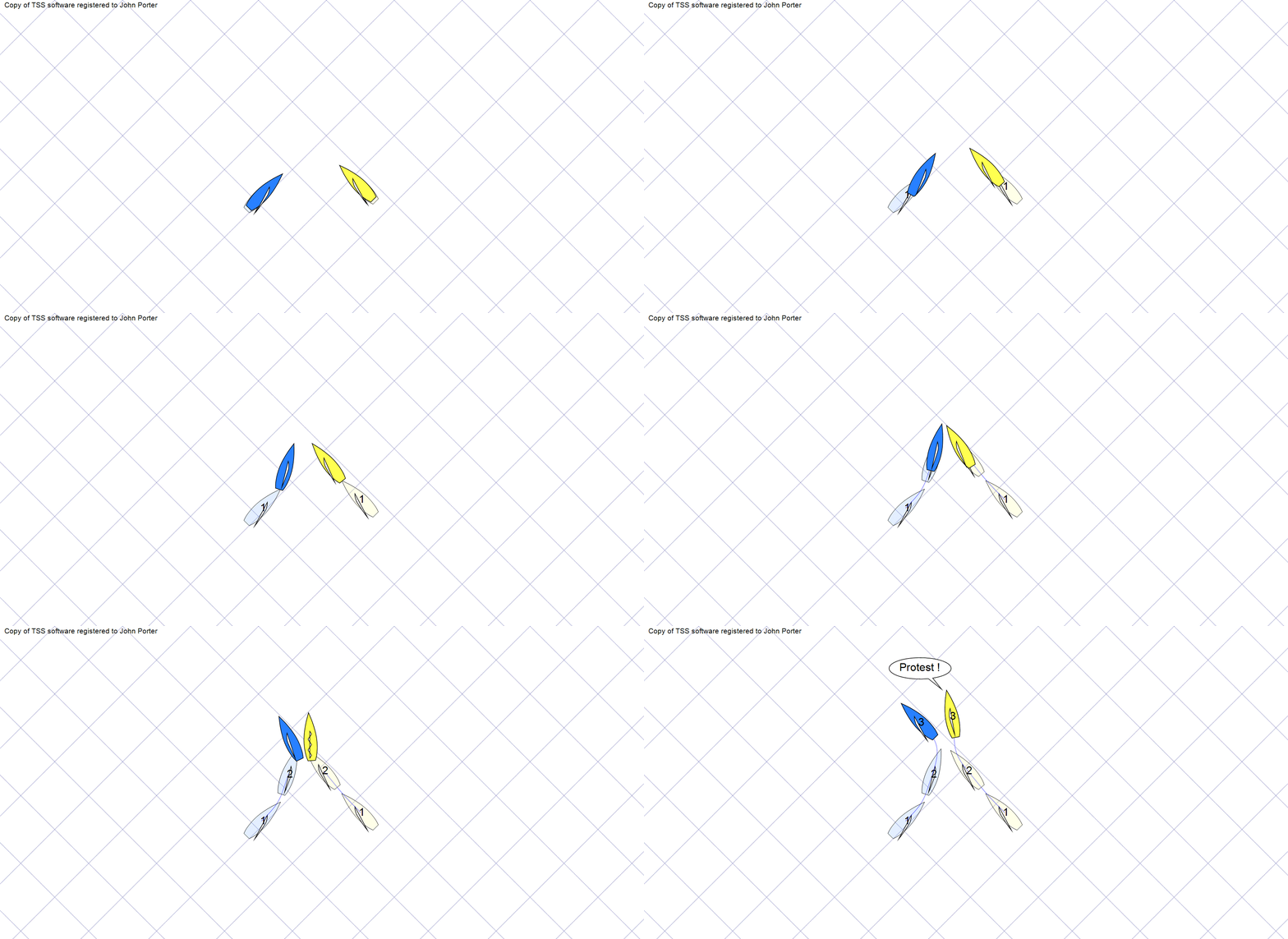
Which boat(s) should promptly take a penalty?
Blue should take a penalty. Rule 13 requires Blue to keep clear of other boats until she is on a close-hauled course. Under the definition Keep Clear, Yellow must be able to sail her course with no need to take avoiding action. Yellow had to head up to avoid Blue, so Blue did not keep clear between the time she passed head to wind and the time she was on a close-hauled course.
#2 – “Tacking too Close”
Description: This situation is similar to #1 above, except that this time, Blue begins her tack earlier. However, during Blue’s tack, Yellow again heads up to avoid Blue. There was no contact. Yellow alleges Blue broke Rule 13. Blue alleges she kept clear.
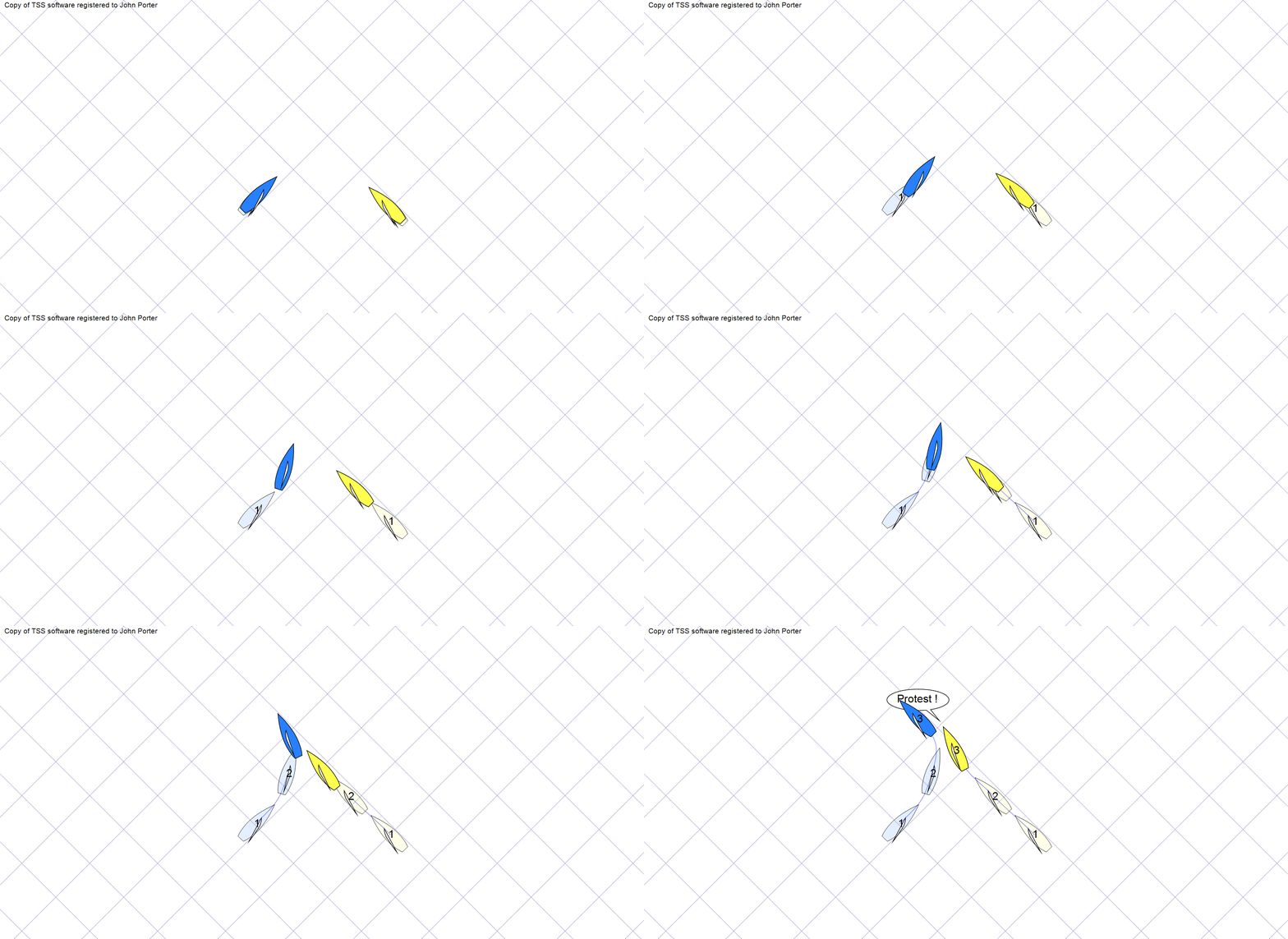
Which boat(s) should promptly take a penalty?
Blue should take a penalty. Even though Blue started her tack earlier than in Scenario #1, if you look closely at the animation, Blue still did not keep clear between the time she passed head to wind and the time she was on a close-hauled course. She broke Rule 13.
#3 – “Tacking and Luffing on the Starting Line”
Description: At the starting line, Blue tacks to leeward of Yellow and hails Yellow to “keep it up.” Yellow changes course, but alleges Blue broke rule 13. Blue claims she kept clear while tacking and was on starboard when Yellow changed course.
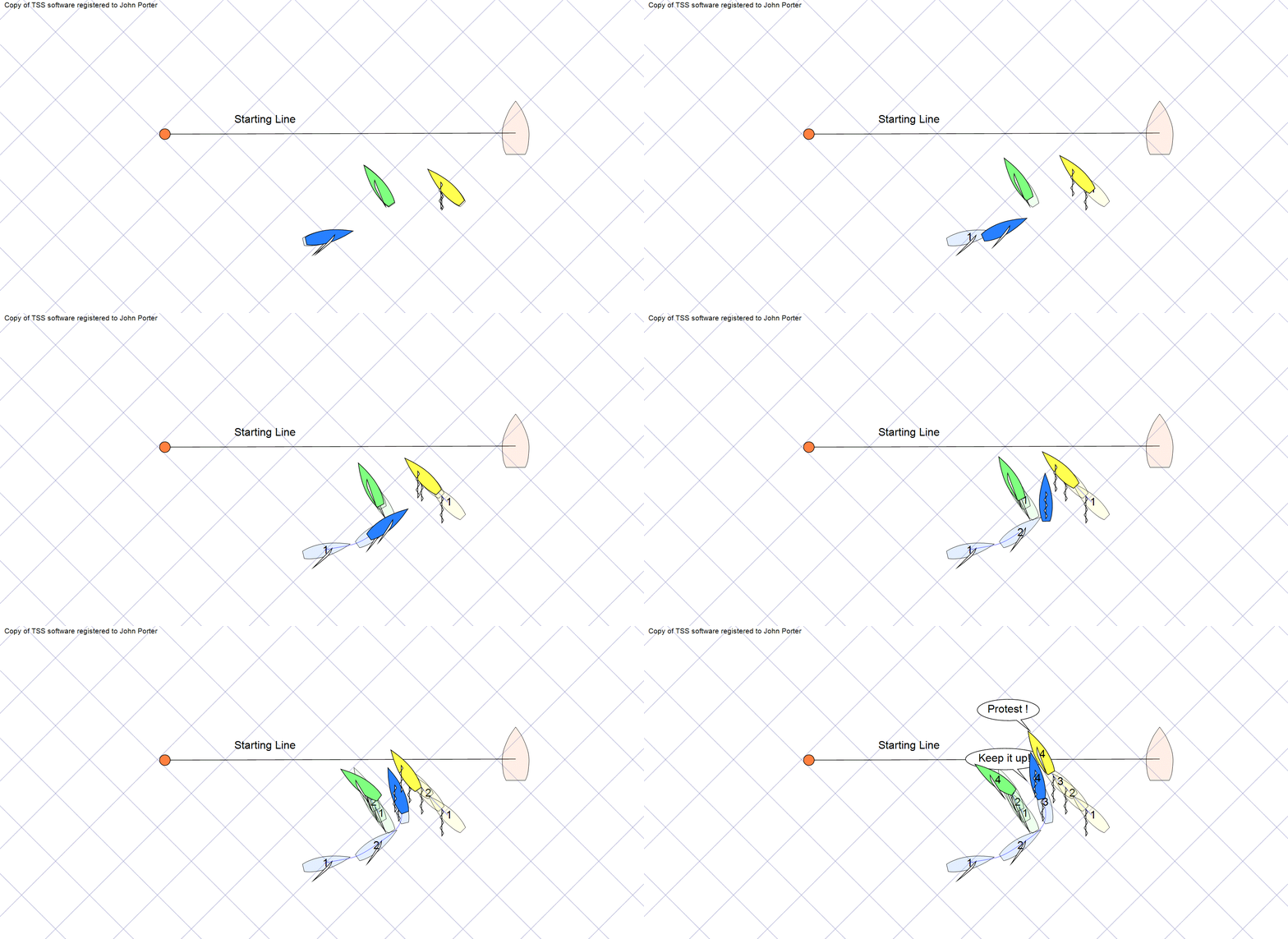
Which boat(s) should promptly take a penalty?
Blue should take a penalty. Blue did not reach a close-hauled course after passing head to wind, so Rule 13 still applied when Yellow changed course. Blue failed to keep clear. Being on starboard is not enough: until she is close-hauled, a tacking boat has no right of way, and hailing does not change that.
#4 – “Tacking and Luffing on the Starting Line”
Description: At the starting line, Blue tacks to starboard and immediately luffs. Yellow changes course, but alleges Blue broke rule 13. Blue claims she kept clear while tacking and was on starboard when Yellow changed course.
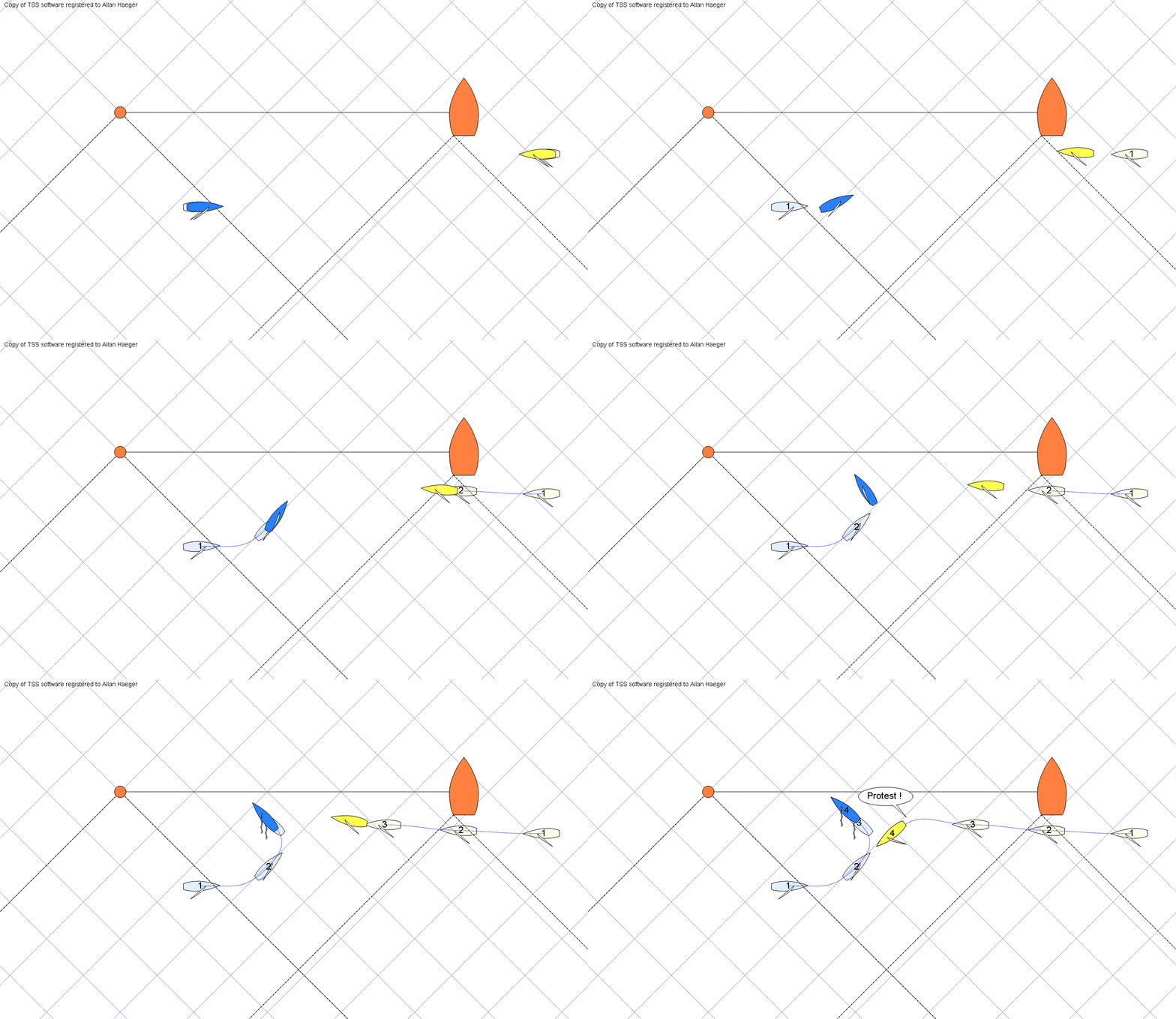
Which boat(s) should promptly take a penalty?
No boat should take a penalty. Rule 13 says, in part: “After a boat passes head to wind, she shall keep clear of other boats until she is on a close-hauled course.”
Blue did reach a close-hauled course after passing head to wind. Note that Rule 13 requires keeping clear until you are on a close-hauled course, not until your sails are trimmed.
Once Blue was on a close-hauled course, Rule 13 no longer applied, and she had right of way, either as the leeward boat under Rule 11 or as the boat clear ahead under Rule 12. Because she acquired right of way by her own action, Rule 15 required her to initially give Yellow room to keep clear (Case 27). When she luffed, Rule 16.1 required the same. Yellow was able to keep clear, so Blue met both rules.
#5 – “Simultaneous Tacks”
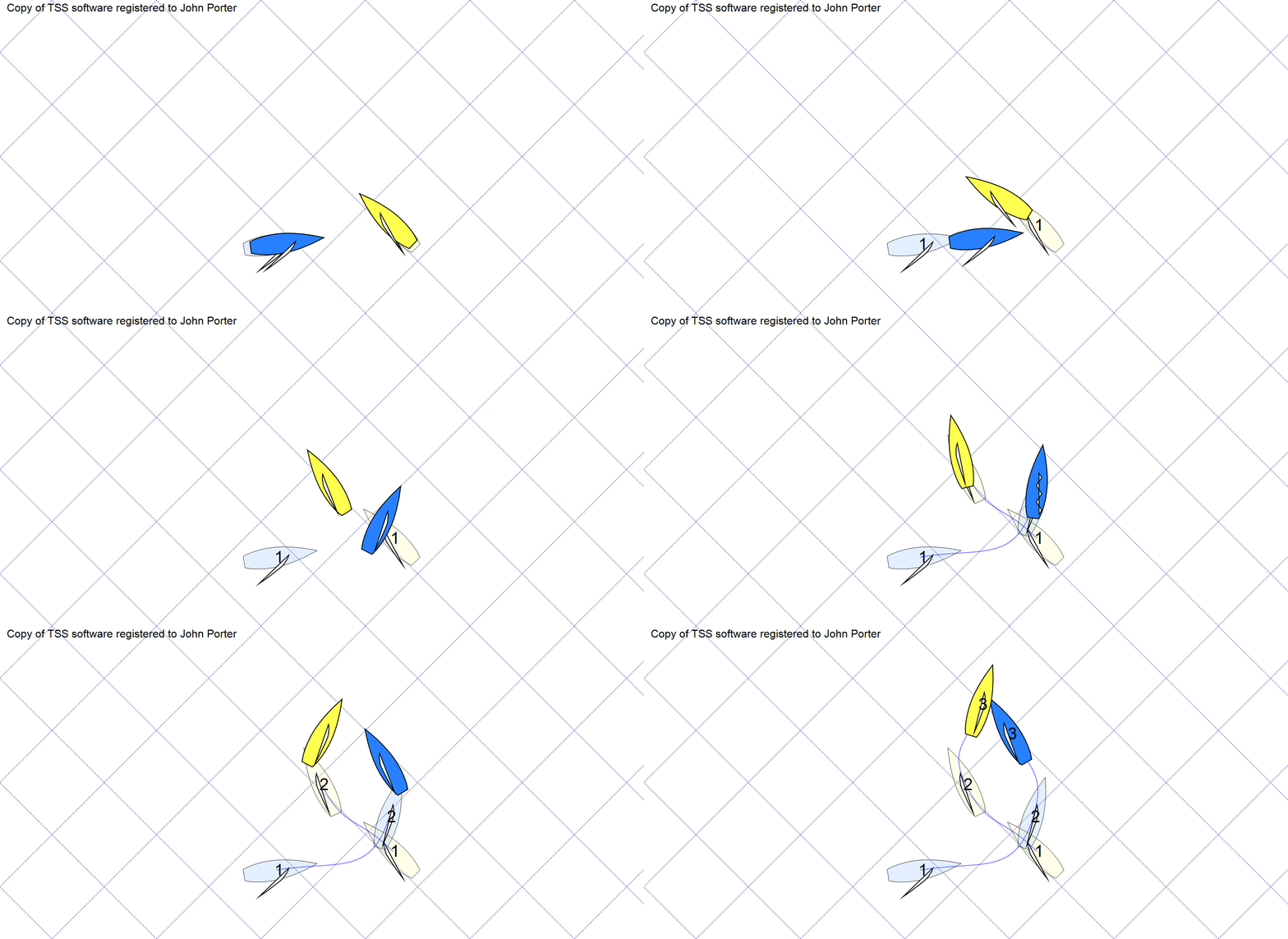
Description: Blue tacks, and Yellow also begins a tack. At contact (position 3), the boats are overlapped, with Yellow on Blue’s port side. Both boats allege the other broke Rule 13.
Which boat(s) should promptly take a penalty?
Yellow should take a penalty. Both boats were tacking when contact occurred, since neither had reached a close-hauled course. Rule 13 says, in part: “If two boats are subject to this rule at the same time, the one on the other’s port side or the one astern shall keep clear.”
Since both boats were tacking, and Yellow is on Blue’s port side, and neither boat is astern of the other, Yellow was required to keep clear.
Summary
If you remember one thing, make it this: from head to wind until you’re close-hauled, you have no right of way. Finish the tack before you expect anyone to keep clear of you, and then give them room to respond.
If two boats tack at the same time, the boat on the other’s starboard (right) side has right of way.
Rule 14 and Rule 15 – Avoiding Contact and Acquiring Right of Way comes next.
Related Content
- Rule 10 – On Opposite Tacks
- Rule 11 – On the Same Tack, Overlapped
- Rule 12 – On the Same Tack, Not Overlapped
- Rule 14 and Rule 15 – Avoiding Contact and Acquiring Right of Way
- Racing Terms: Glossary for Newer Sailors
- ILYA #FairSailing Initiative
- Racing Rules of Sailing 2025-2028, Part 2, Section A – Right of Way – World Sailing (official rule text)
- World Sailing Racing Rules of Sailing – World Sailing