This post has been updated for the 2025-2028 Racing Rules of Sailing.
Port tack, starboard tack: who has to get out of the way? It’s the first right-of-way rule every racer learns, and it settles more crossings than any other.
Rule 10 – On Opposite Tacks is the first rule in Part 2, Section A of the Racing Rules of Sailing (RRS). This post covers what you need to know about Rule 10, with the rule text, definitions, animations, and a quiz on each scenario.
In 2018, the Inland Lake Yachting Association (ILYA) and SailZing, LLC partnered on a Fair Sailing initiative. As part of this initiative, SailZing worked with the ILYA and UK Sailmakers to develop a series of articles on the rules. With the rules changes in 2025, SailZing is updating these articles for the 2025-2028 Racing Rules of Sailing.
Our thanks to UK Sailmakers for generating the animated scenarios.
Racing Rules of Sailing, Part 2
RRS Part 2 is titled “When Boats Meet.” Part 2, Section A covers right of way and begins with this preamble:
A boat has right of way over another boat when the other boat is required to keep clear of her. However, some rules in Sections B, C and D limit the actions of a right-of-way boat.
Racing Rules of Sailing 2025-2028, Part 2, Section A (World Sailing)
The rules in Section A (Rules 10-13) decide which boat has right of way in four situations. In this article, we’ll cover the first one, Rule 10, plus the definitions of the words in italics that it uses. (Words in italics are defined terms in the rulebook.) Then we’ll work through five scenarios.
Rule 10 – On Opposite Tacks
10 ON OPPOSITE TACKS
Racing Rules of Sailing 2025-2028, Part 2, Section A (World Sailing)
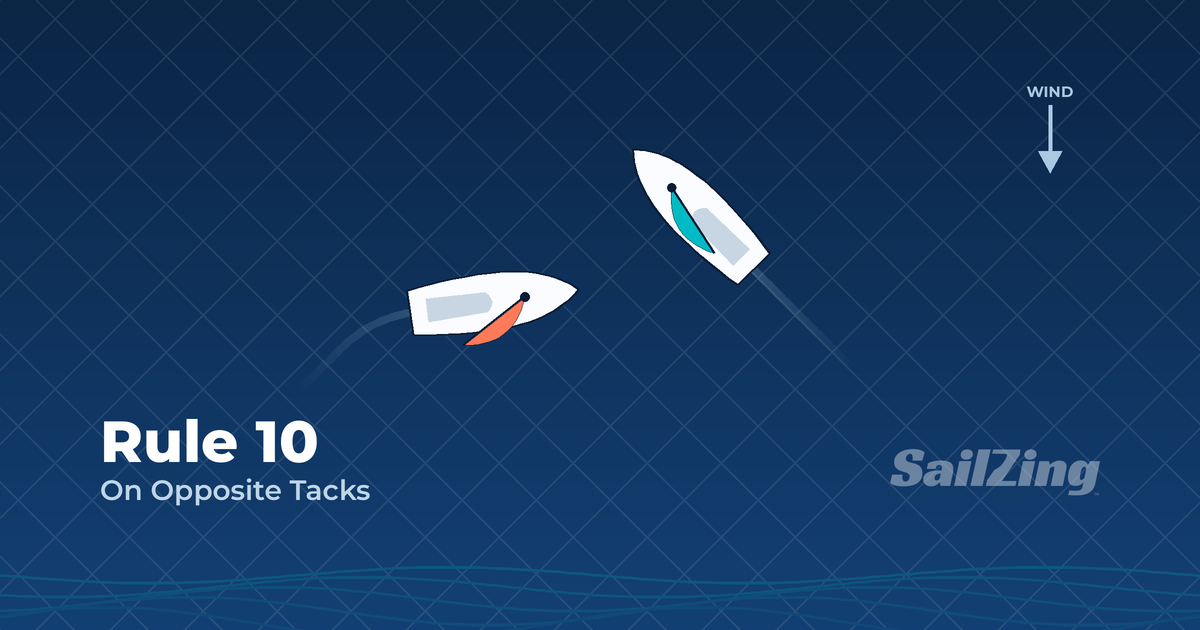
When boats are on opposite tacks, a port-tack boat shall keep clear of a starboard-tack boat.
There were no changes to Rule 10, or to the definitions it uses, for 2025-2028.
What Rule 10 Means in Plain Words
- Port keeps clear of starboard. If the boats are on opposite tacks, the port-tack boat must stay out of the starboard-tack boat’s way. The starboard-tack boat has right of way.
- Which tack am I on? Your tack is named for your windward side, the side the wind is coming from. Wind coming over the starboard (right) side means you’re on starboard tack. A quick check: your boom is normally out on the side opposite your tack, so a boom out to port (left) usually means starboard tack.
- Watch out when sailing by the lee. When you sail downwind by the lee (the wind coming over the same side the mainsail is on), the quick boom check fails. The definitions say your windward side is then the side opposite your mainsail, so you may be on a different tack than your boom suggests. Scenario #3 shows how this plays out.
- It applies on every point of sail. Upwind, reaching or downwind, if the boats are on opposite tacks, Rule 10 applies. Rules 11 and 12 (about overlaps, leeward and windward boats, and boats clear astern) apply only to boats on the same tack.
- “Keep clear” means more than “don’t hit.” The starboard boat must be able to sail her course without needing to take avoiding action (see the definition below). If she has to duck or tack to avoid you, you haven’t kept clear, even with no contact.
- Right of way has limits. The starboard boat still has to avoid contact if reasonably possible (Rule 14), and if she changes course she must give the port boat room to keep clear (Rule 16).
Definitions
Tack, Starboard or Port. A boat is on the tack, starboard or port, corresponding to her windward side.
Keep Clear. A boat keeps clear of a right-of-way boat
(a) if the right-of-way boat can sail her course with no need to take avoiding action and,
(b) when the boats are overlapped, if the right-of-way boat can also change course in both directions without immediately making contact.
Leeward and Windward. A boat’s leeward side is the side that is or, when she is head to wind, was away from the wind. However, when sailing by the lee or directly downwind, her leeward side is the side on which her mainsail lies. The other side is her windward side. When two boats on the same tack overlap, the one on the leeward side of the other is the leeward boat. The other is the windward boat.
Rule 10 Insights
The World Sailing Case Book adds insights to this rule. You can search all cases on the racingrulesofsailing.org cases page.
- Case 50: In a port-starboard incident with no contact, the starboard-tack boat (S) doesn’t have to hold her course and hit the port-tack boat (P) to prove a collision was coming. If she did, she would break Rule 14. P must keep clear (Rule 10), which means S must be able to sail her course with no need to take avoiding action. If S changed course and there was reasonable doubt that P could have crossed ahead, P should be disqualified. If S didn’t change course and had no genuine and reasonable apprehension of collision, the protest committee should dismiss her protest.
Rule 10 Scenarios
For each scenario, read the description, watch the animation, and choose your answer. Then reveal the answer to check your thinking.
#1 – “I got scared”
Description: Blue and Green are sailing upwind and will collide if they maintain their courses. At about 1 boat length apart, Blue had not reacted in any way. Green started to tack to avoid a collision, after which Blue bore off. There was no contact. Blue protested Green, claiming that Green had changed course, breaking Rule 16. Green protested Blue for not keeping clear.
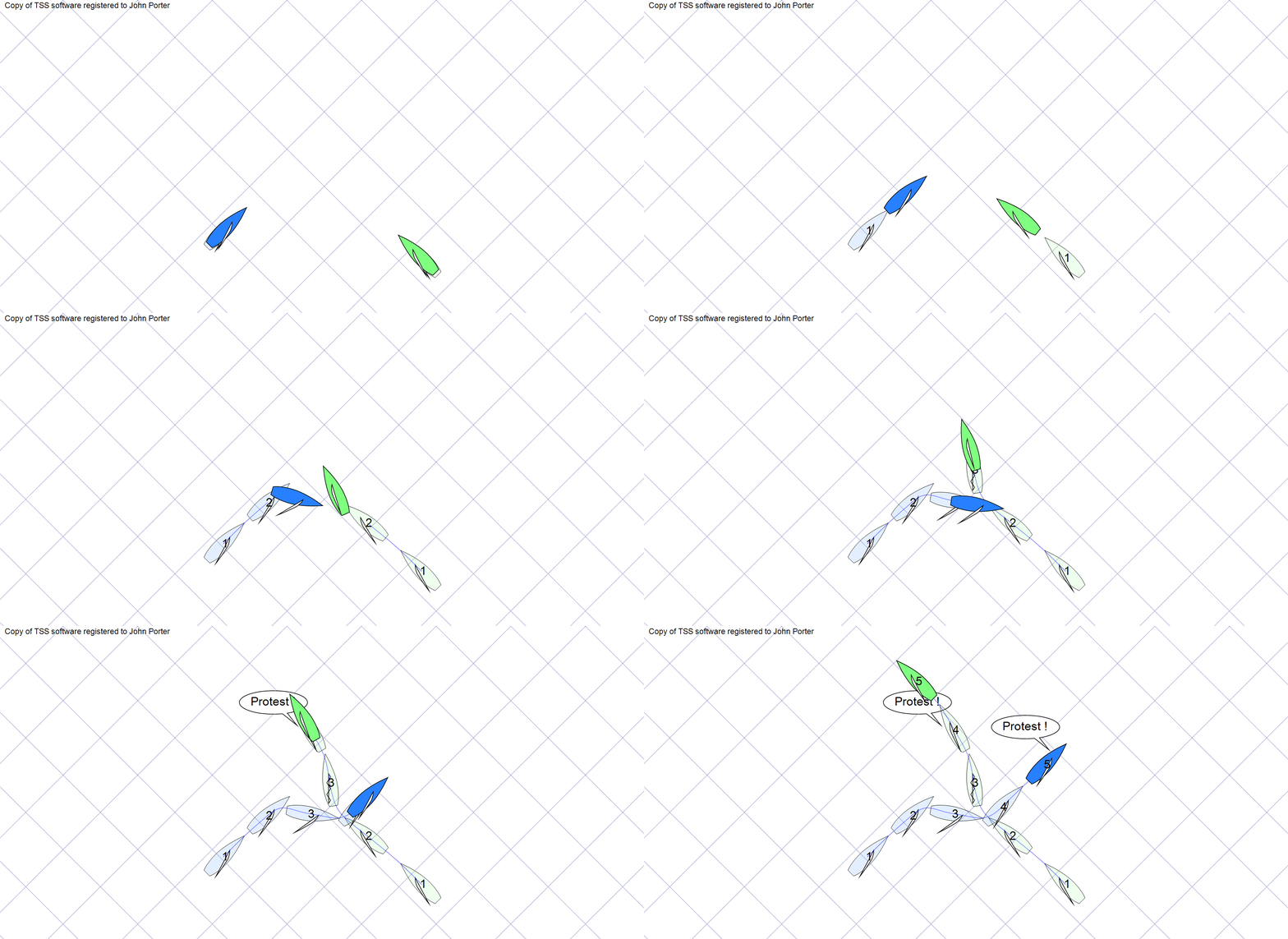
Which boat(s) should promptly take a penalty?
Blue should take a penalty. Blue (on port) did not keep clear of Green (on starboard), so Blue broke Rule 10. Once it was clear that Blue was not keeping clear, Rule 14 required Green to act to avoid a collision if reasonably possible, and she did by starting to tack. Green did not break Rule 16: her change of course was caused by Blue’s failure to keep clear under Rule 10.
#2 – “Tack or cross?”
Description: Red and Green are sailing upwind. Red asks permission to cross, and Green replies, “cross.” Green then ducks Red. A third boat, not involved in the situation, protests Red for not keeping clear of Green.
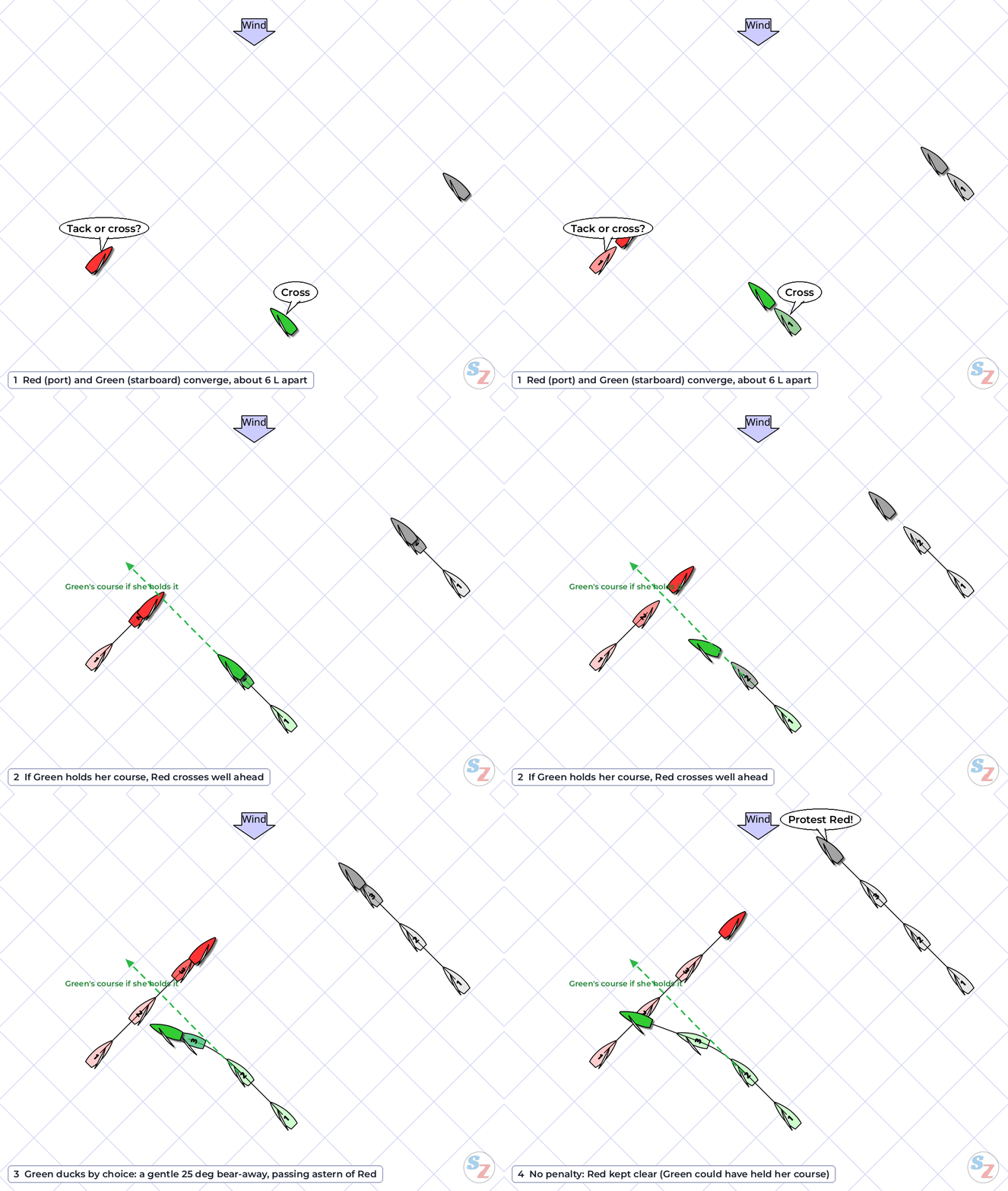
Which boat(s) should promptly take a penalty?
No boat should take a penalty. Red kept clear (rule 10: “When boats are on opposite tacks, a port-tack boat shall keep clear of a starboard-tack boat”). By the definition Keep Clear, (a): “the right-of-way boat can sail her course with no need to take avoiding action”. Green could have held her course, so her duck was not avoiding action. If Green had needed to change course to avoid Red, Red would not have kept clear and should take a penalty.
#3 – “Coming together downwind – by the lee”
Description: Blue and Yellow are sailing downwind by the lee, with the wind coming over the same side of the boat that the sail is on. The boats collide, with no damage. Both boats protest, each claiming the other violated Rule 10.
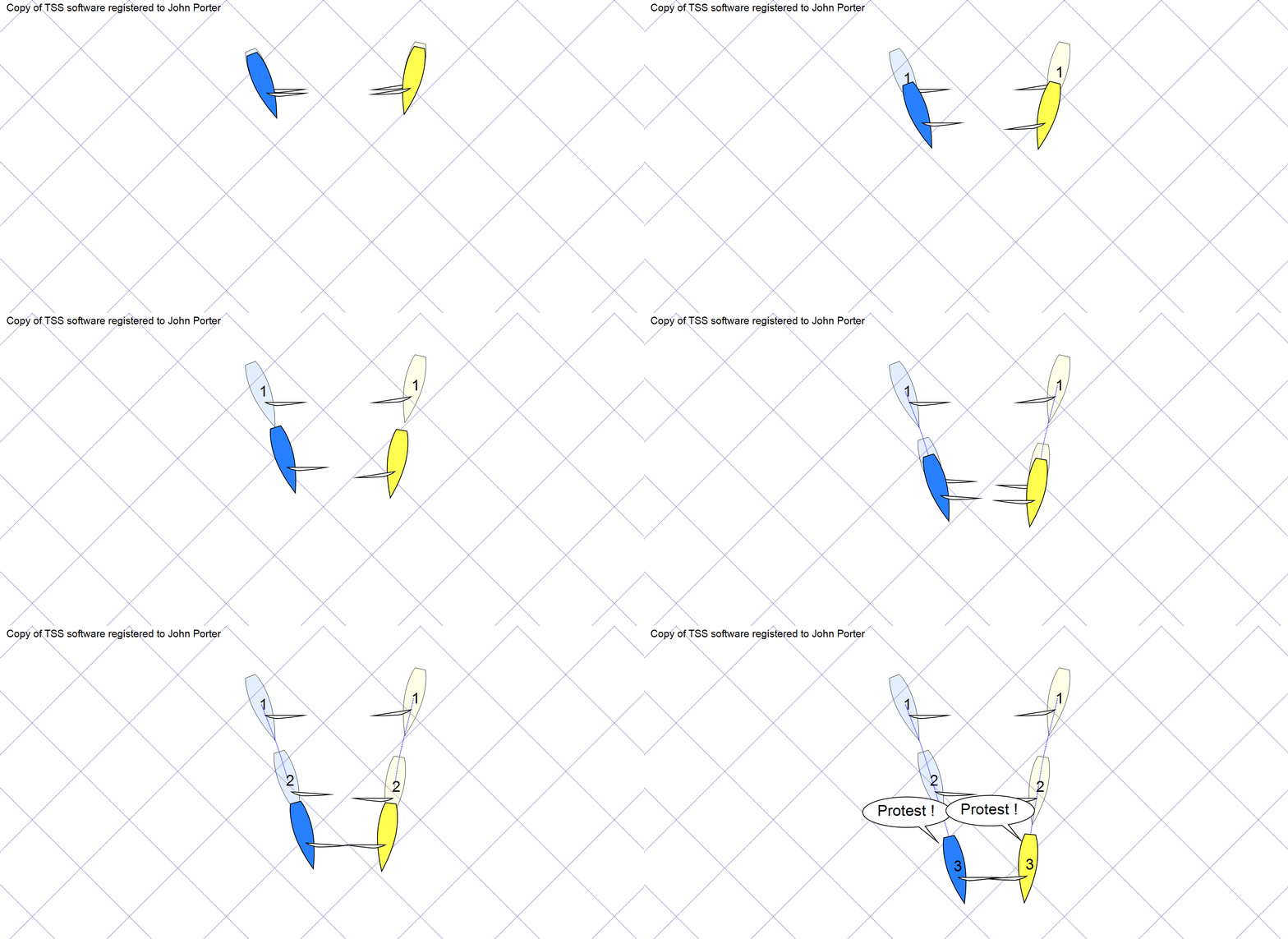
Which boat(s) should promptly take a penalty?
Yellow should take a penalty. Blue is on starboard tack and Yellow is on port tack, so Yellow broke Rule 10 by not keeping clear. See the definitions Tack, Starboard or Port and Leeward and Windward above. Because the boats are sailing by the lee, each boat’s windward side, and so her tack, is the side opposite the one her mainsail is on.
#4 – “Overtaking”
Description: Red and Green are sailing downwind, with Green overtaking Red. Before contact, Red hailed “overtaking boat, keep clear.” Green alleges that Red did not keep clear.
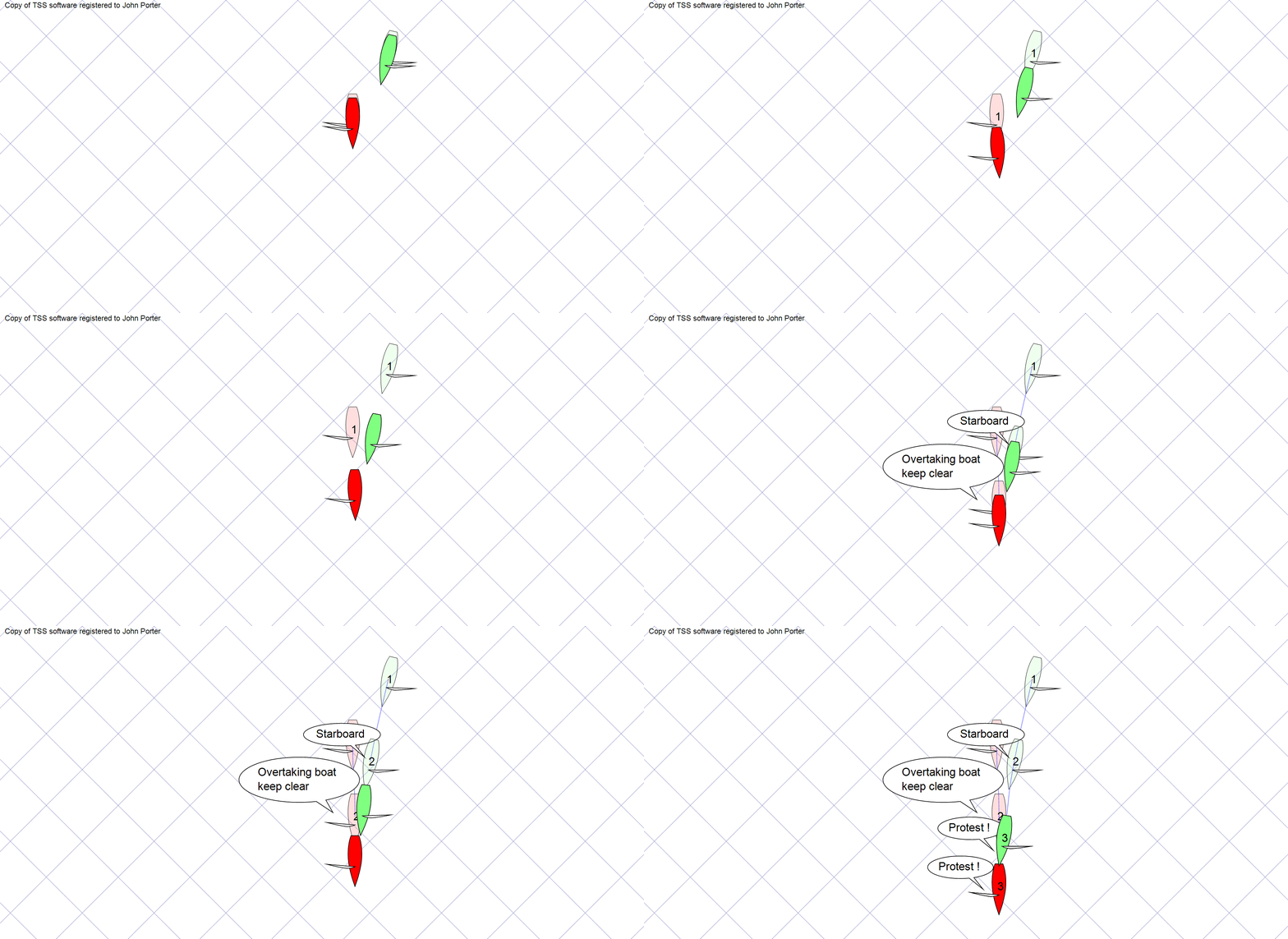
Which boat(s) should promptly take a penalty?
Red should take a penalty. Red and Green are on opposite tacks, so Rule 10 applies. Red is on port and must keep clear of Green. Red mistakenly assumed that Rule 12 applies. Rule 12 – On the Same Tack, Not Overlapped does not apply to boats on opposite tacks.
#5 – “Upwind-Downwind”
Description: Red is sailing upwind and Green is sailing downwind. Green bears off to avoid a collision with Red. Red alleges that she is the leeward boat. Green alleges that Red did not keep clear.
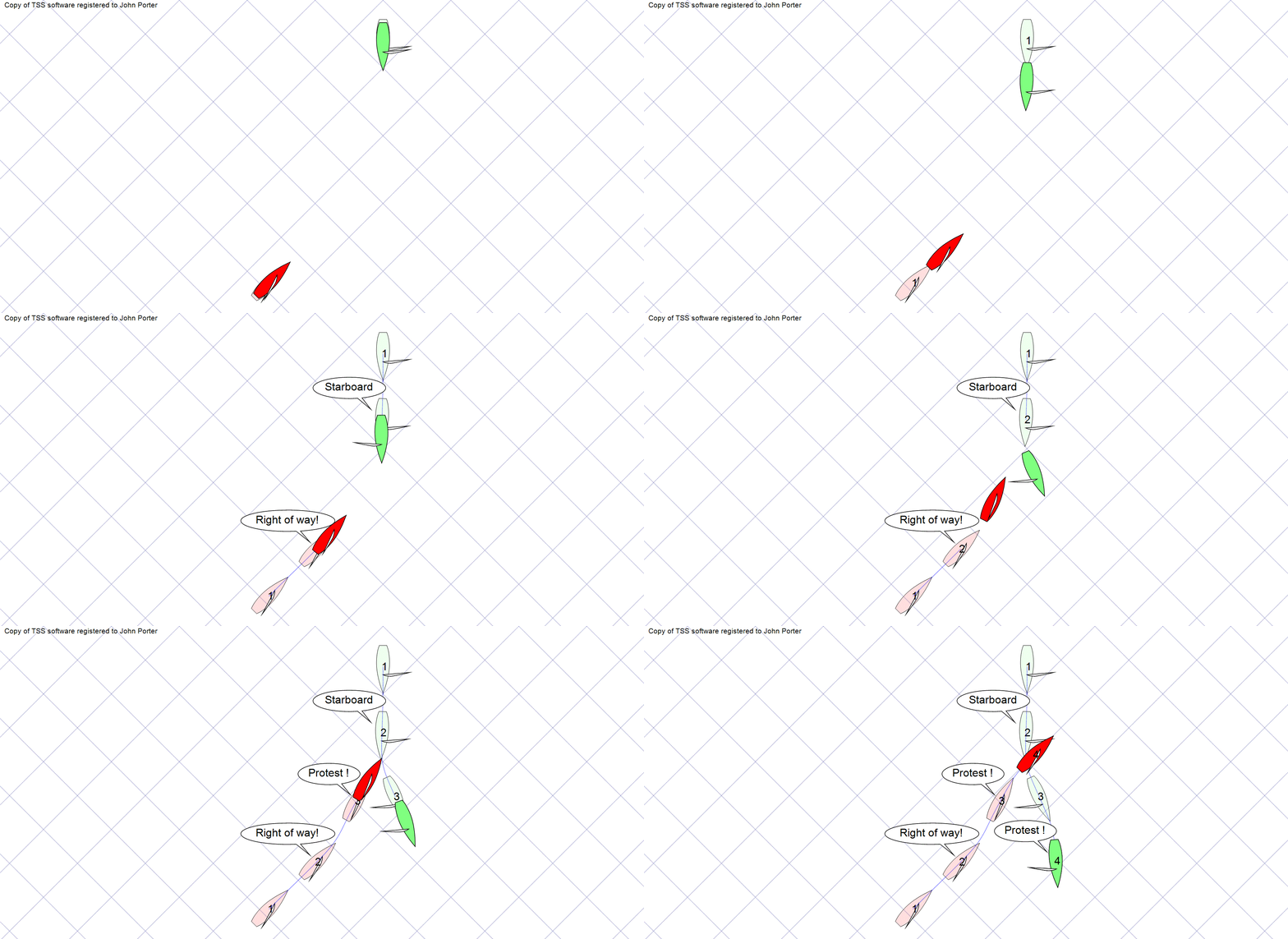
Which boat(s) should promptly take a penalty?
Red should take a penalty. Red and Green are on opposite tacks, so Rule 10 applies. Red is on port and must keep clear of Green. Red mistakenly assumed that Rule 11 applies. Rule 11 – On the Same Tack, Overlapped does not apply to boats on opposite tacks.
Summary
If you remember one thing, make it this: when boats are on opposite tacks, port keeps clear of starboard, upwind or downwind. Know which tack you’re on, especially when sailing by the lee, and remember that keeping clear means the starboard boat never has to take avoiding action.
If you’re on starboard and a port boat doesn’t keep clear, avoid the collision and protest. Don’t “take” your rights with a collision.
Rule 11 – On the Same Tack, Overlapped comes next.
Related Content
- Rule 11 – On the Same Tack, Overlapped
- Rule 12 – On the Same Tack, Not Overlapped
- Rule 13 – While Tacking
- Rule 14 and Rule 15 – Avoiding Contact and Acquiring Right of Way
- Racing Terms: Glossary for Newer Sailors
- ILYA #FairSailing Initiative
- Racing Rules of Sailing 2025-2028, Part 2, Section A – Right of Way – World Sailing (official rule text)
- World Sailing Racing Rules of Sailing – World Sailing