This post has been updated for the 2025-2028 Racing Rules of Sailing.
The boat behind has to keep clear of the boat ahead. Simple, until the boat ahead slows down or the boat behind runs out of room.
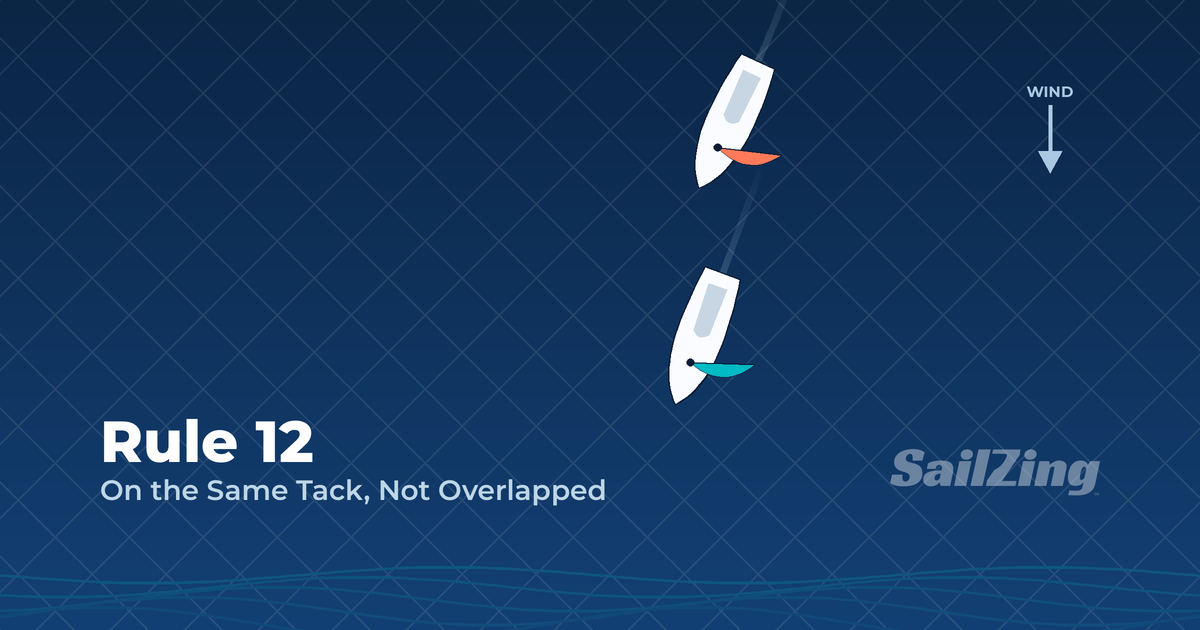
Rule 12 – On the Same Tack, Not Overlapped is the third right-of-way rule in Part 2, Section A of the Racing Rules of Sailing (RRS). This post covers what you need to know about Rule 12, with the rule text, definitions, animations, and a quiz on each scenario.
In 2018, the Inland Lake Yachting Association (ILYA) and SailZing, LLC partnered on a Fair Sailing initiative. As part of this initiative, SailZing worked with the ILYA and UK Sailmakers to develop a series of articles on the rules. With the rules changes in 2025, SailZing is updating these articles for the 2025-2028 Racing Rules of Sailing.
Our thanks to UK Sailmakers for generating the animated scenarios.
Rule 12 – On the Same Tack, Not Overlapped
12 ON THE SAME TACK, NOT OVERLAPPED
Racing Rules of Sailing 2025-2028, Part 2, Section A (World Sailing)
When boats are on the same tack and not overlapped, a boat clear astern shall keep clear of a boat clear ahead.
There were no changes to Rule 12, or to the definitions it uses, for 2025-2028.
What Rule 12 Means in Plain Words
- Same tack, one behind the other: the boat behind keeps clear. If you are clear astern (entirely behind a line across the stern of the boat ahead), you must stay out of her way.
- Following too close is your problem. If the boat ahead slows down, the boat behind still has to keep clear. Leave yourself enough space to react.
- Once you overlap, it becomes Rule 11. As soon as the boat behind is no longer clear astern, the boats are overlapped and Rule 11 (windward keeps clear) applies instead.
- Don’t sail into a trap. Being boxed in by other boats doesn’t excuse you. If you put yourself where you can’t keep clear, you will usually have to take the penalty (Scenario #3).
Definitions
Clear Astern and Clear Ahead; Overlap. One boat is clear astern of another when her hull and equipment in normal position are behind a line abeam from the aftermost point of the other boat’s hull and equipment in normal position. The other boat is clear ahead. They overlap when neither is clear astern. However, they also overlap when a boat between them overlaps both. These terms always apply to boats on the same tack. They apply to boats on opposite tacks only when rule 18 applies between them or when both boats are sailing more than ninety degrees from the true wind.
Tack, Starboard or Port. A boat is on the tack, starboard or port, corresponding to her windward side.
Keep Clear. A boat keeps clear of a right-of-way boat
(a) if the right-of-way boat can sail her course with no need to take avoiding action and,
(b) when the boats are overlapped, if the right-of-way boat can also change course in both directions without immediately making contact.
Rule 12 Insights
The World Sailing Case Book adds insights to the right-of-way rules. You can search all cases, by rule, on the racingrulesofsailing.org cases page.
Rule 12 Scenarios
For each scenario, read the description, watch the animation, and choose your answer. Then reveal the answer to check your thinking.
#1 – “Downwind”
Description: Blue and Yellow are sailing downwind. Yellow overtakes Blue and contacts Blue’s transom.
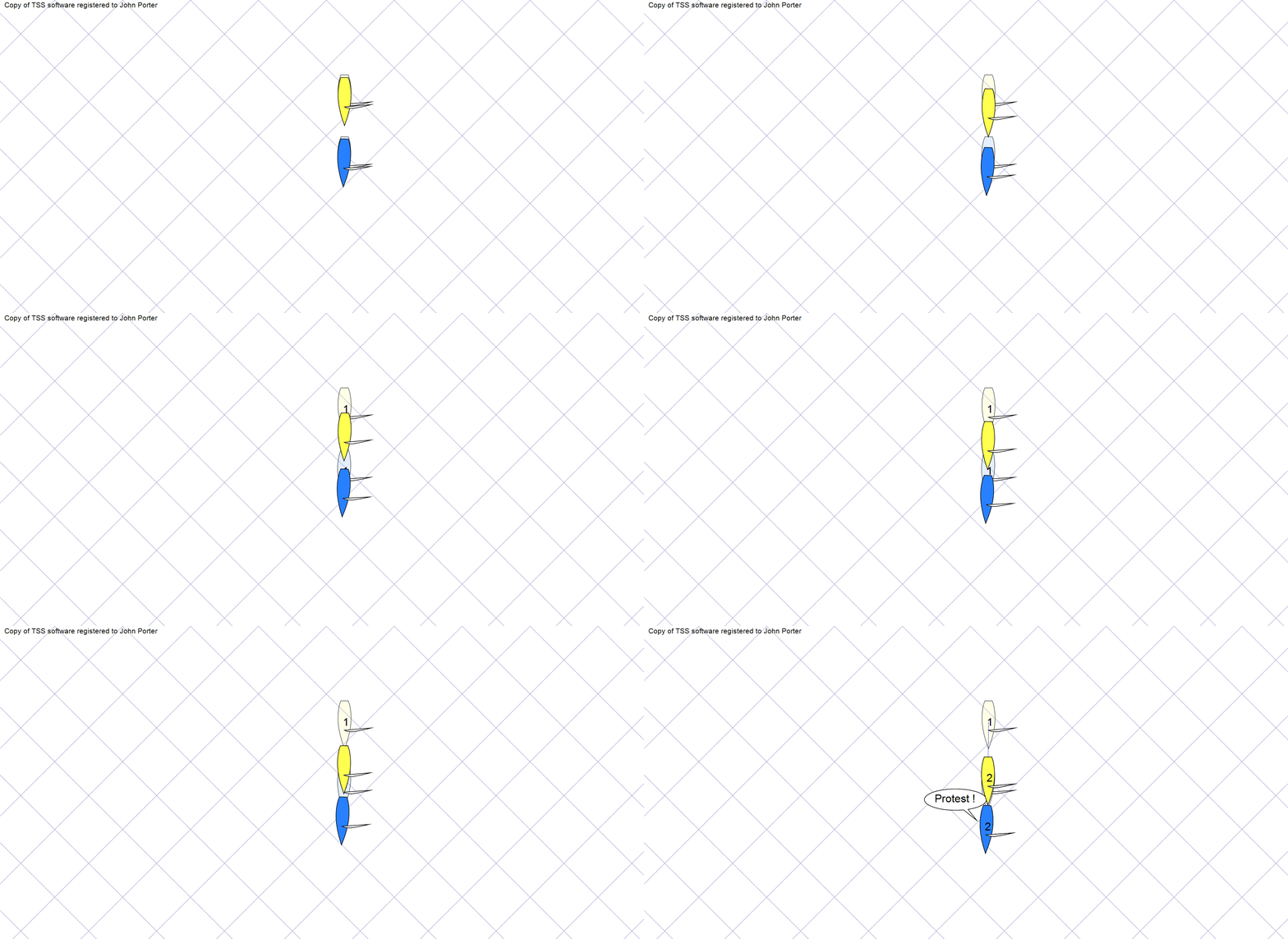
Which boat(s) should promptly take a penalty?
Yellow should take a penalty. Both boats are on the same tack (starboard). The boats are not overlapped. Therefore, Rule 12 applies. Yellow is clear astern and must keep clear of Blue.
#2 – “Upwind”
Description: Blue and Yellow are sailing upwind. Blue hits a large wave and drops her mainsheet, causing her to slow down. Yellow contacts Blue’s transom. Blue alleges Yellow broke Rule 12. Yellow alleges Blue broke Rule 16, “Changing Course,” by slowing down abruptly.
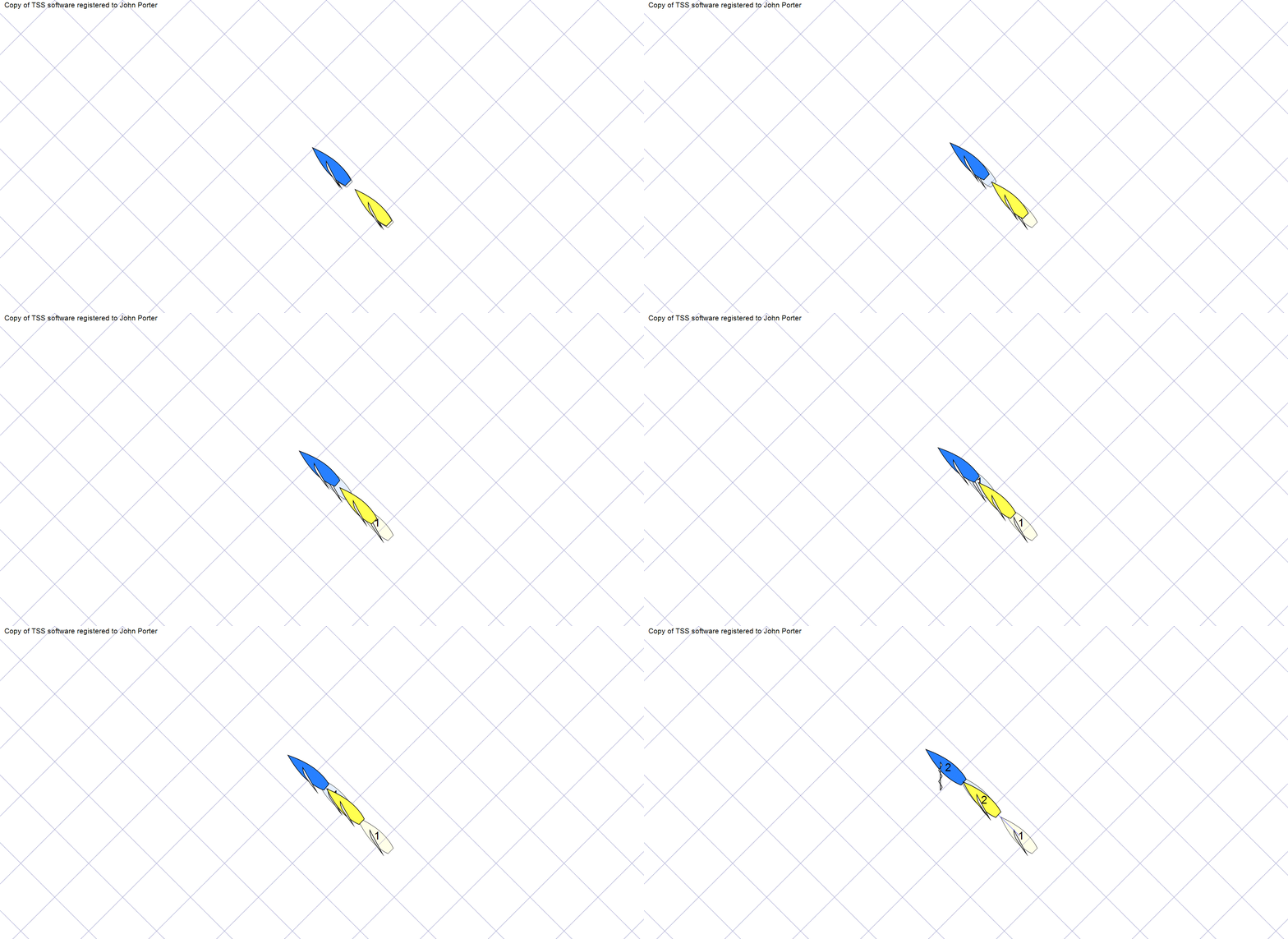
Which boat(s) should promptly take a penalty?
Yellow should take a penalty. Both boats are on the same tack (starboard). The boats are not overlapped. Therefore, Rule 12 applies. Yellow is clear astern and must keep clear of Blue.
Blue did not break Rule 16. Rule 16.1 states, “When a right-of-way boat changes course, she shall give the other boat room to keep clear.” Rule 16.1 is about changing course. Blue held her course, so Rule 16 doesn’t apply; Yellow was simply following too close to keep clear.
#3 – “Starting Line”
Description: Four boats, Blue, Yellow, Green and Grey, are approaching the starting line, before the start. Blue overtakes Yellow and contacts her transom. Yellow alleges Blue broke Rule 12. Blue alleges she had nowhere to go.
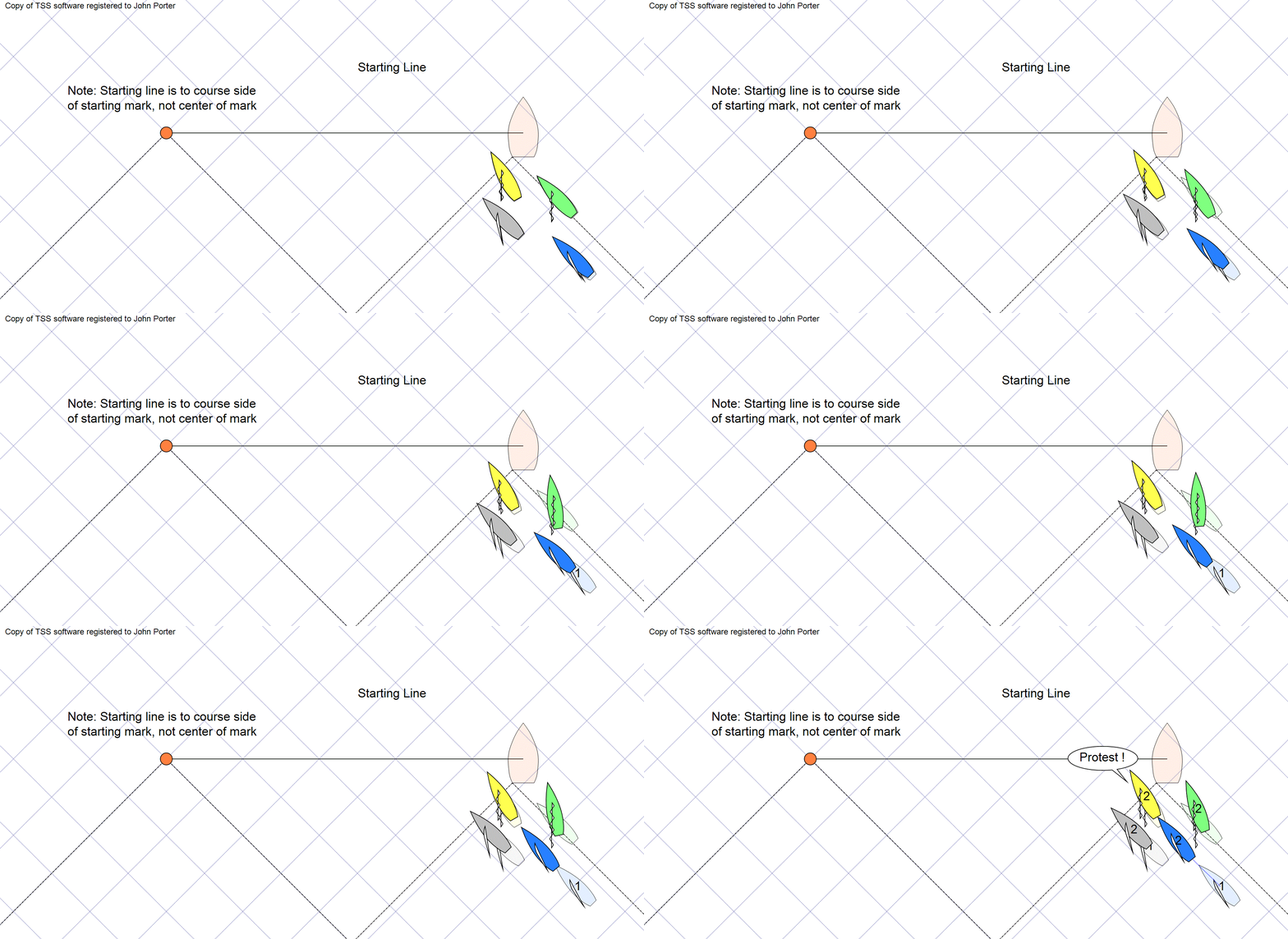
Which boat(s) should promptly take a penalty?
Blue should take a penalty. Blue is clear astern and must keep clear of Yellow (Rule 12). No other boat broke a rule. Blue should have turned above Green before location 1. Putting yourself in a position with no way out doesn’t allow you to be exonerated for fouling someone else. Often, you need to think pretty far ahead.
Summary
If you remember one thing, make it this: on the same tack and not overlapped, the boat clear astern keeps clear. Give yourself room to react if the boat ahead slows down, and don’t sail into a spot with no way out.
Rule 13 – While Tacking comes next.
Related Content
- Rule 10 – On Opposite Tacks
- Rule 11 – On the Same Tack, Overlapped
- Rule 13 – While Tacking
- Rule 14 and Rule 15 – Avoiding Contact and Acquiring Right of Way
- Rule 16 – Changing Course
- Racing Terms: Glossary for Newer Sailors
- ILYA #FairSailing Initiative
- Racing Rules of Sailing 2025-2028, Part 2, Section A – Right of Way – World Sailing (official rule text)
- World Sailing Racing Rules of Sailing – World Sailing