This post has been updated for the 2025-2028 Racing Rules of Sailing.
You sailed up from behind and got a leeward overlap. Can you now luff the windward boat as high as you like? Not under Rule 17.
Rule 17 – On the Same Tack; Proper Course is the fourth and last rule in Part 2, Section B – General Limitations of the Racing Rules of Sailing (RRS). This post covers what you need to know about Rule 17, with the rule text, definitions, animations, and questions you can check yourself, plus links to the World Sailing Case Book.
In 2018, the Inland Lake Yachting Association (ILYA) and SailZing, LLC partnered on a Fair Sailing initiative. As part of this initiative, SailZing worked with the ILYA and UK Sailmakers to develop a series of articles on the rules. With the rules changes in 2025, SailZing is updating these articles for the 2025-2028 Racing Rules of Sailing.
Our thanks to UK Sailmakers for generating the animated scenarios.
This is our final installment on Part 2, Section B, after Rule 14 and Rule 15 – Avoiding Contact and Acquiring Right of Way and Rule 16 – Changing Course. Remember, the rules in this section don’t change right of way, but they do limit the actions of right-of-way boats.
Rule 17 – On the Same Tack; Proper Course
17 ON THE SAME TACK; PROPER COURSE
Racing Rules of Sailing 2025-2028, Part 2, Section B (World Sailing)
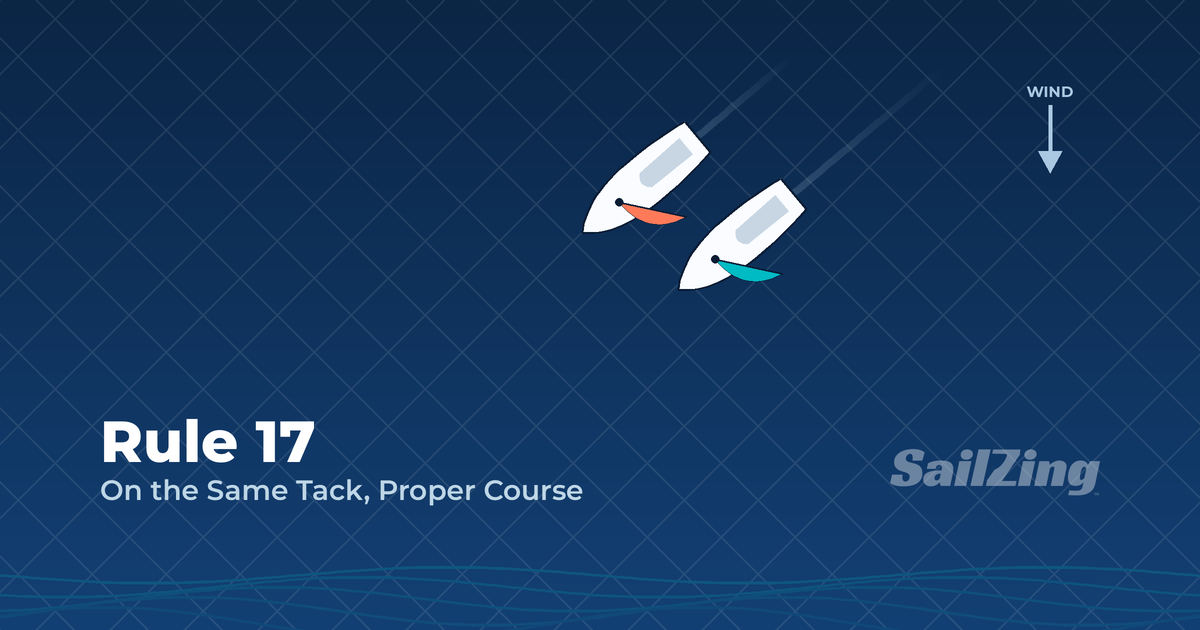
If a boat clear astern becomes overlapped within two of her hull lengths to leeward of a boat on the same tack, she shall not sail above her proper course while they remain on the same tack and overlapped within that distance, unless in doing so she promptly sails astern of the other boat.
For 2025-2028, the last sentence of Rule 17 was deleted, and the definition Proper Course was reworded. See “Rule 17 Changes” below.
What Rule 17 Means in Plain Words
- Who it limits: a boat that comes from clear astern (entirely behind) and gets an overlap to leeward (on the side away from the wind) within two of her hull lengths of a boat on the same tack.
- What it limits: she may not sail above (closer to the wind than) her proper course, the course she would sail to get around the course fastest if the other boat weren’t there.
- How long: only while the boats stay on the same tack and overlapped within two hull lengths. A gybe or tack by either boat, breaking the overlap, or getting more than two hull lengths apart ends it.
- The windward boat must still keep clear. Rule 17 limits the leeward boat, but the windward boat still has to keep clear under Rule 11. If the leeward boat sails too high, keep clear and protest.
- The boat ahead can protect her lead. Rule 17 doesn’t limit a leeward boat that was ahead or that got her overlap from the windward side.
Definitions
Proper Course. A course a boat would choose in order to sail the course as quickly as possible in the absence of the other boats referred to in the rule using the term. A boat has no proper course before her starting signal.
Clear Astern and Clear Ahead; Overlap. One boat is clear astern of another when her hull and equipment in normal position are behind a line abeam from the aftermost point of the other boat’s hull and equipment in normal position. The other boat is clear ahead. They overlap when neither is clear astern. However, they also overlap when a boat between them overlaps both. These terms always apply to boats on the same tack. They apply to boats on opposite tacks only when rule 18 applies between them or when both boats are sailing more than ninety degrees from the true wind.
Leeward and Windward. A boat’s leeward side is the side that is or, when she is head to wind, was away from the wind. However, when sailing by the lee or directly downwind, her leeward side is the side on which her mainsail lies. The other side is her windward side. When two boats on the same tack overlap, the one on the leeward side of the other is the leeward boat. The other is the windward boat.
Tack, Starboard or Port. A boat is on the tack, starboard or port, corresponding to her windward side.
Keep Clear. A boat keeps clear of a right-of-way boat
(a) if the right-of-way boat can sail her course with no need to take avoiding action and,
(b) when the boats are overlapped, if the right-of-way boat can also change course in both directions without immediately making contact.
Rule 17 Key Points
- This rule allows the boat ahead to protect her lead over another boat.
- Rule 17 only applies to a leeward boat establishing an overlap from clear astern, while on the same tack as the other boat, and within two hull lengths. Proper course does not apply to the windward boat.
- Proper course may be different for different boats (Case 14).
- New for 2025-2028: Rule 17 now also applies when the overlap begins while the windward boat is tacking (required by Rule 13 to keep clear).
Rule 17 Changes
For 2025-2028, the last sentence of Rule 17, “This rule does not apply if the overlap begins while the windward boat is required by rule 13 to keep clear,” was deleted. The definition Proper Course was also reworded.
Why the Change?
Optional reading. Skip ahead to Rule 17 Insights if you like.
Rule 17. World Sailing’s Study Version of the 2025-2028 rules ties the deletion of the last sentence to Submission 007-22. The effect, in Dave Perry’s words: “Now, if P becomes overlapped with S anytime after S has passed head to wind, P cannot sail above her proper course.” (A Quick Overview of the Significant Rule and Game Changes, US Sailing, January 2025.)
Proper Course (a term used in Rule 17). The Study Version ties the rewording to Submission 009-23 (as amended), from the Chair of the Racing Rules Committee. Its stated purpose was to “bring the definition in line with how sailor[s] manage Proper Course.” The final wording, “…in order to sail the course as quickly as possible…”, was set by World Sailing’s Changes and Corrections, effective 1 January 2025.
Sources: World Sailing, Study Version of the RRS 2025-2028 (change comments); World Sailing, 2023 Submissions (009-23); World Sailing, Changes and Corrections, Version 2; Dave Perry, Quick Overview (US Sailing).
Rule 17 Insights
Various cases in the World Sailing Case Book add insights to this rule. Click the links to read more.
- Case 14: When, because of a difference of opinion about a leeward boat’s proper course, two boats on the same tack converge, the windward boat must keep clear. Two boats on the same leg sailing near one another may have different proper courses.
- Case 46: A leeward boat is entitled to luff to her proper course, even when she has established a leeward overlap from clear astern and within two of her hull lengths of the windward boat.
- Case 134: A boat’s proper course at any moment depends on the existing conditions. Some of those conditions are the wind strength and direction, the pattern of gusts and lulls in the wind, the waves, the current, and the physical characteristics of the boat’s hull and equipment, including the sails she is using.
Rule 17 Scenarios
For each scenario, read the description, watch the animation, and decide your answer. Then reveal the answer to check your thinking.
#1 – “From Behind 1”
Description: Yellow and Blue are sailing downwind. Yellow establishes an overlap from behind and hails Blue to “take it up.” Yellow heads up and Blue heads up to avoid Yellow. There was no contact. Blue alleges Yellow broke rule 17. Yellow alleges there is no foul, she was leeward.
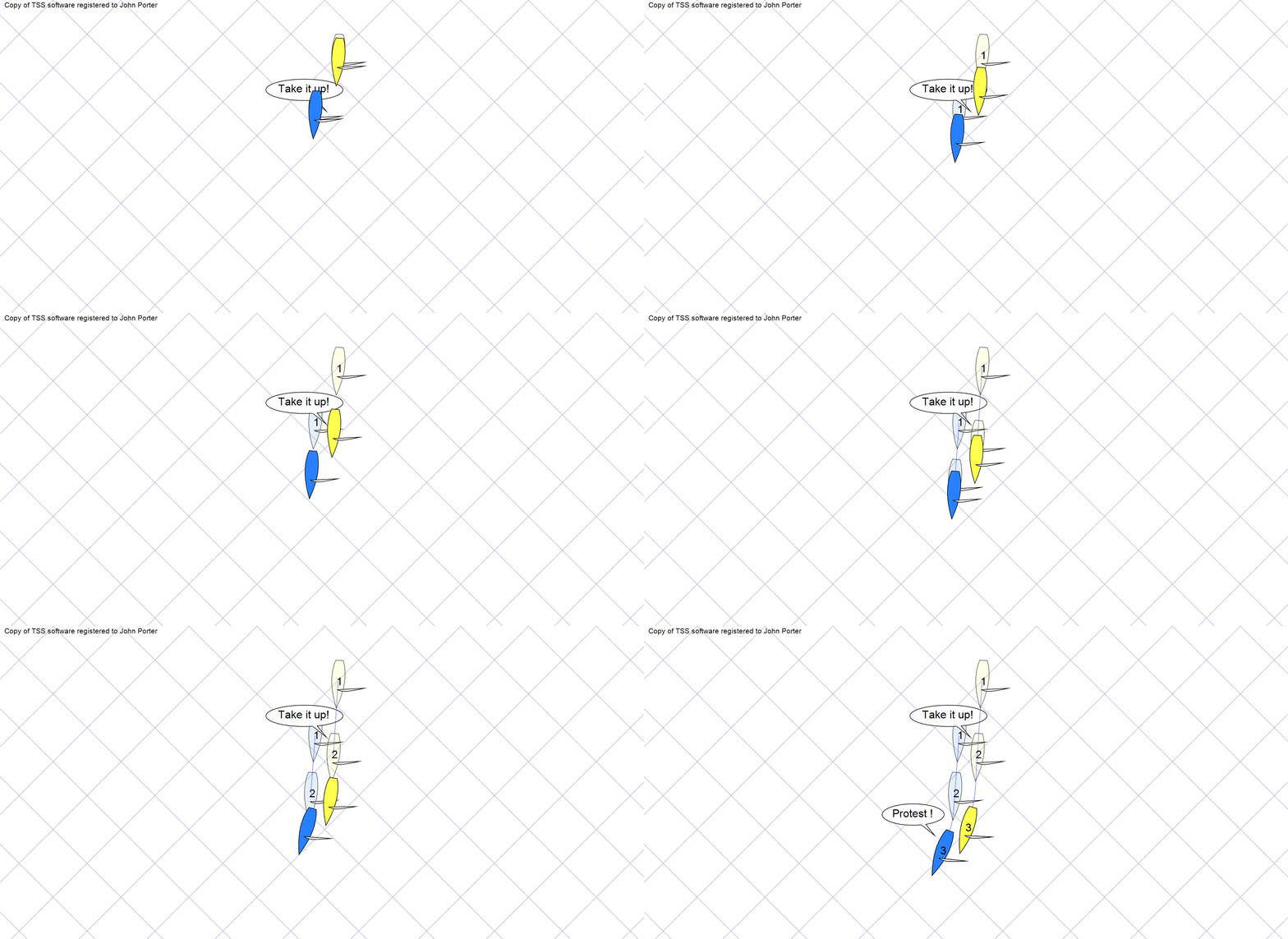
Did Yellow break Rule 17?
Yes, Yellow broke Rule 17 and should take a penalty. Since Yellow obtained the overlap from clear astern, on the same tack and within two hull lengths to leeward, she can sail as high as her proper course, but she cannot deliberately head Blue up for the sole reason of slowing Blue (Rule 17).
Did Blue have the option to not turn up and protest?
No. When Yellow turns up, Blue must turn to avoid contact if needed (Rule 14). Blue can protest Yellow for breaking Rule 17. Blue may want to hail Yellow about proper course, but she must avoid contact.
#2 – “From Behind 2”
Description: Yellow and Blue are sailing downwind. Yellow establishes an overlap from behind and heads up to get to a large puff filling in to windward. Blue heads up to avoid Yellow. There was no contact. Blue alleges Yellow broke rule 17. Yellow alleges she was sailing to the puff.
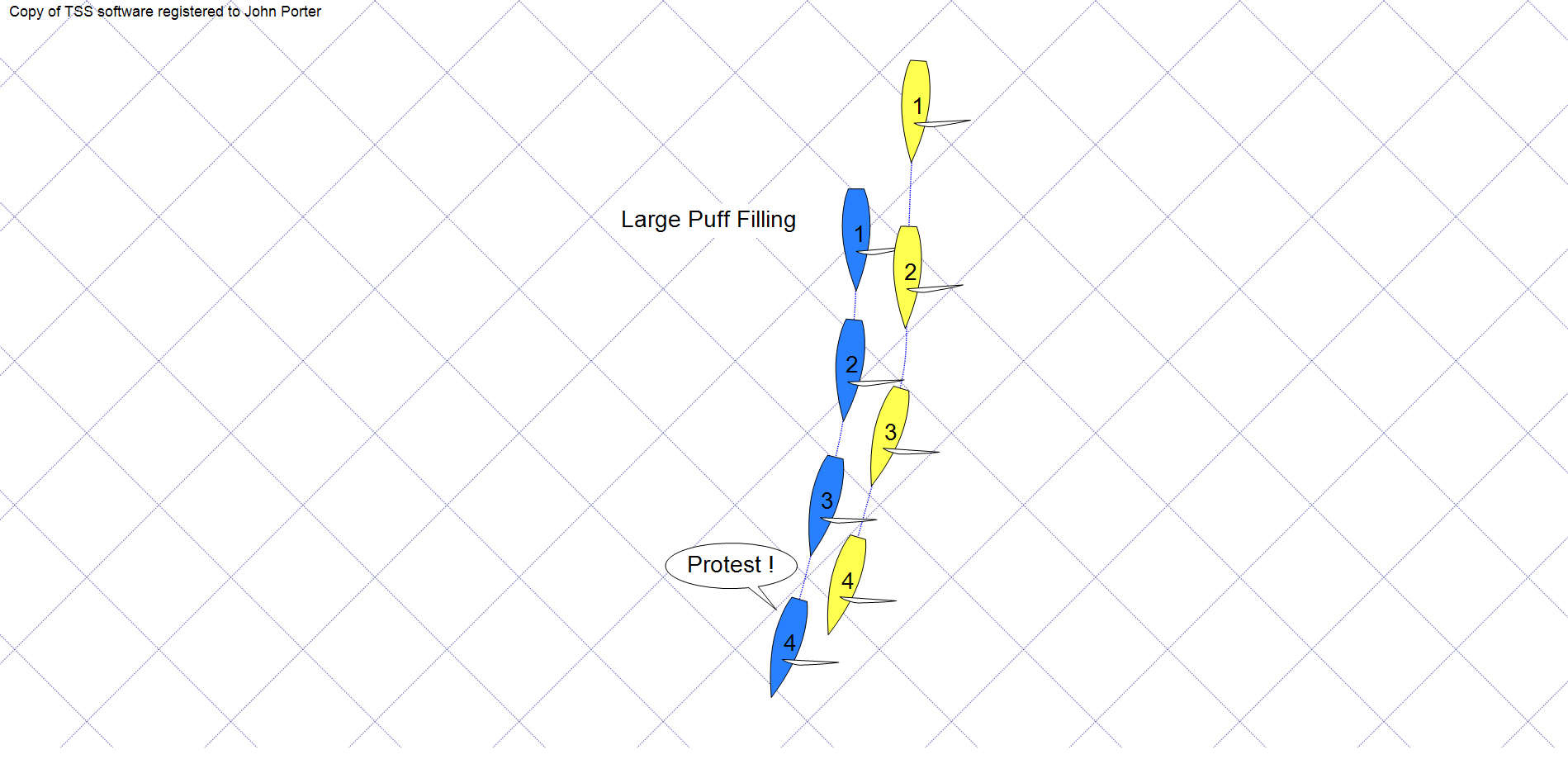
Did Yellow break Rule 17?
No. Since her overlap was obtained from clear astern, Yellow was required to sail no higher than her proper course (Rule 17). However, in this situation, Yellow’s proper course was to sail into the puff. Blue’s proper course to run down in the puff isn’t relevant. Only the leeward boat’s proper course matters here. See Case 14: two boats on the same leg sailing near one another may have different proper courses.
Did Blue have the option to not turn up and protest?
No. When Yellow turns up, Blue must turn up if needed to avoid contact (Rule 14). Blue could protest Yellow, but in this case the protest would likely be dismissed.
#3 – “Protecting the Lead”
Description: Yellow and Blue are sailing downwind. Blue establishes an overlap from behind. Yellow hails Blue not to go above and heads up to protect her lead. There was no contact. Blue alleges Yellow broke Rule 17. Yellow alleges she was not bound by Rule 17.
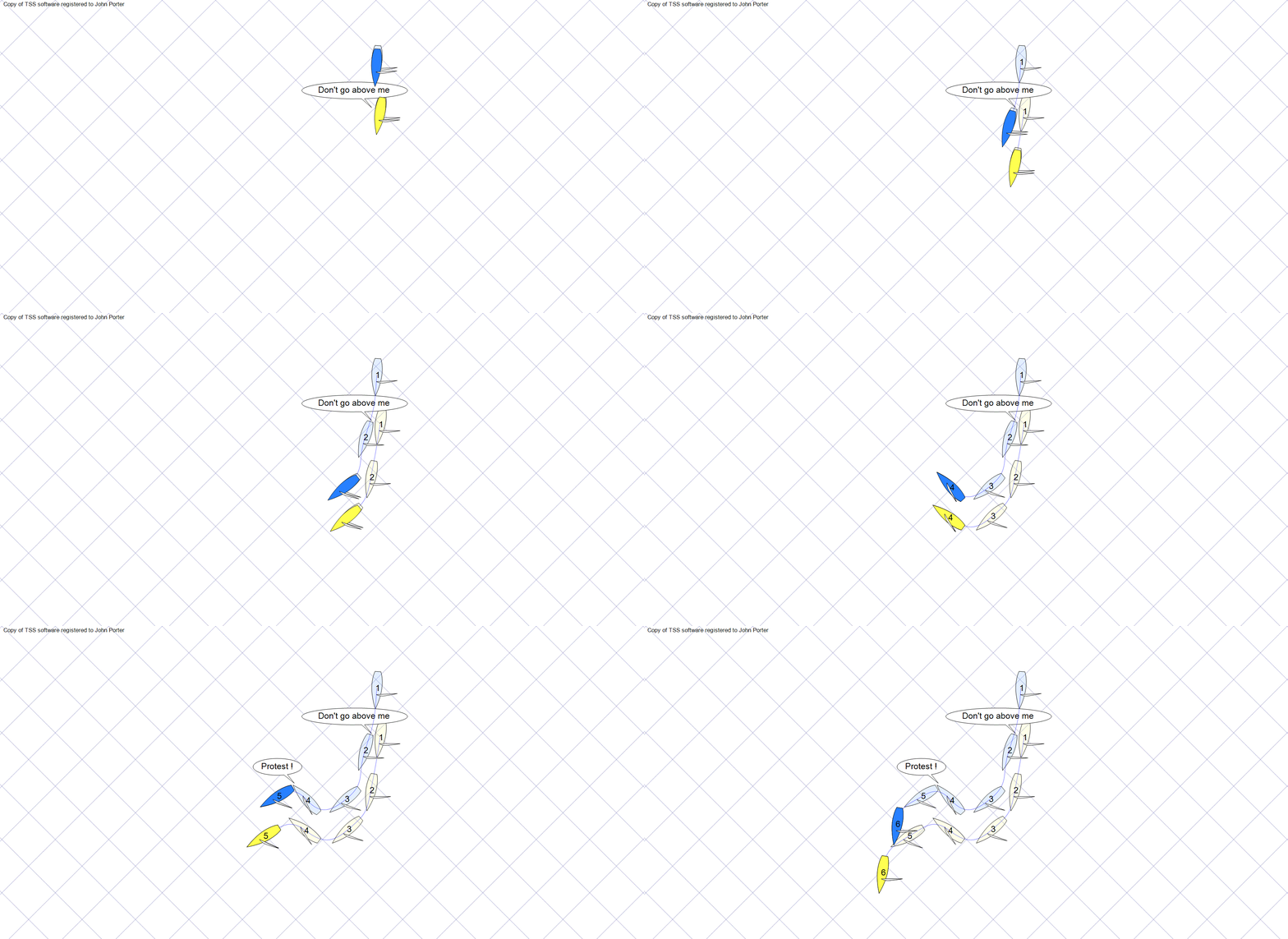
Did Yellow break Rule 17?
No. Yellow is not bound by Rule 17, since she was the boat ahead. Rule 17 applies to a boat that establishes an overlap to leeward from clear astern, so it does not apply to either boat here. This situation shows how a boat ahead can defend her position. The hail not to go above isn’t binding, but it warns that a hard luff may follow.
#4 – “Does Rule 17 Apply 1”
Description: Yellow and Blue are sailing downwind. Between positions 2 and 3, Yellow gybes twice.
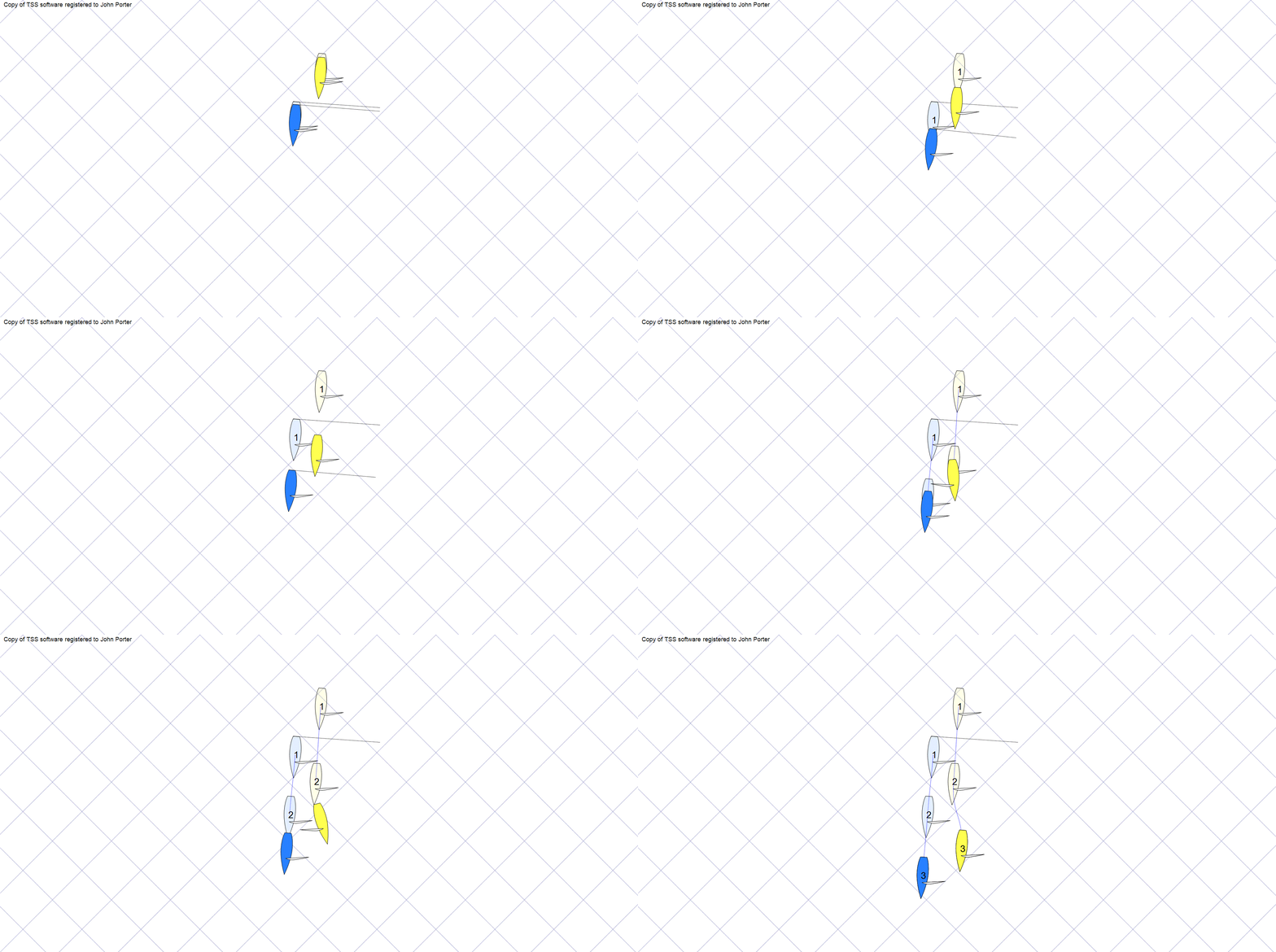
After the gybes, is Yellow bound by Rule 17 to sail no higher than her proper course?
No. Rule 17 applies “while they remain on the same tack.” Since Yellow gybed, the boats did not remain on the same tack. Even though Yellow gybed back to the same tack as Blue, once she changed tacks, the Rule 17 restriction no longer applies.
#5 – “Does Rule 17 Apply 2”
Description: Yellow and Blue are sailing downwind. Between position 1 and 2, Yellow establishes an overlap from clear astern. Between positions 3 and 4, Yellow sails ahead of Blue and breaks the overlap.
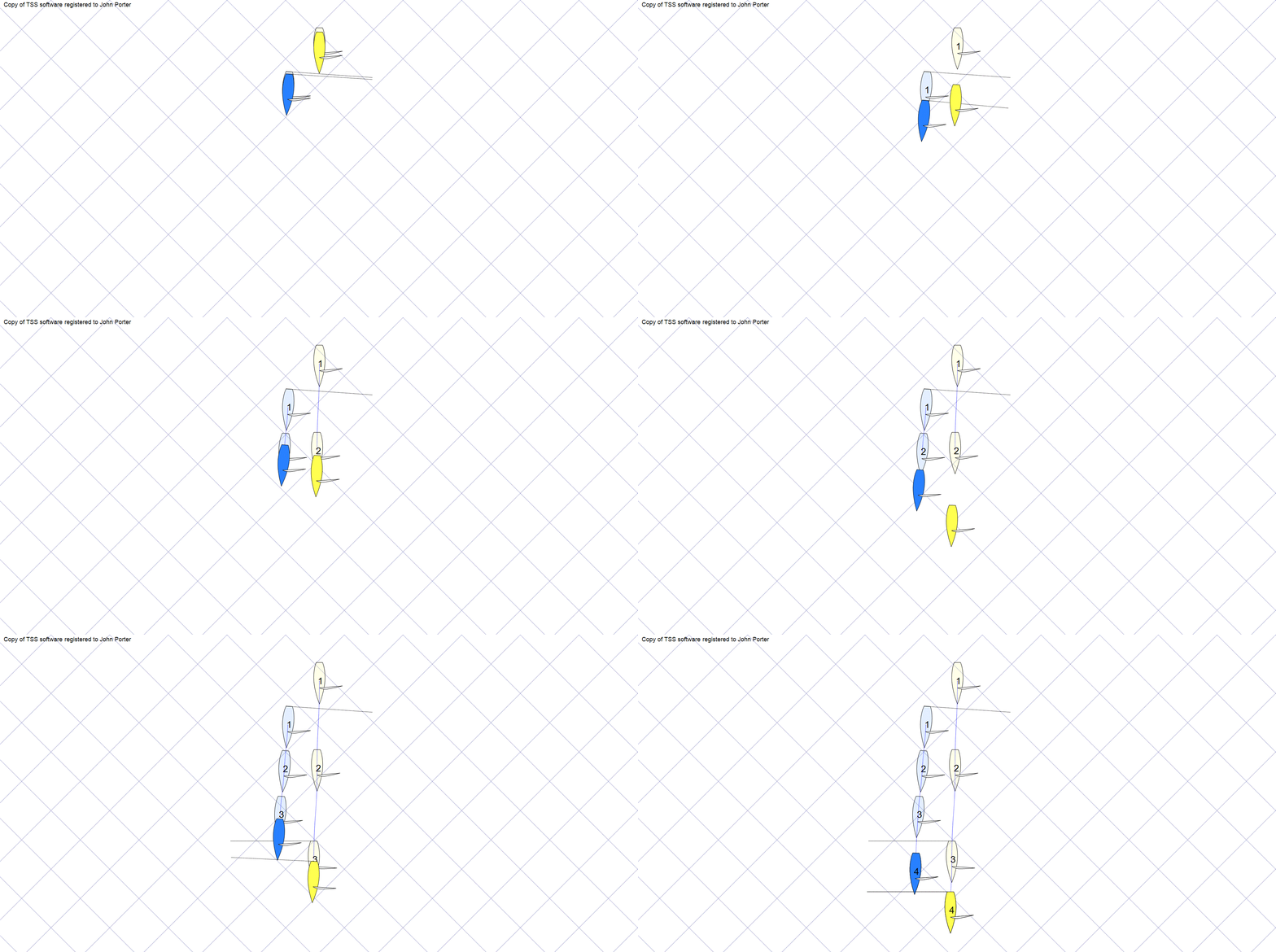
At position 4, is Yellow bound by Rule 17 to sail no higher than her proper course?
No. Rule 17 applies “while they remain on the same tack and overlapped.” Since Yellow sailed ahead and broke the overlap, Rule 17 no longer applies to Yellow at position 4.
#6 – “Does Rule 17 Apply 3”
Description: Yellow and Blue are sailing on a reach. Between positions 1 and 2, Blue establishes an overlap from clear astern. Between positions 2 and 3, Blue sails low, away from Yellow, while maintaining an overlap. At position 3, Blue begins heading up and attempts to head up Yellow at position 5.
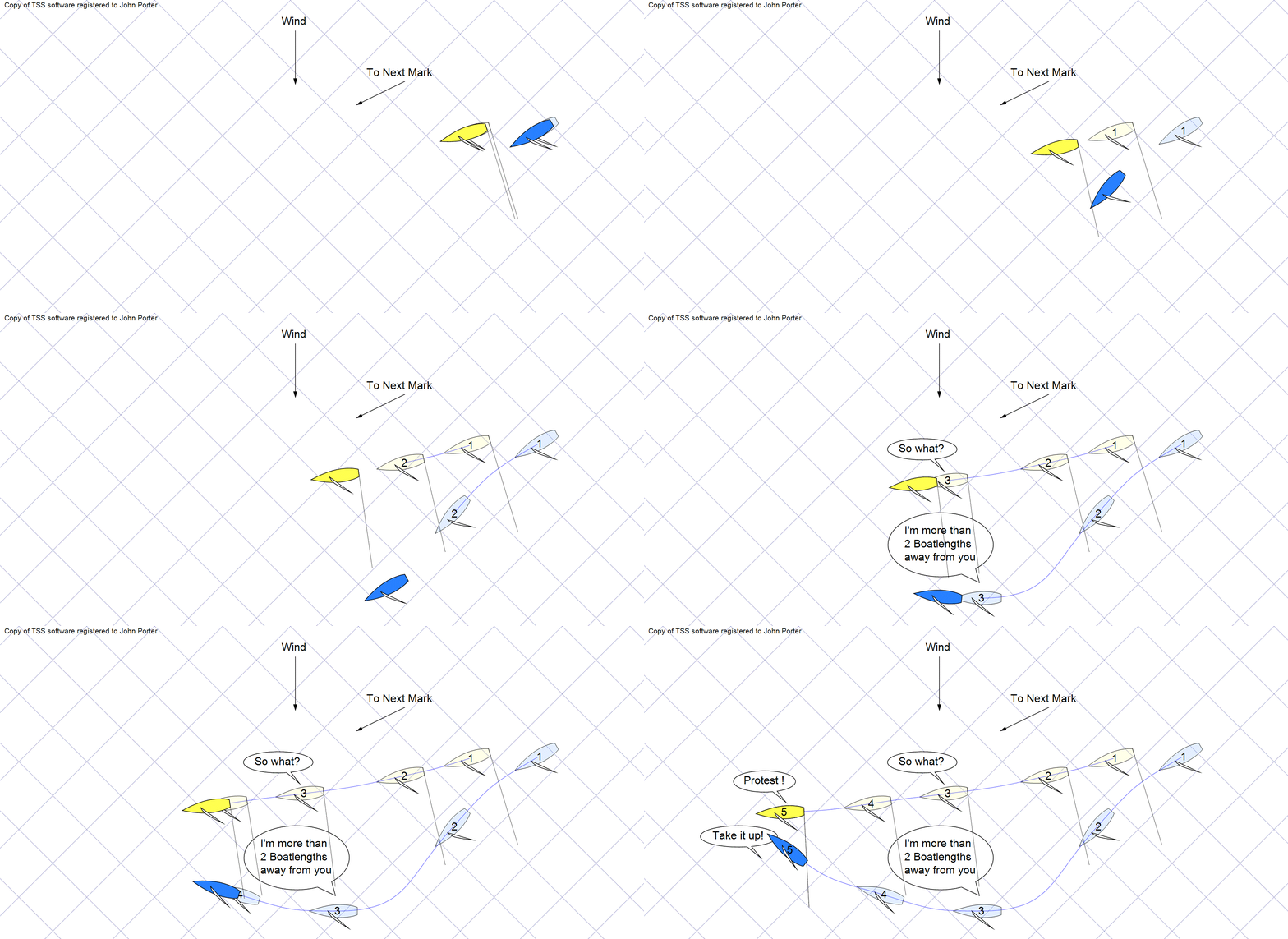
At position 5, is Blue bound by Rule 17 to sail no higher than her proper course?
No. Rule 17 applies “while they remain on the same tack and overlapped within that distance.” “That distance” is the two hull lengths in the opening sentence of the rule. Rule 17 no longer applies to Blue after she sails more than two hull lengths away from Yellow.
Summary
If you remember one thing, make it this: if you sail into a leeward overlap from behind, within two lengths, you may sail your proper course but no higher. The boat ahead can defend. And if you’re the windward boat, keep clear first and protest second.
Rule 18.1 – When Mark-Room Applies comes next, starting Part 2, Section C – At Marks and Obstructions.
Related Content
- Rule 11 – On the Same Tack, Overlapped
- Rule 13 – While Tacking
- Rule 14 and Rule 15 – Avoiding Contact and Acquiring Right of Way
- Rule 16 – Changing Course
- Rule 18.1 – When Mark-Room Applies
- Rule 18.2 – Giving Mark-Room
- Racing Terms: Glossary for Newer Sailors
- ILYA #FairSailing Initiative
- Racing Rules of Sailing 2025-2028, Part 2, Section B – General Limitations – World Sailing (official rule text)
- World Sailing Racing Rules of Sailing – World Sailing