This post has been updated for the 2025-2028 Racing Rules of Sailing.
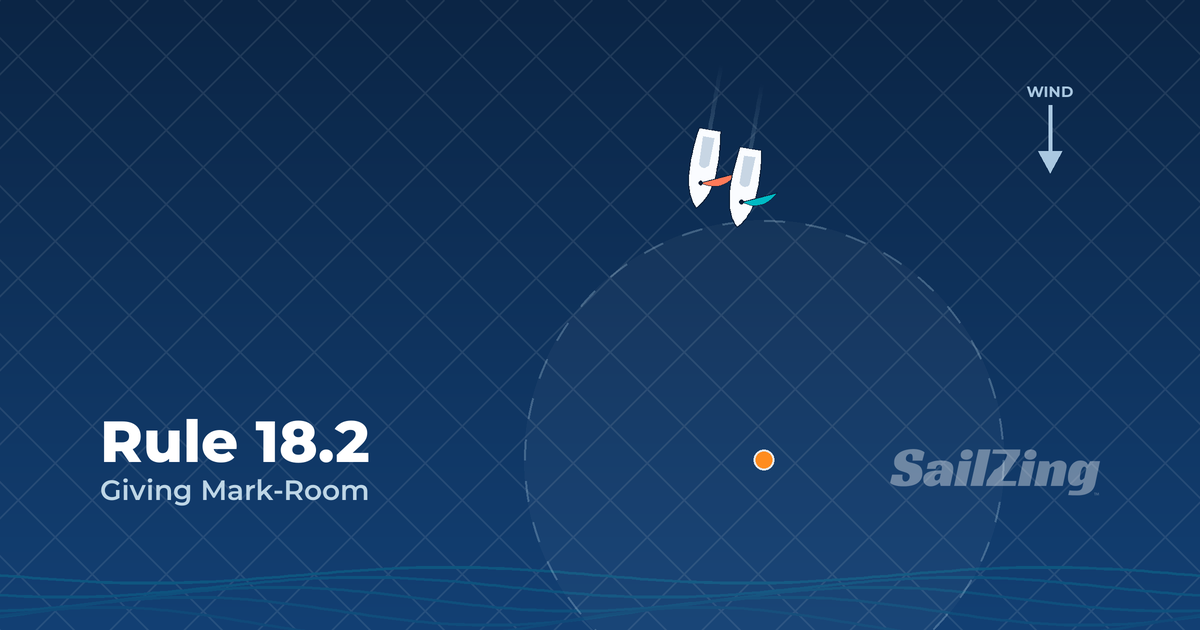
The zone is a snapshot: who was overlapped, and who was ahead, when the first boat got there? Rule 18.2 turns that snapshot into mark-room.
Rule 18.2 – Giving Mark-Room is the second of our three articles on Rule 18 – Mark-Room, in Part 2, Section C of the Racing Rules of Sailing (RRS). We covered Rule 18.1 – When Mark-Room Applies separately, and Rules 18.3 and 18.4 – Mark-Room 3 come next.
In 2018, the Inland Lake Yachting Association (ILYA) and SailZing, LLC partnered on a Fair Sailing initiative. As part of this initiative, SailZing worked with the ILYA and UK Sailmakers to develop a series of articles on the rules. With the rules changes in 2025, SailZing is updating these articles for the 2025-2028 Racing Rules of Sailing.
Our thanks to UK Sailmakers for generating the animated scenarios.
Rule 18.2 – Giving Mark-Room
18.2 Giving Mark-Room
World Sailing, Racing Rules of Sailing 2025-2028 (Study Version), rule 18.2. Read Section C online at racingrulesofsailing.org.
(a) When the first of two boats reaches the zone,
(1) if the boats are overlapped, the outside boat at that moment shall give the inside boat mark-room;
(2) if the boats are not overlapped, the boat that has not reached the zone at that moment shall give the other boat mark-room.
When a boat is required to give mark-room by this rule, she shall continue to do so for as long as this rule applies, even if later an overlap is broken or a new overlap begins.
(b) Rule 18.2(a) no longer applies if the boat entitled to mark-room passes head to wind or leaves the zone.
(c) When rule 18.2(a) does not apply and the boats are overlapped, the outside boat shall give the inside boat mark-room.
(d) If a boat obtained an inside overlap from clear astern or by tacking to windward of the other boat and, from the time the overlap began, the outside boat has been unable to give mark-room, rules 18.2(a) and 18.2(c) do not apply between them.
(e) If there is reasonable doubt that a boat obtained or broke an overlap in time, it shall be presumed that she did not.
What Rule 18.2 Means in Plain Words
- Take a snapshot when the first boat reaches the zone (three hull lengths from the mark). That moment decides who owes mark-room for the rest of the rounding.
- Overlapped at that moment: the outside boat gives the inside boat mark-room (18.2(a)(1)).
- Not overlapped at that moment: the boat that hasn’t reached the zone gives mark-room to the one that has (18.2(a)(2)). It doesn’t matter which one is ahead.
- The snapshot sticks. If the overlap is later broken, or a new one begins, the obligation doesn’t change, until the boat entitled to mark-room passes head to wind or leaves the zone (18.2(b)).
- The back-up rule: if 18.2(a) doesn’t apply and the boats are overlapped, the outside boat gives mark-room (18.2(c)).
- Late overlaps: if you get an inside overlap from clear astern, or by tacking to windward, when the outside boat is already unable to give room, you get no mark-room (18.2(d)). If it’s doubtful whether an overlap was made or broken in time, the protest committee assumes it wasn’t (18.2(e)).
Definitions
Mark-Room. Room for a boat
(a) to sail to the mark when her proper course is to sail close to it,
(b) to round or pass the mark on the required side, and
(c) to leave it astern.
Room. The space a boat needs in the existing conditions, including space to comply with her obligations under the rules of Part 2 and rule 31, while manoeuvring promptly in a seamanlike way.
Clear Astern and Clear Ahead; Overlap. One boat is clear astern of another when her hull and equipment in normal position are behind a line abeam from the aftermost point of the other boat’s hull and equipment in normal position. The other boat is clear ahead. They overlap when neither is clear astern. However, they also overlap when a boat between them overlaps both. These terms always apply to boats on the same tack. They apply to boats on opposite tacks only when rule 18 applies between them or when both boats are sailing more than ninety degrees from the true wind.
Zone. The area around a mark within a distance of three hull lengths of the boat nearer to it. A boat is in the zone when any part of her hull is in the zone.
Proper Course. A course a boat would choose in order to sail the course as quickly as possible in the absence of the other boats referred to in the rule using the term. A boat has no proper course before her starting signal.
Rule 18.2 Key Points
- This rule applies at both windward and leeward marks. We cover windward-mark situations with Rules 18.3 and 18.4.
- If Rule 18 applies, either 18.2(a) (the zone snapshot) or 18.2(c) (overlapped boats when 18.2(a) doesn’t apply) will apply. Most situations are 18.2(a).
- At the moment the first boat reaches the zone: if overlapped, the outside boat owes the inside boat mark-room; if not overlapped, the boat that hasn’t reached the zone owes mark-room to the one that has.
- When a boat claims she obtained or broke an overlap in time, the claim must be well supported. If there is reasonable doubt, the claim will not be accepted (18.2(e)).
- Rule 18 “turns off” when mark-room has been given (rule 18.1(b)). That means room to sail to the mark, round or pass it, and leave it astern.
Rule 18.2 Changes
For 2025-2028, Rule 18.2 was restructured. The zone “snapshot” rule (old 18.2(b)) is now 18.2(a), and it now also covers boats that are not overlapped: the first boat to reach the zone gets mark-room, even if she was clear astern. The old basic rule (old 18.2(a)) is now 18.2(c). Old 18.2(c)(2), which gave a boat entitled to mark-room “room to sail her proper course” in some cases, was deleted. The definition Mark-Room was rewritten: it ends with “to leave it astern” and no longer mentions room to tack.
Why the Change?
Optional reading. Skip ahead to the Rule 18.2 Scenarios if you like.
Rule 18.2. The changes came from Submission 013-23 (Proposals 4, 6, 7 and 8, Option B), made by the Chair of the World Sailing Racing Rules Committee. (Proposal 5, which would have reworded 18.2(e), was rejected.) The submission’s reasons that match the final wording:
- Snapshot rule first: renumbering old 18.2(b) as 18.2(a) “puts the most used part of the rule first.”
- Overlapped or not: the new 18.2(a) uses “the simple symmetry of whether the boats are overlapped or not overlapped when the first of them gets to the zone.” It fixes a gap in the old rule, which didn’t settle anything when a boat clear astern reached the zone first, and “locks in the rights and obligations of the two boats when one of them reaches the zone.”
- Old 18.2(c)(2) deleted: the submission called it “relatively unknown, complex, not necessary,” and said it confused some sailors into thinking mark-room includes room to sail a proper course.
- 18.2(c) kept as a catch-all “for the few times when boats are overlapped but” the snapshot rule does not apply.
- 18.2(d) now switches 18.2 off: the old wording could require a boat to give mark-room under one part of the rule while another part said she didn’t have to.
Mark-Room (a term used in Rule 18.2). The definition was rewritten in Submission 013-23, Proposal 1, approved “as edited.” Adding “to leave it astern” settles the debate about when mark-room has been given, and deleting the old sentence about room to tack settles another debate among rules experts.
Sources: World Sailing, 2023 Submissions (013-23); World Sailing, Study Version of the RRS 2025-2028 (change comments).
Rule 18.2 Scenarios
For each scenario, read the description, watch the animation, and decide your answer. Then reveal the answer to check your thinking.
#1 – “Common Leeward Mark, Example 1”
Description: Yellow and Blue are sailing downwind on the same tack.
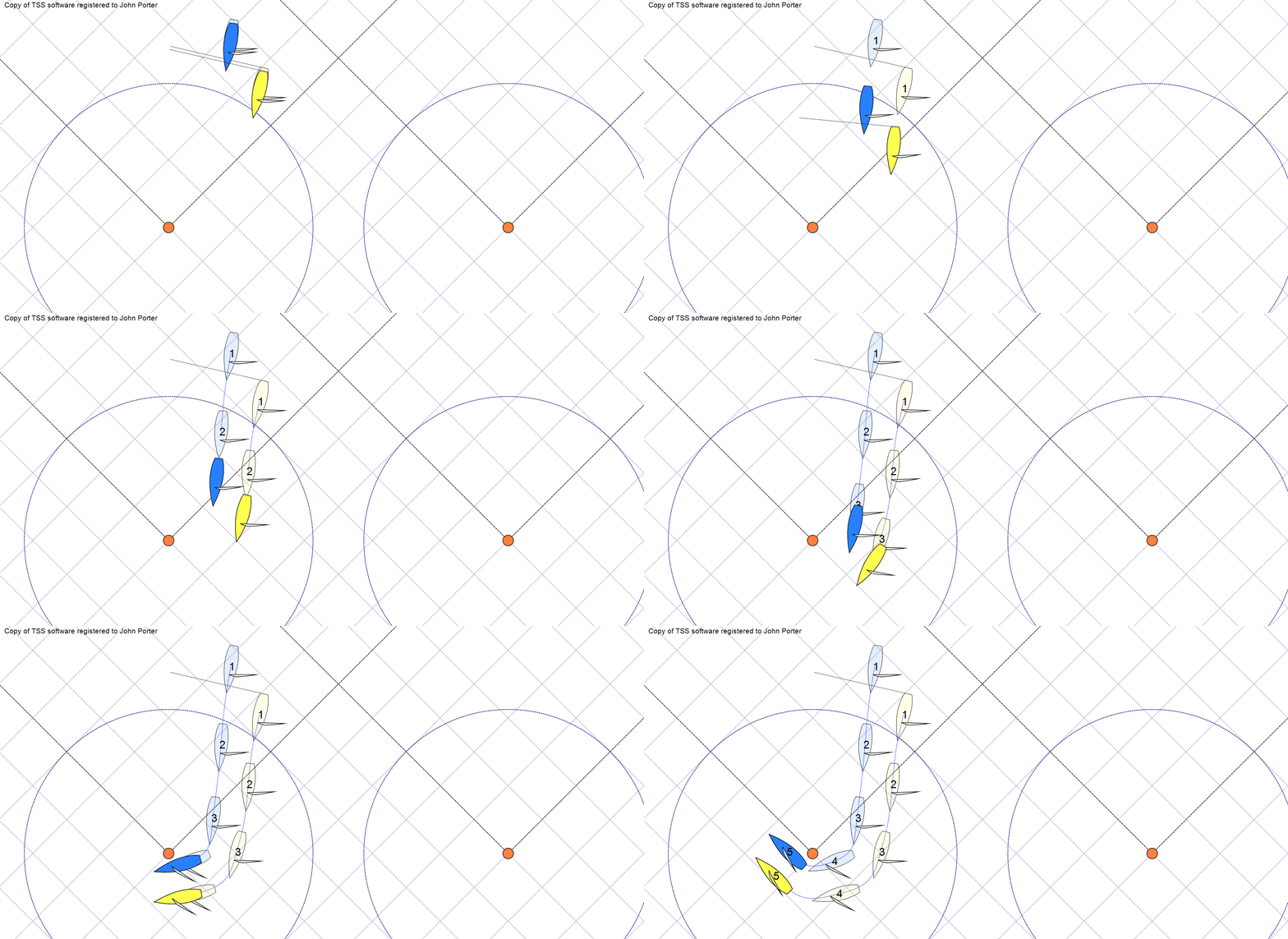
Should Yellow give mark-room to Blue?
Yes, Yellow is required to give mark-room to Blue. The boats were overlapped when the first boat (Yellow) entered the zone. rule 18.2(a)(1) applies.
#2 – “Common Leeward Mark, Example 2”
Description: Yellow and Blue are sailing downwind on the same tack (port). When Blue enters the zone, she is clear ahead of Yellow. After entering the zone, Yellow becomes overlapped with Blue.
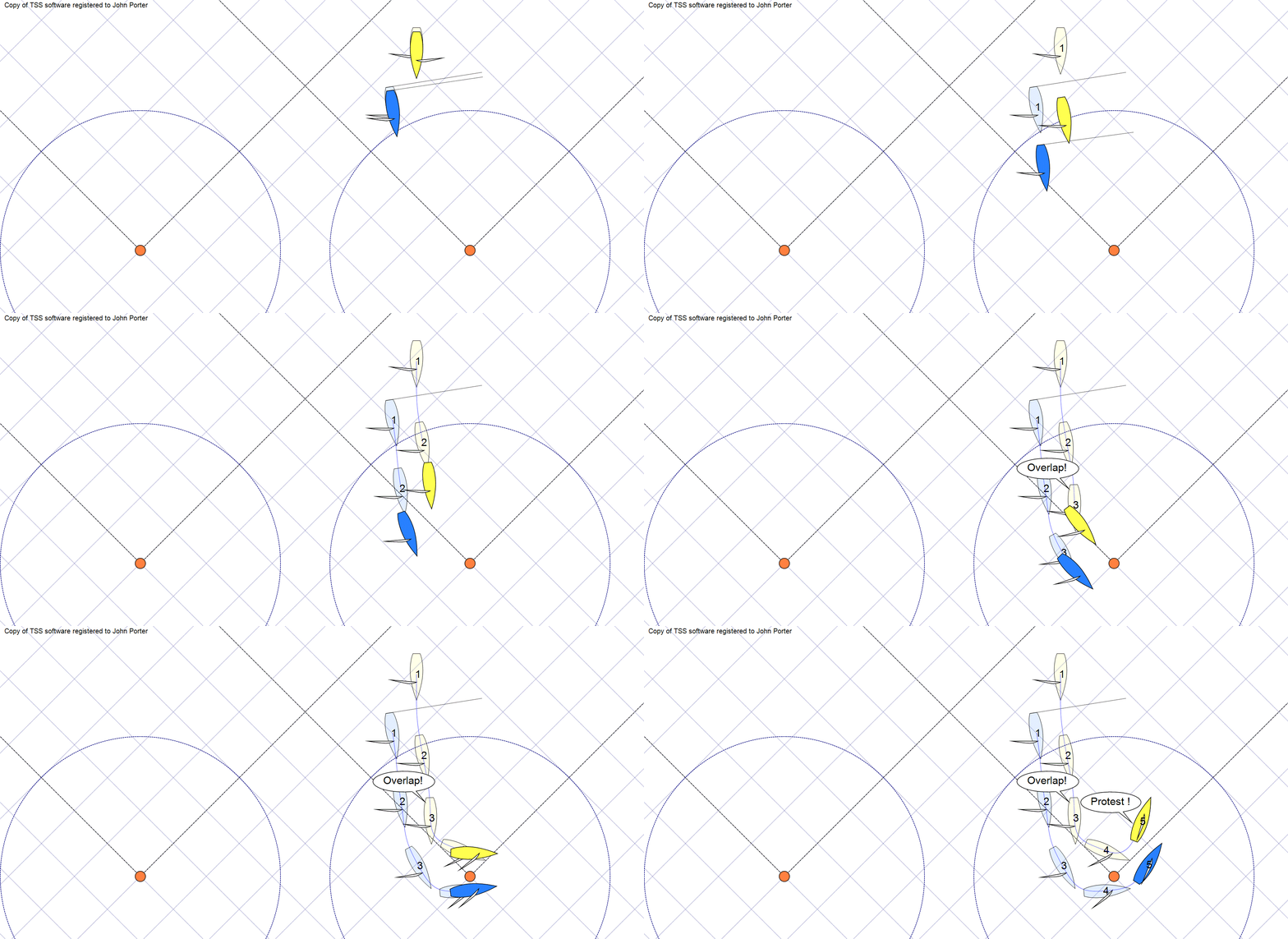
Should Blue give mark-room to Yellow?
No, Blue is not required to give mark-room to Yellow. Blue reached the zone first and the boats were not overlapped, so under rule 18.2(a)(2) Yellow (which had not reached the zone) must give Blue mark-room.
#3 – “Common Leeward Mark, Example 3”
Description: Yellow and Blue are sailing downwind on opposite tacks with spinnakers. Yellow reaches the mark first and does not give Blue mark-room. Blue heads up to avoid Yellow. There was no contact.
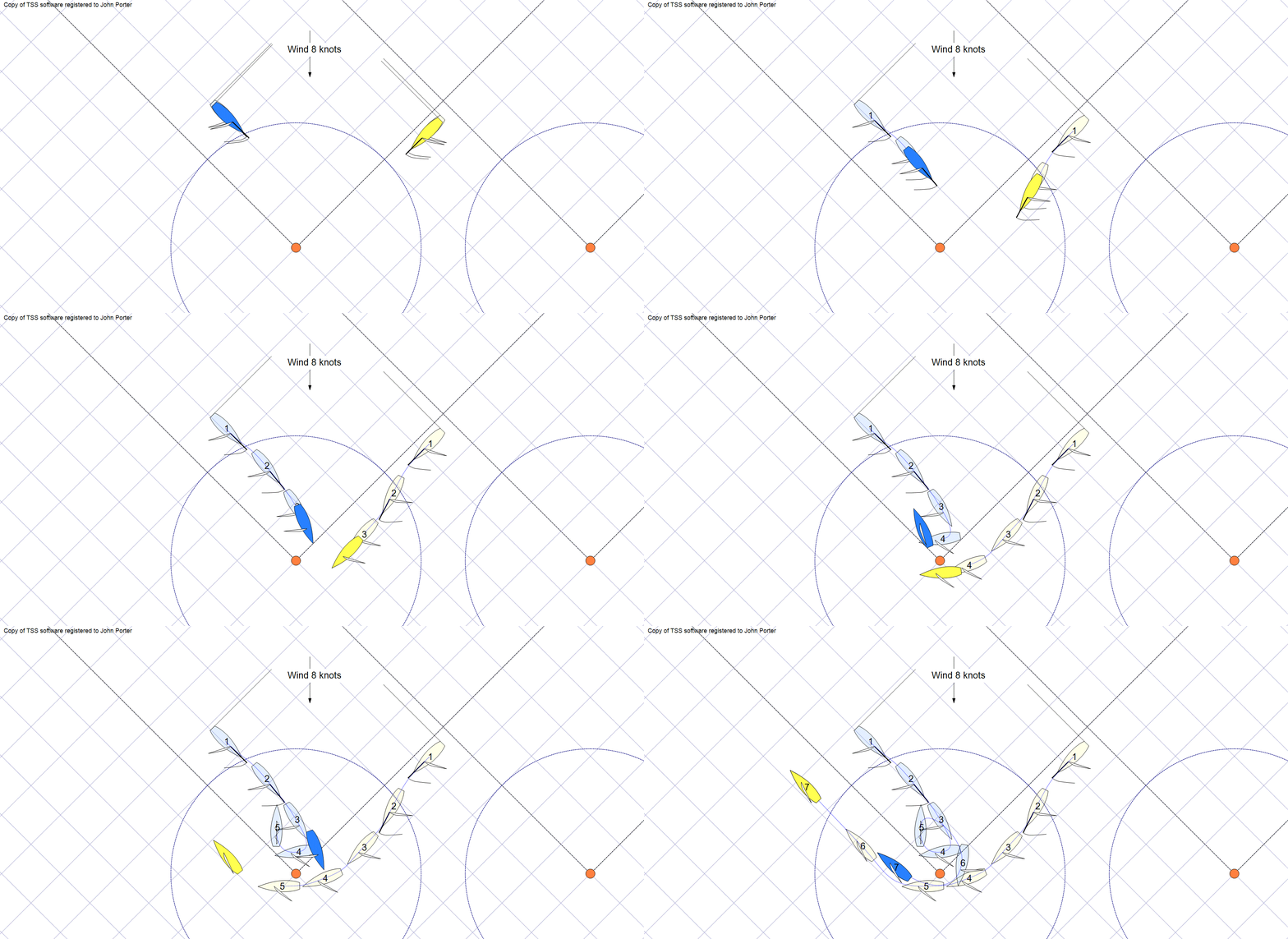
Should Yellow give mark-room to Blue?
Yes, Yellow is required to give mark-room to Blue. Blue was overlapped with Yellow when the first boat reached the zone. rule 18.2(a)(1) applies. As the outside boat, Yellow is required to give Blue mark-room. This situation shows the effect of widely diverging angles when deciding whether boats are overlapped.
#4 – “Common Leeward Mark, Example 4”
Description: Yellow and Blue are sailing downwind on opposite tacks. Shortly after Yellow reaches the zone, Blue hails for room. Yellow does not respond verbally until reaching the mark, and then hails “no room.” Yellow does not give Blue mark-room. Blue protests Yellow. Yellow alleges that she broke the overlap before she entered the zone. There was no contact.
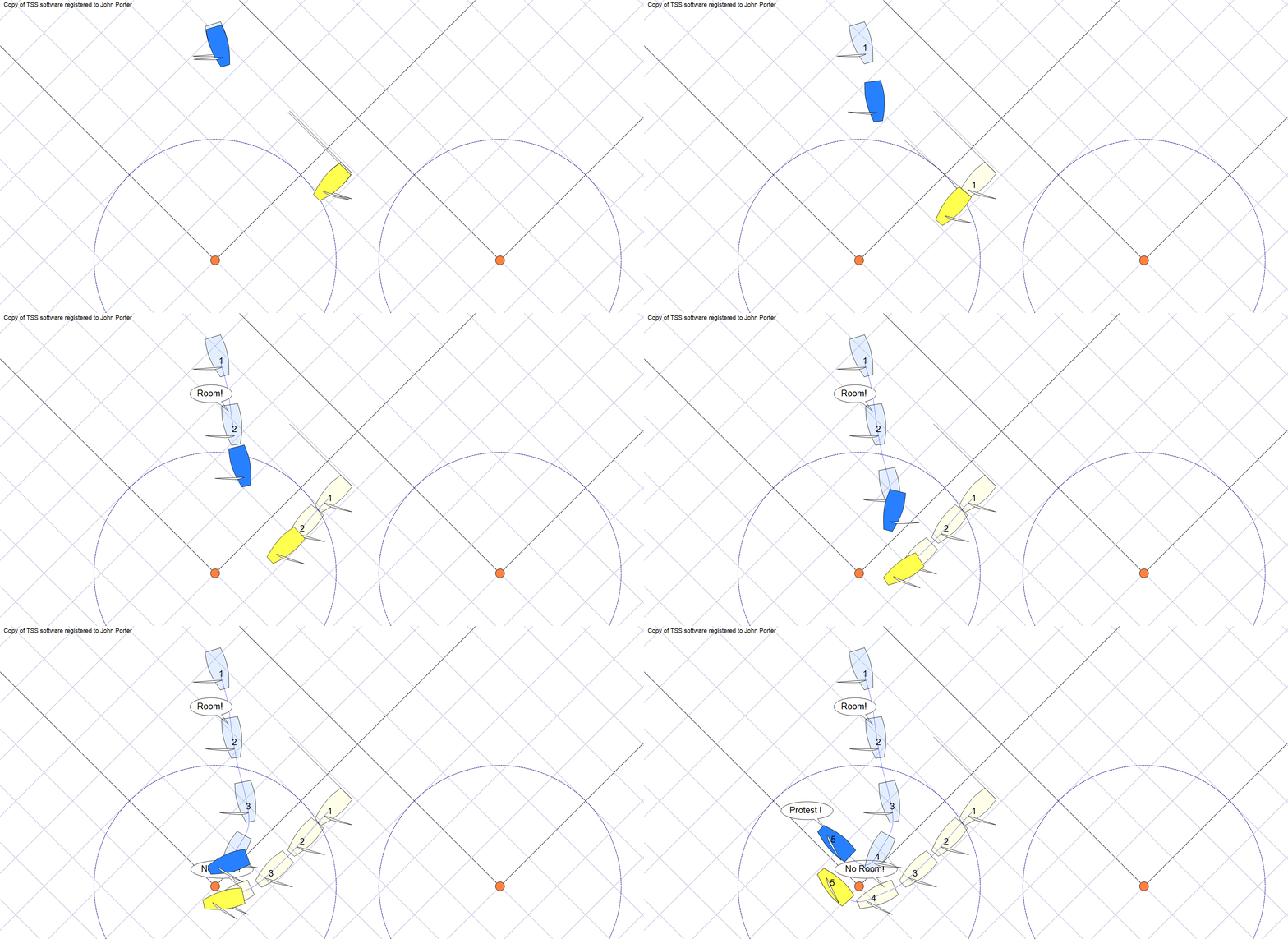
Should Yellow give mark-room to Blue?
Yes, Yellow is required to give mark-room to Blue. Blue was overlapped with Yellow when Yellow entered the zone. rule 18.2(a)(1) applies. As the outside boat, Yellow is required to give Blue mark-room.
Would a protest committee be likely to accept Yellow’s claim that she broke the overlap just before reaching the zone?
No. A protest committee would not be likely to accept Yellow’s claim. The diagram is close, but Yellow claims she broke the overlap; under rule 18.2(e), if there is reasonable doubt it is presumed she did not. Although hailing is not required, this situation might have been prevented if Yellow had considered Blue’s hail and used the remaining time to evaluate the situation and respond.
#5 – “Common Leeward Mark, Example 5”
Description: Yellow and Blue are sailing downwind to the leeward gate on the same tack. After entering the zone, Blue turns up, sails faster, and breaks the overlap.
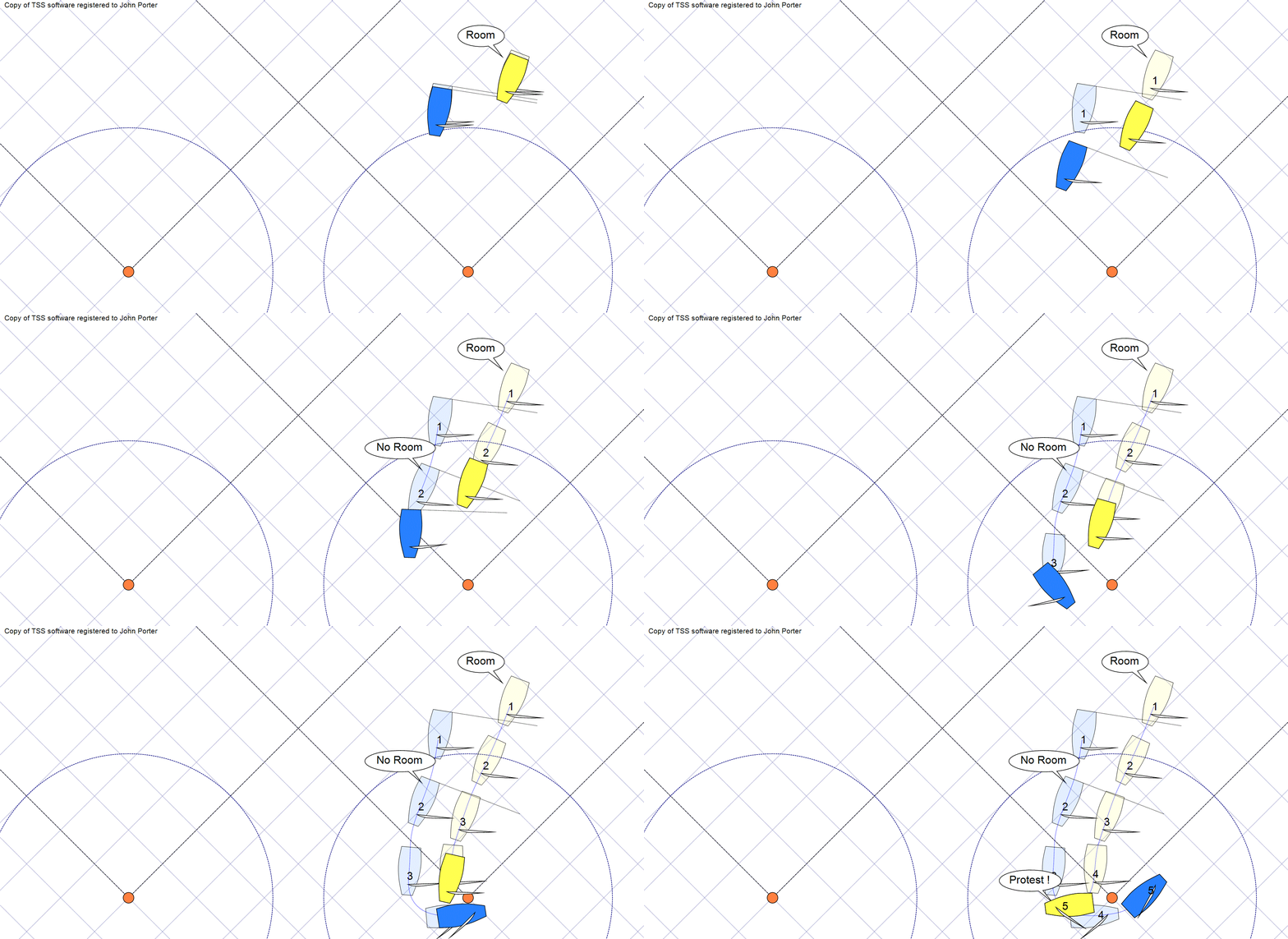
Should Blue give mark-room to Yellow?
Yes, Blue is required to give mark-room to Yellow. The boats were overlapped when Blue reached the zone, so rule 18.2(a)(1) applies. Under the last sentence of 18.2(a), Blue must continue to give mark-room even though the overlap is later broken. This is the “snapshot” idea.
#6 – “Common Leeward Mark, Example 6”
Description: Yellow and Blue are sailing to the leeward mark. Blue is clear ahead when reaching the zone. Blue sails wide of the mark due to trouble with the spinnaker takedown. Yellow sails inside of Blue around the mark.
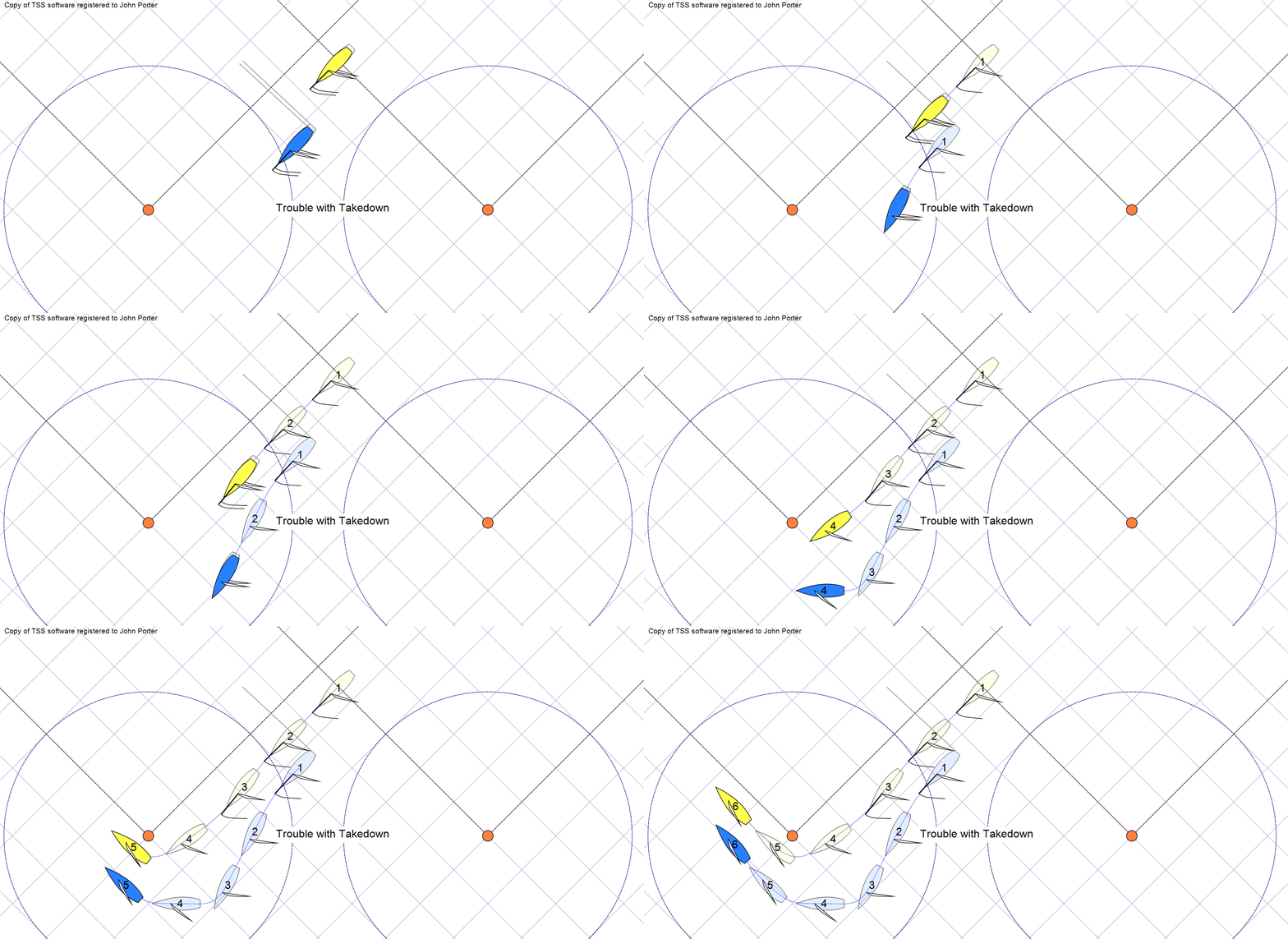
Is Yellow within her rights to round the mark inside Blue?
Yes, Yellow may take the space Blue leaves open, at her own risk (see Case 63). She still owes Blue mark-room under rule 18.2(a)(2) until mark-room has been given (rule 18.1(b)), and the Section A and B rules (for example Rule 11, Rule 15 and Rule 16) govern the boats once they are overlapped.
#7 – “Common Leeward Mark, Example 7”
Description: Yellow, Blue, and Green are approaching the leeward mark. After entering the zone, Green slows down, but Blue speeds up and rounds inside of Yellow. Assume that Blue did not touch the mark. Yellow heads up and contacts Blue. There was no damage.
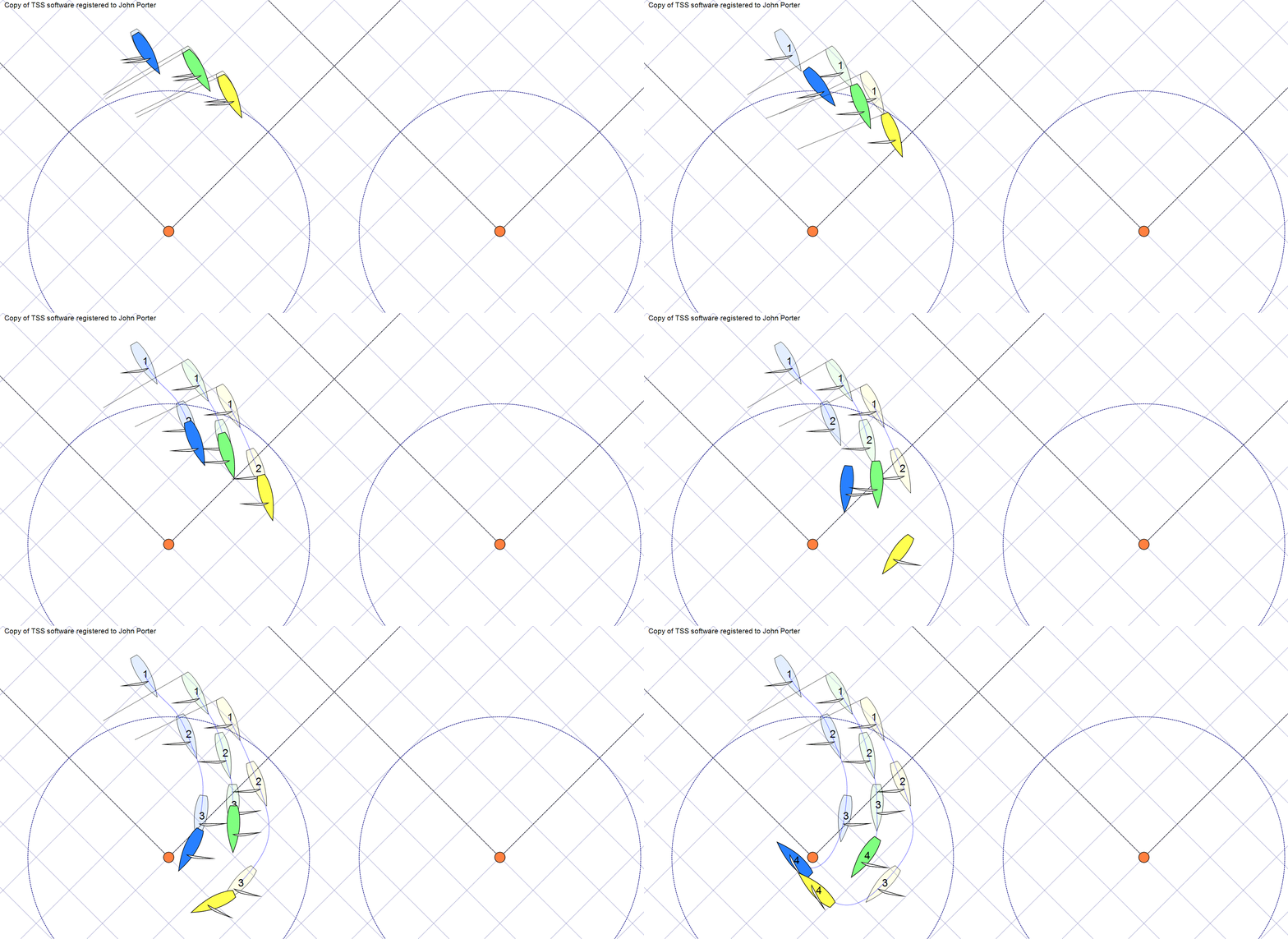
Which boat(s) should promptly take a penalty?
Yellow should promptly take a penalty. When Yellow entered the zone, Blue was overlapped with Green and Green was overlapped with Yellow. Therefore, Blue was overlapped with Yellow. rule 18.2(a)(1) applies, and Yellow was required to give mark-room to both Green and Blue. Blue may have broken Rule 14 (avoiding contact), but she is exonerated under rule 43.1(c), since she was sailing within the mark-room to which she was entitled and there was no damage.
#8 – “Complex Leeward Mark”
Description: Multiple boats are approaching the leeward mark. Watch the scenario several times.
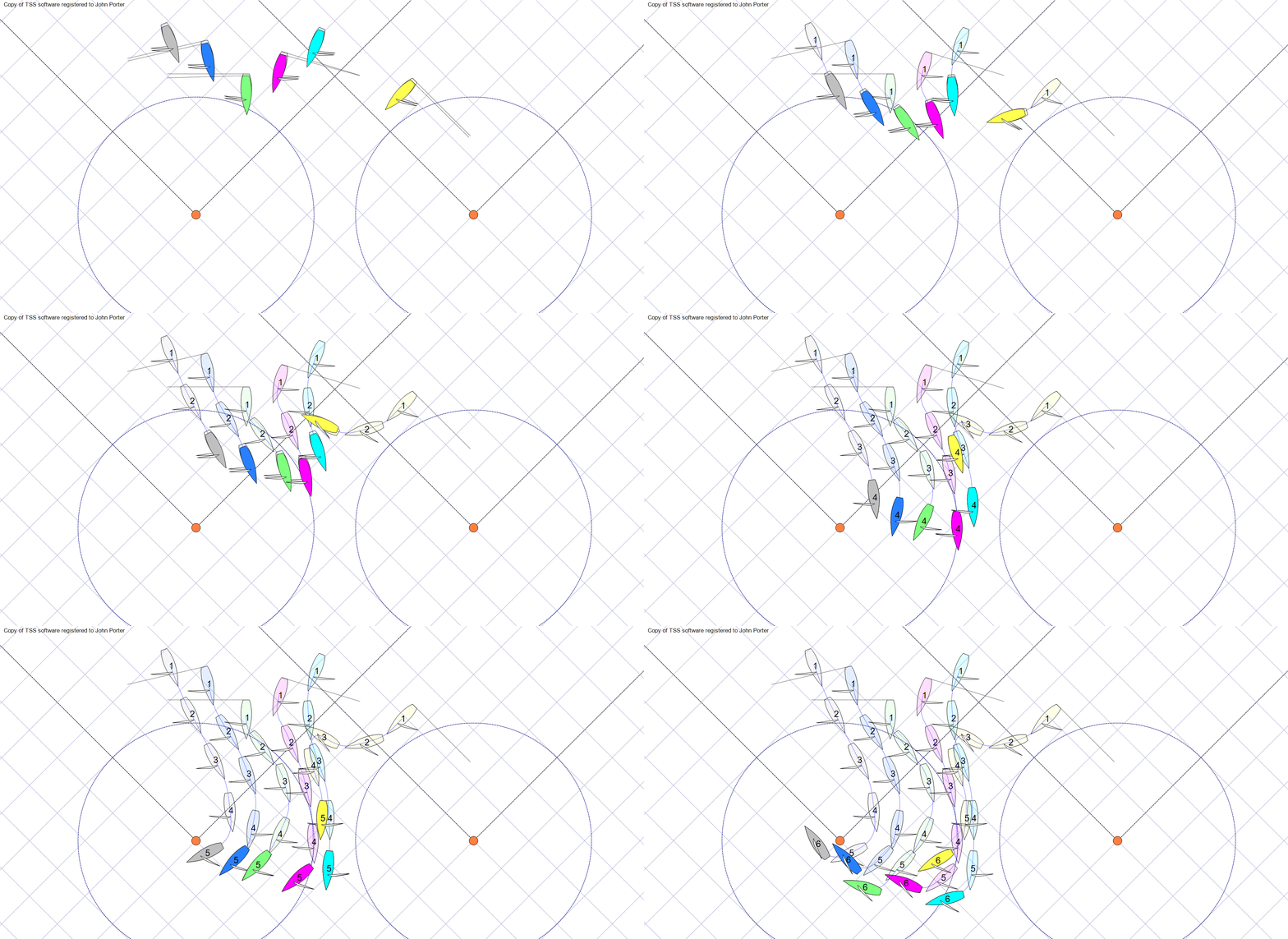
Is Yellow entitled to mark-room from Light Blue?
Yes. Yellow enters the zone before Light Blue, shortly after position 5, and the boats are overlapped when Yellow enters. Under rule 18.2(a)(1), Yellow as the inside boat is entitled to mark-room from Light Blue.
Is Magenta entitled to mark-room from Green?
No. Green enters the zone at position 1. When she enters, the boats are overlapped. Magenta, as the outside boat, is required to give mark-room to Green (rule 18.2(a)(1)). This obligation never changed, even though lots of things happened between entering the zone and getting to the mark.
Another 18.2(a) Example: Case 59
Most mark-room situations fall under 18.2(a), the zone snapshot. Rule 18.2(c) is only the back-up for overlapped boats when 18.2(a) doesn’t apply. Here is the leeward-mark example from Case 59 in the Case Book, which now shows 18.2(a)(2) at work. Blue is forced to sail outside the zone by other boats rounding inside her. Yellow is clear astern of Blue but enters the zone before Blue. When Yellow reached the zone, Blue was outside it and the boats were not overlapped, so rule 18.2(a)(2) requires Blue to give Yellow mark-room.
Rule 18.2 Insights
Various cases in the World Sailing Case Book add insights to this rule. Click the links to read more.
- Case 25: After an inside overlapped windward boat has been given mark-room, rule 18 no longer applies, but rule 11 continues to apply. The inside windward boat must keep clear of the outside leeward boat, and the leeward boat may luff provided that she gives the windward boat room to keep clear.
- Case 59: When a boat comes abeam of a mark but is outside the zone, and when her change of course towards the mark results in a boat that is in the zone and that was previously clear astern becoming overlapped inside her, rule 18.2(a)(2) requires her to give mark-room to that boat, whether or not her distance from the mark was caused by giving mark-room to other boats overlapped inside her.
- Case 63: At a mark, when space is made available to a boat that is not entitled to it, she may, at her own risk, take advantage of the space.
- Case 75: When rule 18 applies, the rules of Sections A and B apply as well. When an inside overlapped right-of-way boat must gybe at a mark, she is entitled to sail her proper course until she gybes. A starboard-tack boat that changes course does not break rule 16.1 if she gives a port-tack boat adequate space to keep clear and the port-tack boat fails to take advantage of it promptly.
Summary
If you remember one thing, make it this: take the snapshot when the first boat reaches the zone. Overlapped? The outside boat gives mark-room. Not overlapped? The boat outside the zone gives mark-room to the one inside it. And the snapshot sticks.
Call your overlaps early and clearly at the zone. If there’s doubt, the protest committee will assume the overlap wasn’t made or broken in time.
Rules 18.3 and 18.4 – Mark-Room 3 come next.
Related Content
- Rule 14 and Rule 15 – Avoiding Contact and Acquiring Right of Way
- Rule 16 – Changing Course
- Rule 17 – On the Same Tack, Proper Course
- Rule 18.1 – When Mark-Room Applies
- Rules 18.3 and 18.4 – Mark-Room 3
- Rules 19-20 – Room at Obstructions
- Racing Terms: Glossary for Newer Sailors
- ILYA #FairSailing Initiative
- Racing Rules of Sailing 2025-2028, Part 2, Section C – At Marks and Obstructions – World Sailing (official rule text)
- World Sailing Racing Rules of Sailing – World Sailing