
Racing Strategy Choices
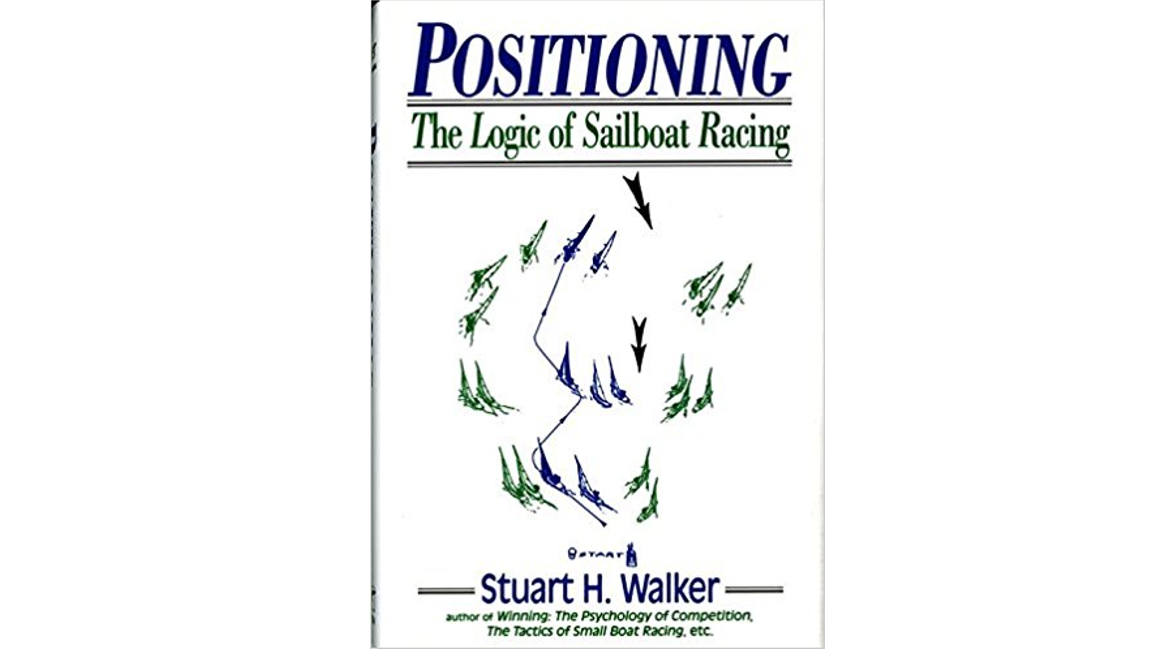
Want a systematic approach to developing your race strategy? Stuart Walker (Positioning: The Logic of Sailboat Racing (paid link)) says successful race strategy depends on determining which one of three conditions (categories) is present. He gives plenty of examples illustrating the consequences of choosing incorrectly.
SailZing.com may earn a small commission if you buy through some links in this post, at no extra cost to you. As an Amazon Associate, SailZing earns from qualifying purchases. More in our Disclosure.
Category I – Oscillating Wind
The wind is always shifting, but Walker defines oscillating as shifts of at least 15-20 degrees occurring back and forth at least every 3 to 8 minutes (more than once in a leg). In Category I, your primary strategy is to ignore competitors and just sail the lifted tack upwind and the headed jibe downwind, at least until you are near the laylines.
Related content
- Sail the Lifted Tack – How and When?: when to stay on the lifted tack in shifty wind
Category II – One Side Obviously Advantaged
You often hear sailors and coaches advising to “pick a side and work it.” This sometimes pays off, but is risky. Walker discusses how to identify conditions that would lead you to pick a side, including: 1) a single or persistent shift during a leg, 2) current differences, 3) light or dying wind, 4) local conditions such as shore effects. In Category II, your primary strategy is to be bold, ignore your competitors, and sail until you reach the advantage, even if it takes you to the laylines (or beyond, in some cases).
Related content
- Favored Side of the Course – Make Better Decisions: how to decide which side pays
Category III – None of the Above
In Category I or II conditions, the strategies involve sailing your own race without paying much attention to the competitors or being too conservative. Most races are not strictly Category I or II, but involve some combination of wind shifts and advantaged locations. In these Category III conditions, Walker says you must sail conservatively by following eight key tactical principles. These include leading out early to get an advantage, but then consolidating, digging back in late to avoid the edges, not letting boats cross, favoring the middle, and covering when ahead.
Related content
- Setting up Right for the Conditions: a very good summary of strategy choices by Mike Ingham in Sailing World
- Racing Strategy: ILYA Fast Forward Seminar: Roble-Shea Sailing share their approach to choosing upwind strategy
Using this Book
If you get this book, be prepared to go through it several times. Your first pass will help immensely as you understand the three categories and the significant strategy differences each requires. In subsequent readings, you can delve into the nuances of each category.

Great post. Makes me want to read the book. I’ve seen similar topics in Speed & Smarts regarding wind-based strategies, but this one seems to add more detail.